
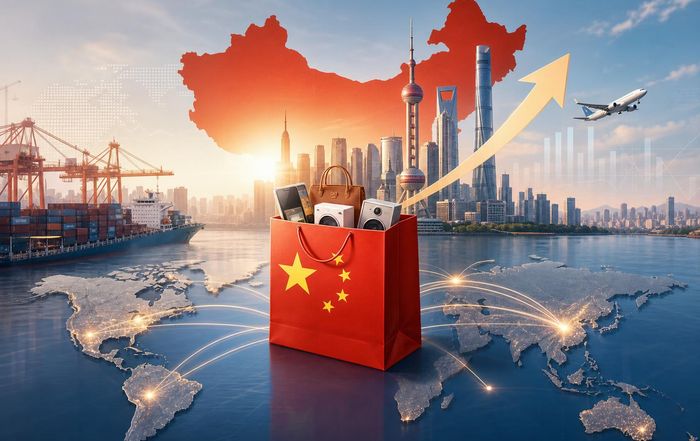
China's Domestic Demand and Its Global Economic Impact
Introduction: Why China's Consumers Matter More Than Ever
China's economic story is no longer only about export-led manufacturing or low-cost labor; it is increasingly about the purchasing power, preferences, and confidence of more than 1.4 billion people whose consumption patterns now shape corporate strategies and policy decisions from New York to Nairobi. For people who follow global business and markets, understanding China's domestic demand has become a prerequisite for evaluating investment risk, forecasting sector performance, and assessing the trajectory of the world economy.
As the country navigates a complex transition from investment-heavy growth toward a more balanced, consumption-driven model, the dynamics of Chinese households, local governments, and private enterprises are transmitting powerful signals across global supply chains, commodity markets, and financial systems. In 2026, shifts in Chinese spending on housing, services, technology, green products, and travel are influencing everything from German machinery orders and Australian iron ore exports to American corporate earnings and Southeast Asian tourism revenues. For executives, investors, and policymakers in the United States, Europe, Asia, Africa, and the Americas, the question is no longer whether China's domestic demand matters, but how to interpret and respond to its evolving patterns.
From Export Powerhouse to Consumption Pivot
Over the past two decades, China's leadership has repeatedly articulated the goal of "rebalancing" the economy toward domestic consumption, recognizing that reliance on exports and property-driven investment creates vulnerabilities during global downturns and financial cycles. According to data regularly analyzed by institutions such as the International Monetary Fund, the consumption share of China's GDP has risen, but it still lags behind that of advanced economies, leaving significant room for expansion as incomes rise and social safety nets gradually strengthen. Readers who track macroeconomic developments will note that this rebalancing has been uneven, influenced by demographic trends, debt levels, and policy choices.
The period from the late 2010s to the mid-2020s saw several structural shifts: the deceleration of the property sector, heightened scrutiny of highly leveraged developers, the impact of pandemic-related disruptions, and a renewed emphasis on advanced manufacturing and technology self-reliance. These shifts have had a direct impact on household wealth perceptions and therefore on spending behavior, particularly in urban middle-class segments that had previously relied heavily on property appreciation as a store of value. As organizations such as the World Bank and OECD have documented, the health of China's domestic demand is now a central determinant of global growth projections, influencing investment decisions from Wall Street to Singapore's financial district.
The Composition of China's Domestic Demand in 2026
In 2026, China's domestic demand can be broadly understood through three interlinked components: household consumption, business investment, and government spending. Each of these components reflects both cyclical conditions and deeper structural trends, and each has distinct implications for international companies, investors, and governments.
Household consumption has become the most closely watched indicator, particularly in major metropolitan areas such as Shanghai, Beijing, Shenzhen, and Guangzhou, where rising incomes and digital ecosystems have created sophisticated consumer markets. The adoption of e-commerce, mobile payments, and platform-based services has fundamentally reshaped retail, entertainment, financial services, and travel. Platforms like Alibaba, JD.com, and Meituan have not only transformed domestic consumption channels but also influenced global norms in digital retail and logistics, with multinational firms studying these models to understand technology-driven business models.
Business investment, especially in advanced manufacturing, automation, and green technologies, has been supported by industrial policies and the strategic objectives of initiatives such as "Made in China 2025" and subsequent policy frameworks. Investments in electric vehicles, batteries, semiconductors, and renewable energy infrastructure have created significant domestic demand for high-tech equipment and specialized components, while simultaneously generating overcapacity concerns in some global markets. Government spending, both at central and local levels, continues to play a stabilizing role, particularly through infrastructure projects, social housing, and public services, although fiscal constraints and debt management remain key challenges closely monitored by institutions such as the Bank for International Settlements.
The Property Slowdown and Wealth Effects on Consumption
No assessment of China's domestic demand in 2026 can ignore the profound impact of the property sector adjustment. For many years, real estate development and associated industries accounted for a substantial share of GDP and local government revenue, while residential property became the primary wealth vehicle for urban households. As regulatory tightening, deleveraging campaigns, and high-profile defaults among large developers unfolded, the resulting correction dampened construction activity, reduced land sale revenues, and weakened consumer confidence, particularly among middle-income families in second- and third-tier cities.
The wealth effect of softer property prices has constrained discretionary spending in areas such as luxury goods, automobiles, and high-end services, even as certain segments of the population continue to spend robustly. International brands in fashion, cosmetics, and premium consumer electronics have had to recalibrate their expectations, store expansion plans, and marketing strategies in response to more cautious household sentiment. Analysts at organizations like McKinsey & Company and Boston Consulting Group have highlighted that while aggregate demand may appear resilient, its composition is shifting toward value-for-money offerings, domestic brands, and experiences rather than purely status-driven purchases. For readers of DailyBusinesss focused on consumer-facing business trends, this nuanced picture is crucial when evaluating revenue forecasts and market entry strategies.
Rising Middle Class, Aging Population, and Regional Divergence
China's demographic profile is undergoing a complex transformation that directly shapes domestic demand. On one hand, the expansion of the urban middle class continues, supported by wage growth in high-value sectors, rising educational attainment, and the proliferation of white-collar employment in services, technology, and advanced manufacturing. On the other hand, population aging and a declining birth rate are beginning to exert downward pressure on long-term growth and alter consumption patterns, with increased spending on healthcare, eldercare, and financial products designed for retirement security.
Regional divergence further complicates the picture. Coastal provinces such as Guangdong, Zhejiang, and Jiangsu, as well as major urban clusters around the Yangtze River Delta and the Greater Bay Area, exhibit higher incomes, stronger service sectors, and more sophisticated consumer behavior, while many inland regions remain more dependent on traditional manufacturing, resource extraction, and public investment. This divergence creates both opportunities and risks for multinational firms and investors, who must decide whether to target affluent urban clusters, emerging cities, or nationwide coverage. Organizations such as the Asian Development Bank have emphasized the importance of infrastructure connectivity and human capital development in narrowing these gaps and sustaining broad-based demand.
Domestic Demand and Global Trade Flows
China's domestic demand exerts a powerful influence on global trade flows, affecting exporters of commodities, intermediate goods, capital equipment, and services across continents. When Chinese consumers and businesses increase their spending on cars, appliances, construction, and infrastructure, demand for iron ore from Australia, copper from Chile, machinery from Germany, and luxury goods from France typically rises in tandem. Conversely, periods of subdued domestic demand can trigger price corrections in global commodity markets, reduce export orders for industrial economies, and alter current account balances.
In 2026, the reorientation of China's growth model toward higher value-added manufacturing and services is reshaping its trade relationships. The country remains a central hub in global supply chains, but its role is evolving from primarily assembling imported components for export to designing, producing, and marketing more sophisticated products under domestic brands. This shift has implications for countries seeking to integrate into or diversify away from Chinese-centric supply chains, particularly in Southeast Asia, South Asia, and Eastern Europe, where governments and firms are competing for investment and market access. Business leaders tracking international trade dynamics increasingly recognize that China's internal demand for components, technology, and services is as important as its export volumes in determining trade patterns.
Financial Markets, Capital Flows, and Global Investment Sentiment
China's domestic demand conditions play a pivotal role in shaping global financial market sentiment, influencing equity valuations, bond yields, currency movements, and cross-border capital flows. When indicators such as retail sales, fixed-asset investment, and services activity signal robust domestic demand, global investors often respond with renewed interest in Chinese equities and corporate bonds, while also upgrading earnings expectations for multinational firms with significant exposure to Chinese consumers. Conversely, signs of weakness or policy uncertainty can trigger risk-off episodes, capital outflows, and volatility across emerging markets.
Major asset managers and institutions, including BlackRock, Vanguard, and Goldman Sachs, closely monitor Chinese macroeconomic data and policy communications when making allocation decisions across equities, fixed income, and alternative assets. Their assessments feed into global risk models and influence the cost of capital for companies worldwide. For readers of DailyBusinesss who follow investment trends and portfolio strategy, understanding how domestic demand in China interacts with monetary policy, exchange rate management, and regulatory developments is essential to anticipating market reactions and identifying opportunities in sectors such as consumer technology, healthcare, green energy, and financial services.
Employment, Wages, and Labor Market Transformation
The evolution of China's domestic demand is closely intertwined with its labor market, as employment and wage growth determine households' capacity and willingness to spend. Over the past decade, the country has experienced a shift from labor-intensive manufacturing toward more automated production and service-oriented employment, driven by rising labor costs, technological progress, and policy support for innovation. This shift has created new job opportunities in logistics, digital platforms, professional services, and advanced manufacturing, while also displacing some workers in traditional industries.
In 2026, policymakers are grappling with the challenge of ensuring sufficient job creation for university graduates, vocational trainees, and rural migrants entering urban labor markets, particularly in a context of slower headline growth. Institutions such as the International Labour Organization have highlighted the importance of reskilling, social protection, and labor market flexibility in maintaining inclusive growth. For businesses and investors, labor market dynamics influence both operational costs and revenue potential, as wage growth supports consumption but also compresses margins. Readers interested in employment trends and workforce strategy can observe how companies operating in China are investing in training, automation, and human capital to balance productivity gains with employee retention and social expectations.
Technology, AI, and the Digital Consumer Ecosystem
China's domestic demand is increasingly mediated by digital platforms, artificial intelligence, and data-driven services that have transformed how consumers discover, evaluate, and purchase products and experiences. The widespread adoption of mobile payments, social commerce, and algorithm-driven recommendations has created a uniquely integrated digital ecosystem in which companies can target micro-segments of consumers with personalized offerings, while also gathering vast amounts of behavioral data. Leading technology firms such as Tencent, Alibaba, and ByteDance have built sophisticated infrastructures that combine payments, messaging, entertainment, and shopping into seamless user journeys.
In 2026, the integration of AI into retail, logistics, finance, and customer service is further amplifying the efficiency and responsiveness of Chinese domestic markets. International observers and practitioners who wish to understand AI's role in business transformation increasingly look to China's experiments in autonomous delivery, smart cities, and intelligent manufacturing for insight. At the same time, regulatory frameworks around data security, privacy, and platform governance are evolving, as authorities seek to balance innovation with consumer protection and systemic stability. The way China manages this balance will influence not only domestic demand but also global norms in digital regulation and competition policy, with implications for technology companies and regulators worldwide.
Green Transition, Sustainable Demand, and Global Climate Goals
China's domestic demand is also central to global efforts to address climate change and promote sustainable development. As the world's largest emitter of greenhouse gases and a leading producer of renewable energy technologies, China's choices regarding energy consumption, transportation, construction, and industrial processes have far-reaching consequences. The government's commitments to peak carbon emissions before 2030 and achieve carbon neutrality by 2060 are reshaping domestic investment and consumption, driving demand for electric vehicles, energy-efficient appliances, green buildings, and low-carbon transportation.
Organizations such as the International Energy Agency and UN Environment Programme have emphasized that China's domestic policies on energy pricing, emissions standards, and green finance will significantly influence the global trajectory of decarbonization. For businesses and investors, this creates both risks and opportunities: sectors reliant on fossil fuels or carbon-intensive processes face structural headwinds, while companies involved in renewables, battery technology, and sustainable materials may benefit from strong domestic and international demand. Readers of DailyBusinesss who follow sustainable business and finance can observe how China's internal shift toward greener consumption patterns is contributing to the growth of global green bond markets, ESG investing, and cross-border collaboration on climate technologies.
Crypto, Digital Currencies, and the Future of Payments
While China has imposed strict regulations on cryptocurrencies and related activities, its approach to digital currencies and payment systems remains highly influential for the global financial architecture. The development and testing of the digital renminbi (e-CNY) reflect a strategic effort to modernize domestic payments, enhance financial inclusion, and strengthen monetary policy transmission, while also exploring new forms of cross-border settlement. Central banks and financial authorities around the world, including those in Europe, North America, and Asia, are closely monitoring these developments through platforms such as the Bank for International Settlements Innovation Hub and the Atlantic Council's central bank digital currency tracker.
For international businesses and investors, the evolution of China's digital currency and payment infrastructure has implications for transaction costs, compliance requirements, and the competitive landscape for fintech innovations. Although speculative crypto assets remain restricted, the underlying technologies and regulatory lessons emerging from China's experience are being studied by policymakers globally. Readers of DailyBusinesss interested in crypto and digital finance will find that China's domestic experiments in programmable money, smart contracts, and digital identity could influence how value is exchanged in both domestic and cross-border contexts in the coming decade.
Implications for Global Corporates and Investors
The interplay between China's domestic demand and the global economy presents a complex set of strategic considerations for multinational corporations, institutional investors, and policymakers. For consumer-facing companies in sectors such as retail, automotive, healthcare, and entertainment, China remains an essential market, but one that demands localized strategies, resilient supply chains, and a deep understanding of regulatory expectations. The days when firms could rely on straightforward export-led or premium-brand strategies are fading; success now depends on aligning product design, pricing, and marketing with the nuanced preferences and constraints of Chinese consumers in different regions and income segments.
For investors, China's domestic demand story is both an opportunity and a source of volatility. Equity and bond markets are influenced by policy signals, regulatory interventions, and shifts in sectoral priorities, requiring sophisticated analysis and diversification. Institutions such as the World Economic Forum and Institute of International Finance frequently highlight the importance of transparency, governance, and risk management when engaging with Chinese assets. Readers of DailyBusinesss who follow global finance and capital markets will recognize that portfolio exposure to China is increasingly being framed not only in terms of growth potential but also in relation to geopolitical risk, supply chain resilience, and regulatory predictability.
Policy Choices, Geopolitics, and the Road Ahead
China's domestic demand trajectory cannot be separated from the broader geopolitical environment, including its relationships with the United States, the European Union, and regional partners in Asia-Pacific, Africa, and Latin America. Trade tensions, technology controls, investment screening mechanisms, and security concerns all influence the flow of goods, capital, and talent. At the same time, China's participation in multilateral frameworks, such as the World Trade Organization, the Regional Comprehensive Economic Partnership, and global climate agreements, shapes the rules and norms governing international economic activity.
Policy choices within China regarding market access, competition policy, state-owned enterprise reform, and financial liberalization will determine the extent to which domestic demand can serve as a stable and sustainable engine of growth, both for China and for the global economy. International organizations, think tanks, and academic institutions, including Chatham House and leading universities, continue to analyze these developments to inform business and policy decisions worldwide. For readers of DailyBusinesss who track world news and geopolitical risk, the intersection of domestic economic priorities and external strategic considerations in China will remain a central theme over the coming years.
What It Means for Our Readers
For the business thinkers here, normally spanning executives, founders, investors, policymakers, and professionals across the United States, Europe, Asia, Africa, and the Americas, China's domestic demand in 2026 represents both a barometer and a driver of global economic health. Whether assessing a new market entry strategy, evaluating a cross-border acquisition, designing a resilient supply chain, or building a diversified investment portfolio, an informed view of Chinese consumer behavior, industrial policy, and financial conditions is indispensable.
Entrepreneurs and founders considering expansion into Asia can draw on insights from founder-focused coverage to understand how local partnerships, digital ecosystems, and regulatory compliance can enable sustainable growth in China's complex market. Corporate leaders evaluating technology investments and innovation strategies may find that China's rapid adoption of AI, automation, and digital platforms offers both competitive pressure and collaborative opportunities, as highlighted in technology and AI analysis. Investors seeking exposure to emerging themes such as green infrastructure, advanced manufacturing, and digital finance will benefit from integrating a nuanced understanding of China's domestic demand into their global investment frameworks.
As time unfolds, DailyBusinesss will continue to track the evolution of China's domestic demand and its global economic impact, providing analysis that connects macroeconomic trends with sector-specific developments, corporate strategies, and financial market dynamics. In a world where China's consumers, companies, and policymakers shape outcomes far beyond its borders, staying informed about these interdependencies is no longer optional; it is a core component of effective decision-making for business and finance professionals worldwide.
