
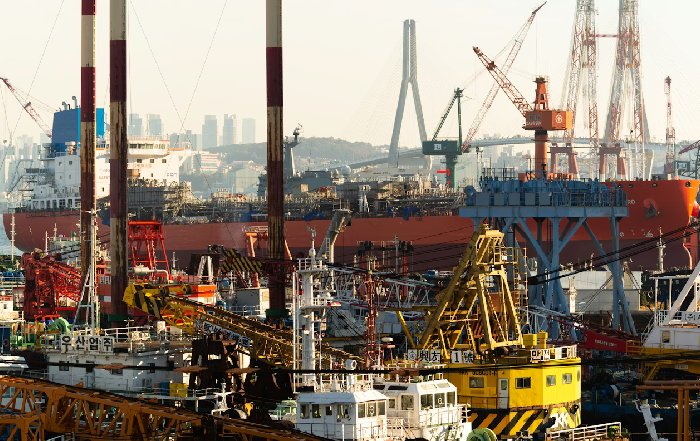
Global Trade Networks Face Unprecedented Stress
A New Era of Friction in Global Commerce
Today executives, investors and policymakers who follow DailyBusinesss have largely abandoned the assumption that global trade will naturally become more open, efficient and predictable over time. Instead, they operate in a world where supply chains are repeatedly disrupted, geopolitical rivalries reshape trade corridors, and emerging technologies both alleviate and amplify systemic risks. The global trade networks that underpinned three decades of expansion in cross-border flows are now under unprecedented stress, and the resulting uncertainty is transforming how companies plan, invest, hire and compete.
For readers across North America, Europe, Asia and beyond, the central question is no longer whether globalization is retreating, but rather what form the next phase of global integration will take, and how businesses can adapt their strategies to survive and thrive. On DailyBusinesss.com, this discussion intersects with themes in business strategy, international trade, technology and AI, finance and markets and sustainable development, because the stress in trade networks now touches every dimension of corporate decision-making.
Geopolitics, Fragmentation and the Rewiring of Trade
The most visible source of strain in global trade networks is the accelerating geopolitical rivalry between major powers, particularly the United States, China and the European Union, alongside increasingly assertive regional players such as India, Brazil and the Gulf states. Trade is no longer treated merely as an engine of shared prosperity; it has become a central instrument of national security, industrial policy and technological competition.
As export controls, sanctions and investment screening regimes expand, companies in sectors from semiconductors to clean energy must navigate a rapidly shifting landscape of restrictions and incentives. The World Trade Organization (WTO), once the anchor of rules-based trade, has struggled to keep pace with this fragmentation, and its dispute settlement system has been hampered for years, reducing its ability to arbitrate conflicts. Businesses seeking to understand these structural shifts increasingly consult analytical resources from institutions such as the International Monetary Fund (IMF) and the World Bank, which document how trade fragmentation could lower global growth and productivity over the long term, even as some countries and sectors benefit in the short run from reshoring and friend-shoring initiatives.
In this environment, trade corridors are being rewired rather than dismantled. European manufacturers diversify away from concentrated dependence on single suppliers, US firms seek alternative partners in Mexico, Vietnam and India, and Chinese companies deepen ties across Asia, Africa and Latin America. Trade volumes remain high, but routes, partners and terms are in flux, forcing operational and strategic recalibration at an unprecedented pace.
Supply Chain Vulnerability Becomes a Board-Level Risk
The pandemic era exposed how fragile just-in-time supply chains could be when confronted with simultaneous shocks to demand, logistics and labor availability. Since then, additional disruptions-from the blocking of the Suez Canal to periodic port congestion, cyber incidents and regional conflicts-have made supply chain resilience a permanent board-level concern. Executives across industries now treat supply chain design as a core component of enterprise risk management rather than a purely operational function.
Leading manufacturers, retailers and logistics providers are investing heavily in multi-sourcing strategies, regionalized production footprints and inventory buffers that would have been dismissed as inefficient a decade ago. Research from organizations like the OECD and McKinsey & Company highlights the trade-off between cost optimization and resilience, showing that while redundancy and diversification raise short-term expenses, they can significantly reduce the financial impact of major disruptions over time. Learn more about how resilient supply chains are reshaping global business models through specialized analyses from institutions such as the World Economic Forum, which has made supply chain resilience a central theme in its discussions of the future of globalization.
For the global audience of DailyBusinesss, from Germany and the Netherlands to Singapore and South Korea, this shift is visible in the way procurement, logistics, finance and technology leaders now collaborate closely to stress-test networks, map tier-two and tier-three suppliers, and integrate real-time risk monitoring into everyday operations. On DailyBusinesss trade coverage, the emphasis increasingly falls on case studies of companies that successfully redesigned their global footprints without sacrificing competitiveness.
The AI-Driven Supply Chain: Visibility, Prediction and Control
Artificial intelligence has moved from a promising experiment to a foundational capability in global trade operations. Major logistics platforms, freight forwarders and multinational manufacturers are deploying AI-powered tools to forecast demand, optimize routing, detect anomalies, manage inventory and dynamically price shipping capacity. By integrating data from port authorities, customs agencies, weather services, satellite imagery and IoT devices, AI systems can provide end-to-end visibility that was previously impossible.
Companies such as Maersk, DHL and UPS have invested heavily in digital platforms that leverage machine learning to anticipate bottlenecks and recommend alternative routes or modes of transport. Technology leaders including Microsoft, Google and Amazon Web Services provide cloud-based AI infrastructure that underpins these solutions, while specialized supply chain software vendors integrate predictive analytics into transportation management and warehouse management systems. Learn more about how AI and machine learning are transforming logistics and transportation through resources from organizations such as MIT and Gartner, which analyze adoption trends, performance gains and emerging risks.
For business leaders following AI developments on DailyBusinesss, the key issue is not simply whether AI can improve efficiency, but how to deploy these tools in a way that enhances trust and resilience. AI systems must be trained on high-quality, timely data and governed with robust controls to avoid amplifying biases, misinterpreting signals or making opaque decisions that are difficult to audit. As regulators in the European Union, the United States and Asia introduce new rules on algorithmic accountability and data protection, companies that operate global trade networks must ensure their AI-enabled systems comply with evolving standards while still delivering operational benefits.
Finance, Liquidity and the Cost of Moving Goods
The stress in global trade networks is not only physical and geopolitical; it is also financial. Trade finance, which underpins the movement of goods by providing working capital and risk mitigation instruments such as letters of credit and guarantees, has come under strain as interest rates rose sharply in the first half of the 2020s and regulatory requirements on banks tightened. For small and medium-sized enterprises in emerging markets, the trade finance gap-estimated by organizations like the Asian Development Bank-remains a significant barrier to participation in global value chains.
As central banks such as the US Federal Reserve, the European Central Bank and the Bank of England recalibrate monetary policy in response to inflation, growth and financial stability concerns, the cost of capital for trade-related activities fluctuates, affecting everything from inventory decisions to fleet expansion. Learn more about the interplay between global interest rates and trade flows through analyses from institutions such as the Bank for International Settlements, which examine how tighter financial conditions can amplify the impact of supply chain disruptions on corporate balance sheets.
Readers of DailyBusinesss finance and investment coverage recognize that the new environment demands more sophisticated treasury and risk management strategies. Corporates increasingly use hedging instruments to manage currency and commodity price volatility, while also diversifying their banking relationships and exploring alternative sources of trade finance, including non-bank lenders and digital platforms. At the same time, investors scrutinizing global markets pay close attention to logistics costs, shipping rates and inventory cycles as leading indicators of broader economic trends.
Crypto, Tokenization and the Digitalization of Trade Flows
The digitalization of trade finance and logistics has opened the door to new models based on distributed ledger technologies and tokenization. While the speculative phase of cryptocurrencies has moderated in many jurisdictions under stricter regulatory oversight, the underlying blockchain infrastructure is increasingly being explored as a means to streamline documentation, reduce fraud and improve transparency in cross-border transactions. Projects led by consortia of banks, logistics companies and technology providers aim to digitize bills of lading, automate compliance checks and enable near-instant settlement of trade-related payments.
Central bank digital currency (CBDC) experiments in China, the Eurozone, Singapore and other jurisdictions add another layer of potential transformation. If widely adopted, CBDCs could reduce the frictions and costs associated with correspondent banking networks, especially for smaller firms and emerging-market participants. Learn more about how digital currencies are reshaping cross-border payments through research and commentary from institutions such as the Bank of England and the Monetary Authority of Singapore, which are at the forefront of CBDC experimentation and regulatory innovation.
For the global community of founders, investors and technologists who follow crypto insights on DailyBusinesss, the critical opportunity lies in building trusted, interoperable platforms that integrate blockchain-based solutions with existing trade finance and logistics systems, rather than attempting to replace them outright. Success in this arena will depend on close collaboration between regulators, financial institutions and technology providers, as well as clear governance frameworks that address data privacy, liability and dispute resolution.
Labor Markets, Skills and the Human Side of Trade Stress
The stress in global trade networks has profound implications for employment patterns, skills demand and labor relations across continents. As companies reconfigure supply chains and invest in automation, robotics and AI, the geography and nature of work in manufacturing, logistics and trade-related services are changing significantly. Workers in traditional export-oriented manufacturing hubs face uncertainty as production shifts to new locations or becomes more capital-intensive, while demand rises for highly skilled professionals in areas such as data analytics, cybersecurity, supply chain design and trade compliance.
International organizations such as the International Labour Organization (ILO) and OECD have documented how trade disruptions and technological change can exacerbate inequalities if reskilling and social protection policies fail to keep pace. For businesses operating in the United States, United Kingdom, Germany, Canada, Australia, Japan and beyond, the challenge is to balance efficiency with social responsibility, investing in workforce development and engaging in constructive dialogue with labor representatives. Learn more about evolving labor market dynamics and their connection to trade through research from institutions such as the Brookings Institution and Chatham House, which analyze the political and social consequences of trade-related job transitions.
On DailyBusinesss employment and workforce pages, readers increasingly seek guidance on how to build resilient, inclusive talent strategies that align with new trade realities. This includes not only upskilling existing employees but also rethinking recruitment, remote work, and cross-border mobility policies in a world where immigration rules and geopolitical tensions can change quickly.
Sustainability, Climate Risk and the Green Trade Agenda
Climate change and the global push toward decarbonization are now central drivers of stress and transformation in trade networks. Extreme weather events disrupt ports, shipping lanes and production sites, while regulatory initiatives such as the European Union's Carbon Border Adjustment Mechanism (CBAM) and evolving carbon pricing schemes in countries from Canada to South Korea introduce new costs and compliance requirements for carbon-intensive imports. Companies that rely heavily on long, complex supply chains must now evaluate the climate resilience of their networks as rigorously as they assess cost and speed.
At the same time, the transition to a low-carbon economy is creating new trade patterns in critical minerals, batteries, renewable energy technologies and green hydrogen. Nations compete to secure access to lithium, cobalt, nickel and rare earth elements, while also seeking to develop domestic capacity in solar, wind and next-generation nuclear technologies. Learn more about sustainable business practices and climate-aligned trade policies through resources from organizations such as the United Nations Environment Programme (UNEP) and the International Energy Agency (IEA), which provide data and guidance on decarbonization pathways and their implications for global commerce.
For the sustainability-focused audience of DailyBusinesss, particularly those following sustainable business coverage, the central challenge is how to integrate environmental, social and governance (ESG) considerations into trade-related decisions without undermining competitiveness. This involves measuring and reducing Scope 3 emissions across supply chains, collaborating with suppliers to improve environmental performance, and engaging with policymakers to design trade rules that support, rather than hinder, the transition to a net-zero global economy.
Founders, Innovation and New Trade-Centric Business Models
The stress affecting global trade networks is also a catalyst for entrepreneurial innovation. Founders in the United States, Europe, Asia and Africa are building startups that tackle specific pain points in logistics, customs, trade finance and risk management. From digital freight marketplaces and port optimization platforms to AI-driven compliance tools and climate-risk analytics, a new generation of companies is emerging at the intersection of trade, technology and sustainability.
Venture capital firms, sovereign wealth funds and corporate venture arms are increasingly interested in these trade-tech solutions, recognizing that even incremental improvements in efficiency, transparency or resilience can unlock significant value in a sector that underpins trillions of dollars in annual flows. Learn more about the evolving startup ecosystem around global trade through reports and insights from organizations such as Startup Genome and Crunchbase, which track funding patterns and innovation clusters across major hubs from Silicon Valley to Berlin, Singapore and Tel Aviv.
On DailyBusinesss founders and innovation pages, readers encounter case studies of entrepreneurs who leverage domain expertise in logistics or finance, combined with cutting-edge technologies, to build scalable platforms that address real-world bottlenecks. These stories highlight not only the commercial opportunity but also the importance of trust, governance and cross-border collaboration in building solutions that can operate across multiple jurisdictions and regulatory regimes.
Regional Perspectives: Diverging Paths in a Fragmented World
While the stress on global trade networks is a worldwide phenomenon, its manifestations and consequences vary significantly by region. In North America, the reconfiguration of supply chains under frameworks such as the US-Mexico-Canada Agreement (USMCA) has reinforced regional integration, particularly in automotive, electronics and agriculture, even as tensions with China reshape import and export patterns. Europe faces the dual challenge of managing energy transitions and security concerns while maintaining its position as a leading exporter of high-value manufactured goods and services, with Germany, France, Italy, Spain and the Netherlands each navigating distinct industrial and political pressures.
In Asia, countries such as China, Japan, South Korea, Singapore, Thailand and Malaysia are at the center of both manufacturing networks and emerging trade agreements, including the Regional Comprehensive Economic Partnership (RCEP) and various bilateral and plurilateral deals. Learn more about these agreements and their implications for trade flows through resources from organizations such as UNCTAD and the Asia-Pacific Economic Cooperation (APEC), which provide detailed analyses of regional integration trends. Meanwhile, African economies, including South Africa and emerging manufacturing hubs in East and West Africa, seek to leverage frameworks like the African Continental Free Trade Area (AfCFTA) to build intra-continental trade and reduce dependence on commodity exports.
For global readers of DailyBusinesss world coverage, these regional dynamics underscore the importance of nuanced, country-specific strategies. A one-size-fits-all approach to sourcing, market entry or investment is increasingly untenable in a world where regulatory, political and infrastructural conditions diverge sharply, even among neighboring states.
Strategic Imperatives for Business Leaders
In this environment of unprecedented stress and transformation, the most resilient organizations are those that treat global trade not as a static backdrop but as a dynamic, strategic domain requiring continuous attention from the C-suite and the board. For executives, investors and founders who turn to DailyBusinesss for guidance on business strategy, technology, investment and economic analysis, several imperatives stand out.
First, robust scenario planning has become essential. Companies must model multiple geopolitical, regulatory and technological futures, assessing how each would affect supply chains, customer demand, capital costs and competitive dynamics. Second, data and digital capabilities are no longer optional; they are the foundation for real-time visibility, predictive analytics and agile decision-making across global trade networks. Third, building trusted partnerships-whether with suppliers, logistics providers, financial institutions, technology vendors or policymakers-is critical to navigating uncertainty and responding quickly to shocks.
Finally, a renewed focus on Experience, Expertise, Authoritativeness and Trustworthiness is indispensable. In a world where misinformation and fragmented narratives can distort perceptions of risk and opportunity, business leaders need reliable, in-depth analysis that connects developments in AI, finance, crypto, economics, employment, sustainability and trade into a coherent picture. As global trade networks continue to evolve under pressure, DailyBusinesss remains committed to providing that integrated perspective, helping decision-makers across the United States, Europe, Asia, Africa, South America and beyond chart a course through one of the most challenging and consequential periods in the history of global commerce.
