
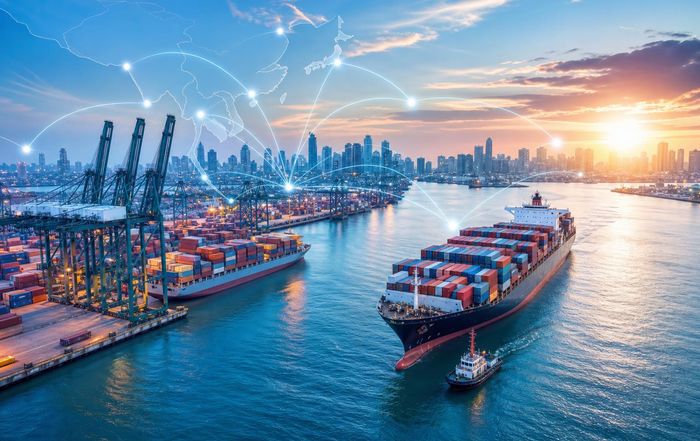
How Singapore's Port Connectivity Underpins Asia's Regional Supply Chains
Singapore's port has long been a barometer of global trade. Sitting at the crossroads of major East-West and intra-Asia shipping lanes, the city-state has built one of the world's most connected maritime hubs. That connectivity is now central not just to Singapore's own economy, but to how regional supply chains in Asia adapt to geopolitical tensions, climate shocks, and shifting manufacturing bases.
Now we look at how Singapore's port connectivity works in practice, why it matters for manufacturers, logistics providers, and investors across Asia, and how ongoing infrastructure and technology upgrades could reshape regional trade over the next decade.
A strategic hub at the world's busiest crossroads
Singapore's position along the Strait of Malacca-linking the Indian Ocean to the South China Sea-has made it a natural maritime hub for centuries. Today, that geography is amplified by dense shipping networks and sophisticated logistics infrastructure. The Maritime and Port Authority of Singapore (MPA) reports that the port is connected to more than 600 ports in over 120 countries, served by hundreds of shipping lines on thousands of weekly sailings. For global carriers, this makes Singapore a near-universal transhipment point: containers moving between Asia, Europe, the Middle East, and Africa can be consolidated, rerouted, or turned around quickly.
This dense network has significant implications for regional supply chains. Manufacturers in Southeast Asia, India, and even inland China can reach almost any major market through Singapore with relatively predictable transit times. For time-sensitive sectors such as electronics, pharmaceuticals, and automotive components, this connectivity reduces the need for large buffer inventories and helps keep working capital requirements under control. It also supports just-in-time production models, which are increasingly being re-evaluated but still underpin many regional value chains.
Singapore's hub role is reinforced by its integration into global liner alliances. Major carriers such as Maersk, MSC, CMA CGM, and ONE use Singapore as a key node in their Asia-Europe, Trans-Pacific, and intra-Asia networks. The presence of these lines, and of leading logistics players like DHL, Kuehne+Nagel, and DB Schenker, creates a clustering effect: shippers have access to a wide range of competing services, which in turn drives efficiency, reliability, and relatively competitive pricing. For businesses tracking freight costs and capacity as part of broader markets and trade strategies, this concentration of options is a major advantage.
Transhipment: the engine of regional connectivity
Transhipment-the process of moving containers from one vessel to another at an intermediate port-is where Singapore's connectivity is most visible. A large share of containers handled in Singapore never enter the local economy; instead, they are transferred between deep-sea and feeder vessels serving regional ports. This model allows smaller or shallower ports in Southeast Asia and South Asia to plug into global trade without needing to host the biggest container ships themselves.
For exporters in countries such as Indonesia, Vietnam, Malaysia, India, and Bangladesh, this means that a box can travel from a relatively small local port to Singapore on a feeder service, then be loaded onto a mainline vessel to Europe, North America, or the Middle East. The transhipment process adds handling steps, but Singapore's scale and efficiency help keep dwell times low. According to industry benchmarking from organizations such as the World Bank and UNCTAD, Singapore consistently ranks among the most efficient container ports in terms of ship turnaround and container handling productivity, which directly affects schedule reliability.
This transhipment function is particularly important for regional supply chains that rely on multi-country production. A smartphone assembled in Vietnam might incorporate chips from Taiwan, displays from South Korea, and software teams in India, with final products shipped worldwide. Singapore's port enables these components and finished goods to move between multiple Asian economies and global consumer markets with relatively few disruptions. For logistics planners designing regional distribution networks or evaluating investment in new production sites, access to a reliable transhipment hub is often a decisive factor.
Tuas Megaport: scaling up for bigger ships and denser trade
Singapore's existing container terminals at Tanjong Pagar, Keppel, Brani, and Pasir Panjang are being progressively consolidated into the new Tuas Port, billed by the government as the world's largest fully automated container terminal when fully completed in the 2040s. According to official plans from the Singapore Government and MPA, Tuas is expected to handle up to 65 million twenty-foot equivalent units (TEUs) per year-significantly more than the country's current capacity.
For regional supply chains, Tuas matters for three main reasons. First, it is designed to handle the latest generation of ultra-large container vessels, which continue to grow in size as carriers seek economies of scale. Many regional ports cannot accommodate these ships due to draft, berth length, or crane limitations. By providing deep-water berths, high-capacity cranes, and large yard space, Tuas ensures that Asia's biggest ships will continue to call in Singapore, preserving its role as a central hub for cargo consolidation.
Second, Tuas is conceived as an integrated logistics ecosystem, co-located with logistics parks, value-added services, and potentially even advanced manufacturing clusters. This supports more sophisticated supply chain configurations, such as postponement (delaying product customization until closer to the final market) and regional distribution centers that serve multiple countries. For companies exploring regional headquarters, bonded warehousing, or e-commerce fulfillment hubs, Singapore's port-linked infrastructure is increasingly seen as a strategic asset, complementing broader business and finance decisions.
Third, automation and digitalization at Tuas-ranging from automated guided vehicles and yard cranes to integrated port community systems-aim to improve reliability and reduce labor-intensive bottlenecks. While many ports worldwide are experimenting with automation, Singapore's scale and policy support give it a chance to set benchmarks in port productivity and safety. For shippers, higher predictability in vessel berthing and container handling translates into more reliable sailing schedules and tighter planning for trucking, rail (where available), and warehousing across the region.
Digital trade corridors and data-driven logistics
Physical connectivity is only part of the story. Singapore has invested heavily in digital infrastructure to streamline trade flows and reduce friction at the border. The Networked Trade Platform (NTP), for instance, is a national trade information management system that integrates customs declarations, logistics documentation, and trade finance data. By allowing shippers, freight forwarders, banks, and government agencies to share information securely, NTP aims to reduce manual paperwork and cut processing times.
These digital initiatives are increasingly being linked to cross-border data-sharing arrangements. Singapore has signed Digital Economy Agreements (DEAs) with partners including Australia, the UK, and New Zealand, and participates in regional frameworks such as the Association of Southeast Asian Nations (ASEAN) Single Window. The goal is to enable electronic exchange of customs and trade documents, making it easier for goods transiting Singapore to clear regulatory checks in multiple jurisdictions with less duplication.
For supply chains, the value lies in visibility and predictability. Real-time tracking of containers, digital bills of lading, and integrated port community systems help logistics managers anticipate delays, reroute cargo, and optimize inventory positions. Major carriers and logistics firms operating in Singapore are also deploying advanced analytics and AI-driven forecasting tools, often in collaboration with technology companies such as IBM and Microsoft. These tools can help predict port congestion, weather-related disruptions, or shifts in demand, allowing shippers to make more informed routing and procurement decisions.
As AI and automation spread through logistics, Singapore's position as a tech-friendly, regulation-light testbed is likely to reinforce its role in digital supply chains. For readers following developments in AI and technology, the port's digital transformation offers a concrete example of how data and algorithms are reshaping physical trade flows as much as purely online services.
Supporting supply chain diversification and "China+1" strategies
One of the most significant shifts in global trade over the past decade has been the gradual diversification of manufacturing away from a heavy concentration in mainland China. Trade tensions between the US and China, rising labor costs, and pandemic-era disruptions have pushed many firms to adopt "China+1" or "China+Many" strategies, adding capacity in countries such as Vietnam, India, Indonesia, and Mexico. In Asia, Singapore's port connectivity has become a key enabler of this rebalancing.
For companies building new factories in Southeast Asia, the decision often hinges on whether exports can reach key markets reliably and cost-effectively. Singapore acts as a connectivity "anchor" for the region: even if a new factory is located in a relatively remote industrial zone, as long as it can reach a feeder port that connects to Singapore, it can access mainline services to Europe, North America, and the Middle East. This reduces the risk of depending on a single national port that might suffer from congestion, labor disputes, or infrastructure constraints.
Moreover, Singapore's role as a neutral, rules-based jurisdiction is attractive for firms navigating complex geopolitical tensions. The city-state maintains strong ties with both Western economies and China, and its institutions-such as the Singapore International Arbitration Centre and the local courts-are widely regarded as predictable venues for resolving commercial disputes. When combined with its port connectivity, this legal and regulatory environment helps multinational companies structure regional supply chains that can flex between different sourcing locations without being overly exposed to political risk.
For investors and founders evaluating cross-border operations or regional expansion, these dynamics intersect with broader questions of economics and geopolitical strategy. Singapore's port is not just a physical asset; it is part of a wider ecosystem that supports diversified, resilient supply chains across Asia.
Integration with air, land, and logistics ecosystems
Singapore's port does not operate in isolation. Its connectivity is amplified by integration with Changi Airport, one of the world's leading air cargo hubs, and with extensive road links into Malaysia and, by extension, continental Southeast Asia. This multi-modal connectivity allows supply chains to combine sea, air, and land transport in flexible ways, depending on cost, speed, and reliability needs.
Sea-air solutions, where cargo arrives by ocean freight and then transfers to air freight (or vice versa), can be particularly effective for high-value goods that need faster delivery than pure ocean but at lower cost than pure air. Singapore's ability to coordinate port and airport operations-supported by customs systems that facilitate swift transhipment between modes-makes it an attractive location for such hybrid logistics strategies. For time-critical sectors like fashion retail, electronics launches, or certain pharmaceutical products, these options can be decisive.
On the land side, road connections via the Johor-Singapore Causeway and the Tuas Second Link connect Singapore to Malaysia and, through it, to Thailand and the broader ASEAN region. While Singapore is not itself a large manufacturing base compared with its neighbors, its logistics parks, free trade zones, and third-party logistics providers serve as regional consolidation and distribution centers. Companies can import, store, and re-export goods with relative ease, leveraging Singapore's numerous free trade agreements and its reputation as a safe, corruption-resistant jurisdiction.
This multi-modal integration aligns with broader trends in world trade and logistics, where companies increasingly seek end-to-end visibility and control rather than treating each transport leg in isolation. Singapore's port, airport, and hinterland logistics network together form a platform for such integrated solutions.
Managing shocks: from pandemic disruption to Red Sea rerouting
The COVID-19 pandemic and, more recently, disruptions in the Red Sea and other geopolitical flashpoints have tested global supply chains. Singapore's experience during these crises illustrates both the vulnerabilities and the strengths of a hub-and-spoke model. During the pandemic, container imbalances, port closures elsewhere, and surging demand for goods led to congestion and schedule unreliability globally. Singapore was not immune, but its relatively stable operations and strong public-health measures allowed it to remain one of the more reliable ports in Asia.
As carriers rerouted vessels and adjusted rotations, Singapore's connectivity allowed shippers to reconfigure supply chains more quickly than in regions with fewer alternative services. When some ports experienced severe congestion or temporary shutdowns, shippers could divert cargo to Singapore and then redistribute it via feeder networks. This flexibility proved valuable for industries ranging from consumer electronics to automotive parts, where delays in a single component can halt entire production lines.
More recently, security issues in the Red Sea and Gulf of Aden have forced many carriers to reroute Asia-Europe services around the Cape of Good Hope, adding time and cost. Singapore's position along alternative East-West routes has again reinforced its role as a key transhipment and refueling hub. While such disruptions inevitably raise freight rates and transit times, ports with strong connectivity and reliable operations, like Singapore, tend to capture a larger share of diverted traffic, reinforcing their centrality in regional supply chains.
For businesses monitoring global news and markets, these episodes underscore a broader lesson: supply chain resilience increasingly depends on access not just to low-cost manufacturing, but to highly connected, well-run logistics hubs capable of absorbing shocks.
Sustainability and the green transition in shipping
As regulators, investors, and consumers put greater pressure on companies to decarbonize, maritime transport is under scrutiny. International rules led by the International Maritime Organization (IMO) are tightening emissions standards, and many large shippers have set their own net-zero targets. Singapore is positioning its port as a leader in this transition, with implications for how regional supply chains decarbonize.
The city-state has launched initiatives to develop green and digital shipping corridors with partners such as Rotterdam and Los Angeles, aiming to support low- and zero-carbon fuels, standardized emissions reporting, and shared best practices. It is also investing in infrastructure for alternative fuels, including liquefied natural gas (LNG) bunkering and exploring options for methanol and ammonia. As these fuels become more widely used, ports capable of supplying them will gain an edge in attracting next-generation vessels.
For regional supply chains, greener shipping can affect both route choices and cost structures. Shippers may favor routes and hubs that help them meet emissions targets, especially as carbon-pricing schemes expand in regions such as the European Union. Singapore's efforts to become a center for green financing and sustainable maritime technologies-supported by institutions like the Monetary Authority of Singapore and research partnerships with universities such as NUS-could make it a focal point for sustainable trade in Asia. Readers interested in sustainable business and finance will likely watch how these initiatives influence shipping surcharges, vessel deployment, and corporate disclosures.
At the same time, the green transition poses challenges. Alternative fuels are currently more expensive and less widely available than conventional bunker fuel, and there is uncertainty over which technologies will dominate. Port investments in bunkering infrastructure, shore power, and emissions monitoring carry risks if standards shift. Singapore's approach-backing multiple fuel pathways and working closely with industry and regulators-reflects a hedging strategy designed to maintain its hub status under different decarbonization scenarios.
Risks, competition, and the limits of hub dominance
Despite its strengths, Singapore's port faces competitive and structural risks that matter for regional supply chain planning. Nearby ports such as Port Klang and Tanjung Pelepas in Malaysia, Laem Chabang in Thailand, and Colombo in Sri Lanka are investing heavily to capture a larger share of transhipment traffic. China's major ports, including Shanghai and Shenzhen, continue to expand, and new projects such as Indonesia's Patimban port seek to provide alternative gateways for exporters.
As shipping alliances and carrier strategies evolve, transhipment flows can shift relatively quickly. A decision by a major liner alliance to consolidate calls at a competing port, or to favor direct calls over hub-and-spoke routing on certain lanes, can reduce volumes through Singapore. While its deep network and scale make it resilient, no hub is guaranteed permanent dominance. For regional manufacturers and logistics providers, this underscores the importance of building optionality into network design-using Singapore as a core node, but not the only one.
There are also structural vulnerabilities. Singapore's limited land area constrains hinterland development and heavy manufacturing growth, which could, in theory, limit captive cargo volumes compared with ports serving large domestic markets. Its reliance on transhipment makes it more exposed to shifts in global trade patterns, including potential reshoring or nearshoring trends in North America and Europe. Cybersecurity and systemic risks in highly automated port operations are another concern, as increased digitalization can expand the attack surface for cyber threats.
From a policy perspective, Singapore's response has been to double down on efficiency, reliability, and value-added services, while cultivating strong relationships with carriers, shippers, and neighboring economies. How well this strategy works will influence not only the city-state's own growth, but also the configuration of supply chains across Asia and beyond.
What Singapore's connectivity means for businesses and investors
For companies across Asia and globally, Singapore's port connectivity offers both practical advantages and strategic options. Export-oriented manufacturers in Southeast Asia and South Asia can leverage Singapore as a gateway to global markets, even when their home ports have limited direct services. Multinational corporations can design regional distribution and production networks that use Singapore as a central coordination point, supported by its legal, financial, and technological infrastructure.
Logistics providers and freight forwarders can benefit from the concentration of services, carriers, and multimodal options, enabling them to offer flexible routing and capacity solutions to clients. Investors evaluating infrastructure, industrial parks, or logistics ventures in the region must factor in Singapore's ongoing expansion at Tuas, its digital trade initiatives, and its role in the green transition in shipping, as these will shape regional trade flows and asset values.
For smart and active readers tracking employment and skills in logistics, Singapore's port ecosystem also highlights the growing need for talent in areas such as data analytics, automation, maritime engineering, and sustainable shipping. As ports and supply chains become more technology-intensive, the mix of jobs and capabilities required is changing, with implications for education, training, and workforce mobility across the region.
Ultimately, Singapore's port is more than a set of berths and cranes. It is a central node in a complex network of ships, data, finance, and regulation that underpins how goods move across Asia and between continents. As companies navigate an era of supply chain reconfiguration, climate risk, and geopolitical uncertainty, the city-state's connectivity-and its ability to adapt-will remain a critical factor in the design and resilience of regional and global supply chains.
