
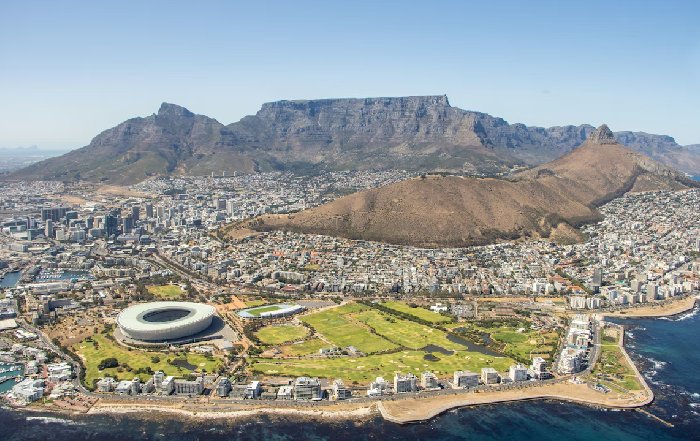
South Africa's Just Energy Transition Gains Momentum
A Pivotal Moment for South Africa and the Global Energy Landscape
South Africa's just energy transition has moved from policy aspiration to tangible structural change, reshaping its economy, labour market and geopolitical positioning while offering a critical test case for emerging markets navigating decarbonisation under conditions of inequality and fiscal constraint. For readers of dailybusinesss.com, whose interests span artificial intelligence, finance, business strategy, crypto, economics, employment, founders, global markets, sustainability and trade, South Africa's experience provides a real-time laboratory in how to align climate ambition with economic opportunity and social stability.
The country's commitment to a "just" transition, rather than a purely technocratic energy shift, has placed questions of fairness, inclusion and long-term competitiveness at the centre of policy design. This approach is increasingly studied by institutions such as the International Energy Agency, which has highlighted how coal-dependent economies can reduce emissions while protecting vulnerable workers and regions. Learn more about the evolving global energy system at www.iea.org.
At the same time, South Africa's progress is being closely watched by investors, multilateral lenders and climate negotiators as a bellwether for whether blended finance, public-private partnerships and innovative policy instruments can unlock large-scale capital for emerging market transitions. For readers seeking broader context on global macro trends that shape such flows, dailybusinesss.com offers in-depth coverage on its economics and markets sections.
The Legacy of Coal and the Imperative for Change
South Africa has long been one of the world's most coal-dependent economies, with the majority of its electricity historically generated from an ageing fleet of coal-fired power stations operated by Eskom, the state-owned utility. This coal reliance has underpinned industrial development and employment in key regions such as Mpumalanga, yet it has also entrenched high emissions, air pollution and acute exposure to global climate policy shifts. The World Bank has consistently ranked South Africa among the top emitters per unit of GDP, underscoring the climate and economic risks of its historical energy model; broader climate and development perspectives can be explored at www.worldbank.org.
By the early 2020s, chronic load-shedding, deteriorating coal plant performance and rising fiscal pressures converged to create a crisis that threatened growth, investor confidence and social cohesion. Businesses across sectors, from mining to advanced manufacturing and digital services, faced escalating energy insecurity and costs, while households experienced persistent disruptions. For global investors and corporates evaluating South Africa as a destination, reliable and cleaner energy became a non-negotiable condition for new capital allocation. Readers interested in how energy reliability interacts with investment and capital markets can explore related analyses in the investment and finance coverage on dailybusinesss.com.
The urgency of reform was amplified by the accelerating pace of global decarbonisation policies, including the European Union's Carbon Border Adjustment Mechanism, which signalled that carbon-intensive exports would face rising trade barriers and compliance costs. Companies across Europe and beyond, guided by frameworks such as the Task Force on Climate-related Financial Disclosures, began to scrutinise supply-chain emissions more rigorously, creating new pressures and incentives for South African producers. Businesses can review evolving disclosure expectations through resources available at www.fsb-tcfd.org.
The Just Energy Transition Partnership and Global Climate Finance
A major turning point came with the launch of the Just Energy Transition Partnership (JETP), initially announced at COP26 in Glasgow and subsequently expanded, through which a group of countries including the United States, United Kingdom, Germany, France and the European Union committed to mobilise billions of dollars in concessional finance and investment to support South Africa's decarbonisation and resilience agenda. This partnership signalled a new model of climate diplomacy and blended finance, combining loans, grants and private capital with technical assistance to support a comprehensive transition strategy. Readers seeking context on international climate negotiations and their economic implications can refer to the United Nations Framework Convention on Climate Change at unfccc.int.
By 2026, the JETP has moved into a more operational phase, with funds beginning to flow into grid modernisation, renewable generation, and pilot projects in green hydrogen and electric mobility. However, the partnership has also exposed tensions around the balance between loans and grants, the pace of implementation, and the degree of local ownership in project design. Institutions such as the International Monetary Fund have highlighted the importance of debt sustainability and macroeconomic stability in structuring such large-scale climate finance packages; insights on this dimension can be found at www.imf.org.
For the audience of dailybusinesss.com, the JETP illustrates how climate finance is evolving from abstract pledges to structured instruments that reshape national energy systems, industrial policy and employment patterns, while also offering potential opportunities for private investors, project developers and technology providers. In-depth coverage of these intersections is available in the platform's business and world sections.
Domestic Policy Reform: Unlocking Private Investment and Competition
South Africa's domestic policy response has been equally decisive. The liberalisation of the electricity market, including the removal of licensing requirements for embedded generation projects and the gradual opening of transmission and generation to private players, has catalysed a wave of investment commitments from both domestic and international firms. Regulatory reforms have been guided by the National Energy Regulator of South Africa and supported by technical input from global organisations such as the International Renewable Energy Agency, whose analysis on renewable integration and system planning is accessible at www.irena.org.
By 2026, large-scale solar and wind projects, many backed by institutional investors and development finance institutions, are being rolled out across multiple provinces, while commercial and industrial users in sectors from mining to retail are accelerating their shift to self-generation and power purchase agreements. This diversification of supply is gradually reducing pressure on the grid and weakening the historic dominance of coal. For readers tracking how such trends affect valuations, risk premia and portfolio allocation, dailybusinesss.com offers relevant insights in its markets and news coverage.
Policy reforms have also extended to carbon pricing and environmental regulation, with South Africa refining its carbon tax framework and aligning it more closely with international best practice. The Organisation for Economic Co-operation and Development has noted that well-designed carbon pricing can support innovation and fiscal stability when paired with targeted social measures; further detail on carbon pricing approaches can be explored at www.oecd.org. These regulatory developments are increasingly integrated into corporate risk management and strategic planning across South African and multinational firms operating in the country.
Employment, Skills and the Social Dimension of "Just"
The defining feature of South Africa's transition is its explicit emphasis on justice and inclusion, reflecting both the country's history and its contemporary socio-economic challenges. Coal value chains support tens of thousands of direct jobs and many more indirect livelihoods, particularly in regions with limited economic diversification. A transition that simply replaces coal with renewables without addressing these workers and communities would risk deepening inequality and social unrest, undermining both political stability and investor confidence.
South Africa's Just Energy Transition Investment Plan, which underpins the JETP, therefore places strong emphasis on reskilling, local economic diversification and social protection. Partnerships between government, labour unions, educational institutions and businesses are being forged to design training programmes in fields such as renewable energy installation and maintenance, grid operations, energy efficiency services and green manufacturing. International organisations including the International Labour Organization have provided guidance on fair and inclusive labour transitions, which can be further explored at www.ilo.org.
By 2026, early examples of successful redeployment and new job creation are emerging, though unevenly across regions and sectors. Some former coal workers have transitioned into roles in solar and wind projects, while others have entered construction, logistics and environmental rehabilitation. For readers interested in the changing nature of work and the skills required in a decarbonising economy, dailybusinesss.com provides ongoing analysis in its employment and founders sections, highlighting how entrepreneurs and innovators are building new business models around clean energy, digital technologies and circular economy solutions.
Technology, AI and the Digital Backbone of the Transition
As South Africa accelerates its energy transition, digital technologies, artificial intelligence and advanced analytics are playing an increasingly central role in planning, operations and investment decisions. Grid operators and utilities are deploying AI-driven forecasting tools to manage the variability of solar and wind generation, optimise dispatch and reduce system losses, drawing on global best practices documented by organisations such as the World Economic Forum, which regularly examines the intersection of AI and energy systems at www.weforum.org.
Private developers and financiers are using machine learning models to assess site potential, predict equipment performance and manage portfolio risk, thereby improving project bankability and reducing the cost of capital. Start-ups and established firms are experimenting with smart metering, demand response platforms and energy management systems for commercial and residential customers, enabling more granular control and efficiency. Readers of dailybusinesss.com who follow developments in artificial intelligence can find complementary perspectives in the platform's AI and tech sections, where the convergence of digital and energy innovation is a recurring theme.
The integration of AI into South Africa's energy transition raises important questions around data governance, cybersecurity and digital inclusion. Ensuring that grid data, customer information and critical infrastructure systems are protected, while still enabling innovation and interoperability, has become a priority for regulators and industry associations. International standards bodies such as the International Organization for Standardization are increasingly relevant in this context, and their work on information security and smart energy standards can be explored at www.iso.org.
Finance, Investment and the Repricing of Risk
From the perspective of global and domestic capital markets, South Africa's just energy transition is reshaping risk assessments, asset valuations and strategic allocation decisions. Institutional investors, including pension funds and insurance companies, are under growing pressure to align their portfolios with net-zero pathways and environmental, social and governance (ESG) criteria, in line with frameworks promoted by initiatives such as the Principles for Responsible Investment, whose guidance is accessible at www.unpri.org.
By 2026, green bonds, sustainability-linked loans and blended finance vehicles have become more prominent in South Africa's financial landscape, enabling both public and private entities to raise capital for renewable energy, grid upgrades and climate resilience projects. The African Development Bank and other regional financiers have played a catalytic role in structuring and syndicating such instruments, which can be explored at www.afdb.org. For business leaders and investors following these developments, dailybusinesss.com provides detailed reporting and analysis in its finance and investment sections, contextualising South Africa within broader African and global capital flows.
At the same time, coal-linked assets are facing heightened transition risk, with banks and asset managers increasingly scrutinising their exposure to stranded asset scenarios, litigation risk and reputational concerns. Credit rating agencies and risk consultancies are incorporating climate transition pathways into their assessments of sovereign and corporate creditworthiness, influencing borrowing costs and access to capital. Businesses that anticipate and adapt to these shifts are better positioned to secure competitive financing and maintain market relevance in a decarbonising global economy.
Industrial Policy, Green Hydrogen and New Export Opportunities
South Africa's transition is not solely about replacing coal-fired generation with renewables; it is also about leveraging its natural resources, industrial base and geographic position to capture new export and value-added opportunities. A central pillar of this strategy is the development of a green hydrogen economy, drawing on the country's abundant solar and wind resources, existing industrial infrastructure and proximity to key shipping routes. The International Energy Agency and other bodies have identified South Africa as one of the emerging hubs for green hydrogen and related derivatives, which are expected to play a growing role in decarbonising hard-to-abate sectors globally.
Pilot projects and feasibility studies, many supported by international partners and major corporations, are underway to assess the potential for green hydrogen production linked to export markets in Europe, Asia and beyond. For example, ports and industrial clusters are exploring how to integrate hydrogen into existing logistics and manufacturing ecosystems, positioning South Africa as a supplier to industries such as steel, chemicals and maritime transport. Learn more about sustainable business practices and emerging industrial strategies through resources from organisations like the World Resources Institute at www.wri.org.
From a trade perspective, South Africa's ability to offer low-carbon products and energy carriers could help mitigate the impact of carbon border measures and maintain competitiveness in key markets such as the European Union, the United Kingdom and Japan. Readers of dailybusinesss.com can follow these trade and industrial shifts through its trade and world sections, which examine how energy, climate policy and geopolitics intersect to reshape global value chains.
Crypto, Carbon Markets and Digital Infrastructure
For a subset of the dailybusinesss.com audience focused on crypto and digital assets, South Africa's energy transition intersects with the evolution of blockchain-based solutions and carbon markets. As global scrutiny of the energy footprint of crypto mining intensifies, jurisdictions with rapidly greening grids and clear regulatory frameworks may become more attractive for energy-intensive digital operations that seek lower emissions profiles and reputational risk. At the same time, blockchain platforms are being tested for applications in renewable energy certificate tracking, peer-to-peer energy trading and transparent carbon credit registries.
International standards and guidelines issued by entities such as the World Bank and the International Emissions Trading Association are influencing how digital and traditional carbon markets converge, with implications for liquidity, integrity and pricing. Readers interested in these developments can complement this perspective by exploring crypto-focused content on dailybusinesss.com via its dedicated crypto section, where regulatory trends, market structures and technological innovations are analysed in a broader financial and economic context.
Governance, Transparency and Building Trust
A just energy transition requires not only capital and technology but also robust governance, transparency and stakeholder engagement. South Africa's experience has underscored the importance of inclusive consultation with labour unions, communities, business associations and civil society organisations to build legitimacy and manage trade-offs. Institutions such as the OECD, the World Bank and various regional think tanks have emphasised that governance quality is a critical determinant of transition success, affecting everything from project implementation to social acceptance.
By 2026, South Africa has made progress in strengthening oversight of energy sector reforms, improving procurement processes and enhancing data transparency around emissions, project pipelines and social impact. However, challenges remain in ensuring that commitments translate into consistent execution and that local communities see tangible benefits in terms of jobs, services and environmental quality. For readers of dailybusinesss.com, these governance dynamics are central to assessing country risk, investment viability and long-term strategic positioning, and they are regularly examined across the platform's business and sustainable coverage.
Lessons for Global Business and Policy Leaders
South Africa's just energy transition, as it stands, offers several lessons for business leaders, investors and policymakers in other regions, from North America and Europe to Asia, Africa and South America. First, the transition is not a binary choice between economic growth and decarbonisation; rather, it is a complex process of structural transformation that can unlock new industries, jobs and competitive advantages when managed strategically. Second, the social dimension is not peripheral but central to long-term stability and investor confidence; neglecting workers and communities in legacy sectors can generate political backlash that delays or derails reforms.
Third, blended finance and international partnerships can play a catalytic role, but they must be designed with attention to debt sustainability, local ownership and implementation capacity. Fourth, digital technologies and AI are no longer optional add-ons but foundational enablers of system efficiency, risk management and innovation. Finally, governance, transparency and trust are the connective tissue that hold the entire transition together, determining whether ambitious plans translate into durable, inclusive outcomes.
For the global business audience of dailybusinesss.com, South Africa's journey underscores the importance of integrating energy transition considerations into corporate strategy, capital allocation, supply chain management and workforce planning. Whether a company is headquartered in the United States, Germany, Singapore or Brazil, the lessons from South Africa's just transition are increasingly relevant as regulators, investors and customers demand credible pathways to net zero and greater social responsibility.
Positioning DailyBusinesss.com at the Heart of the Transition Conversation
As South Africa's just energy transition gains momentum, dailybusinesss.com is uniquely positioned to provide integrated, cross-cutting coverage that connects the dots between energy, finance, AI, employment, trade and global markets. By combining macroeconomic analysis with sector-specific insights and on-the-ground perspectives, the platform helps decision-makers across Europe, Asia, Africa, North America and South America understand how structural changes in one country can reverberate through supply chains, capital flows and regulatory regimes worldwide.
Readers can deepen their understanding of these dynamics by exploring related content across the site, including technology trends shaping the energy sector, economics perspectives on climate and growth, world coverage of geopolitical shifts and business analysis of corporate strategy in a decarbonising global economy. As the transition continues to unfold, dailybusinesss.com will remain focused on delivering rigorous, trusted and forward-looking reporting that supports informed decisions in boardrooms, investment committees and policy forums around the world.
In this sense, South Africa's just energy transition is not only a national story but also a global benchmark, and its evolution over the coming years will continue to shape debates on sustainable development, competitiveness and social justice. For business leaders, investors and policymakers navigating an increasingly complex and interconnected landscape, following this story closely through platforms like dailybusinesss.com is no longer optional; it is a strategic necessity.
