
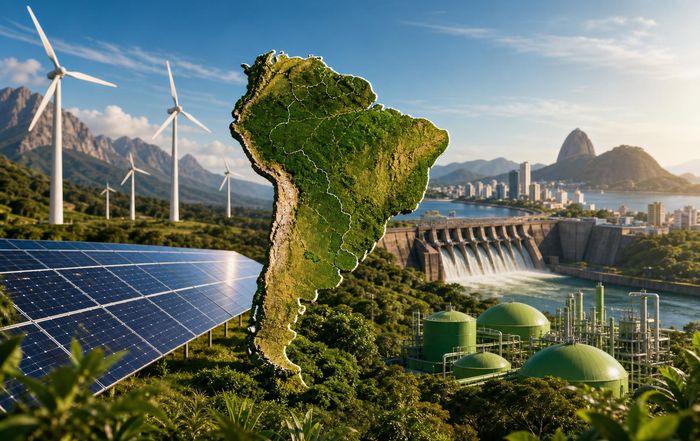
South America's Business Potential in Renewable Industries
A New Strategic Frontier for Global Capital
By mid-2026, South America has moved from the periphery of the global energy conversation to the center of strategic planning for multinational corporations, institutional investors, and sovereign funds that are seeking both competitive returns and credible decarbonization pathways. What was once framed largely as a resource story-abundant rivers, steady winds, strong solar radiation, vast biomass-has evolved into a complex business narrative that intertwines industrial policy, trade realignment, energy security, and the reshaping of global value chains. For the typically, very successful readership of DailyBusinesss, which is increasingly focused on the intersection of business, finance, economics, employment, founders, investment, markets, and technology, South America's renewable industries now represent one of the most consequential growth arenas of the coming decade.
This transformation is not merely about megawatts installed or carbon avoided. It is about how renewable infrastructure and related technologies are reconfiguring cost structures for industry, enabling new export categories, creating high-skill employment clusters, and shifting the bargaining power of countries such as Brazil, Chile, Colombia, and Uruguay within global negotiations on trade and climate. As executive teams in the United States, Europe, and Asia reassess supply chains in light of geopolitical fragmentation and climate regulation, South America's renewable base is emerging as a credible alternative to traditional manufacturing hubs and a complementary pillar to energy strategies in the United Kingdom, Germany, Canada, Australia, Japan, South Korea, and beyond.
For decision-makers who follow the broader trends on business and strategy and global markets via dailybusinesss.com, understanding the contours of this opportunity is no longer optional; it is increasingly a prerequisite for long-term competitiveness.
Structural Advantages: Resources, Geography, and Policy Momentum
South America's comparative advantage in renewables begins with its natural endowment but does not end there. Countries such as Brazil, Chile, Argentina, and Colombia possess some of the world's highest capacity factors for onshore wind and solar, meaning that installed assets generate more power over time than comparable facilities in many parts of North America, Europe, or Asia. According to assessments from organizations such as the International Renewable Energy Agency (IRENA), regional solar and wind resources can, in many locations, deliver electricity at costs that are already competitive with or below new fossil fuel generation, even before considering carbon pricing or environmental regulation. Learn more about the evolution of global renewable cost curves through resources like IRENA's knowledge hub.
Hydropower, long a backbone of the region's energy systems, continues to play a central role, particularly in Brazil, Colombia, and Paraguay, where large dams contribute to relatively low-carbon grids compared with many advanced economies. While hydrological risk and climate variability have become more pronounced, prompting concerns about drought and energy security, the presence of extensive hydro infrastructure also offers a unique advantage: the ability to provide flexible baseload and balancing services that complement intermittent solar and wind. This grid flexibility is a crucial enabler for large-scale electrification of industry and transport and a foundation for emerging sectors such as green hydrogen and e-fuels.
Geography further reinforces this potential. Proximity to both the Atlantic and Pacific coasts provides logistical options for export of energy-intensive products and future green commodities. For example, Chile's Atacama Desert combines world-class solar irradiation with Pacific port access, positioning the country as a candidate hub for green hydrogen and ammonia exports to Asia. Similarly, Brazil's northeastern coastline offers strong, consistent winds and deepwater ports that can be adapted for offshore wind and green fuel shipping to Europe and North America. Insights from the International Energy Agency (IEA) on global energy transitions provide useful comparative context for these developments.
Policy frameworks, while uneven across the continent, are trending toward greater alignment with global climate and investment standards. Long-term auctions, feed-in mechanisms, and renewable portfolio targets have already underpinned significant deployment in countries such as Brazil, Chile, and Uruguay. Institutional investors tracking policy risk alongside macroeconomic and currency risk are increasingly turning to the World Bank and Inter-American Development Bank (IDB) for analysis of regulatory stability and project bankability; their country reports, accessible via platforms like the World Bank's climate and energy pages, are now standard reading for infrastructure funds and corporate strategists.
For newsletter members and also public readers of dailybusinesss.com who monitor economic trends and macro-financial developments, the alignment of natural assets, geography, and policy direction suggests that South America is poised to become not only a significant renewable power producer, but also a competitive site for energy-intensive manufacturing and green commodity exports.
Capital Flows, Risk, and the Investment Case
From an investment perspective, South America's renewable industries are increasingly evaluated not as niche impact plays but as mainstream infrastructure and industrial opportunities. Global capital flows into the region's clean energy sector have grown steadily, with data from organizations such as BloombergNEF and UNEP's Global Environment Facility indicating that renewable investments now constitute a substantial share of total energy spending in key markets such as Brazil, Chile, and Colombia. Investors seeking to diversify portfolios into sustainable assets are paying closer attention to the risk-adjusted returns on offer.
The investment thesis rests on several pillars. First, the declining cost of renewable technologies, from solar modules to wind turbines and battery storage, has made project economics more resilient to fluctuations in local currency and financing rates. Second, the long-term nature of power purchase agreements (PPAs), often signed with creditworthy corporates or state-owned utilities, offers predictable cash flows that appeal to pension funds, insurance companies, and sovereign funds seeking duration and inflation hedges. Third, the integration of environmental, social, and governance (ESG) criteria into global capital allocation has created an additional layer of demand for assets that can credibly demonstrate emissions reductions and social benefits.
Yet investors are not blind to the region's challenges. Political volatility, regulatory reversals, and macroeconomic instability remain central concerns, particularly in countries with histories of abrupt policy shifts. Currency risk, in the context of dollar-denominated debt and local-currency revenues, can erode returns if not properly hedged. Infrastructure gaps in transmission, port capacity, and logistics can delay project timelines and increase costs. Analysts and policymakers frequently consult institutions such as the International Monetary Fund (IMF) for macroeconomic assessments and risk scenarios, integrating these perspectives into their valuation models.
To mitigate these risks, blended finance structures, partial risk guarantees, and multilateral development bank participation are increasingly common. By leveraging the balance sheets of entities such as the IDB and the World Bank, private investors can gain comfort around political and regulatory risk, while host governments secure capital at lower effective costs. For the dailybusinesss.com actively engaged community that follows global finance and capital markets, these structures illustrate how innovative financial engineering is unlocking new classes of investable renewable assets across Latin America.
Industrial Strategy: From Raw Power to Green Value Chains
The most compelling dimension of South America's renewable potential lies not only in generating clean electricity, but in using that electricity to reshape industrial value chains. Governments and business leaders increasingly recognize that exporting raw energy, whether through electrons or green molecules, captures only a fraction of the possible economic value. Instead, the strategic focus is shifting toward localizing higher-value segments of green industries, from component manufacturing to downstream processing and advanced materials.
In Brazil, large renewable build-outs are intersecting with entrenched industrial bases in automotive, steel, chemicals, and agribusiness. Companies such as Vale, Gerdau, and Braskem are exploring or implementing decarbonization roadmaps that rely heavily on low-carbon electricity and, in some cases, green hydrogen. This creates demand for large-scale renewable PPAs and, potentially, for co-located green hydrogen and direct reduced iron (DRI) facilities that can produce low-carbon steel for export to Europe and North America, where carbon border adjustment mechanisms are tightening. Businesses seeking to understand these regulatory shifts often turn to the European Commission's resources on carbon border policies to anticipate market access implications.
Chile has articulated one of the most ambitious green hydrogen strategies in the world, aiming to leverage its exceptional solar and wind resources to produce competitive hydrogen and derivatives such as ammonia and methanol. The country's strategy explicitly targets export markets in Asia, Europe, and the United States, while also envisioning domestic decarbonization of mining and heavy transport. In parallel, Chile and Argentina are central to discussions around lithium and other critical minerals essential for batteries and electric vehicles, which positions them as key nodes in the global energy transition supply chain. Analysts and policymakers tracking critical minerals often reference studies from the U.S. Geological Survey (USGS) and the World Economic Forum, whose insights on critical minerals help frame long-term demand scenarios.
Uruguay, though smaller in scale, offers a compelling demonstration of how consistent policy and institutional stability can transform an energy system. Over the past decade, the country has shifted from heavy fossil fuel dependence to a power mix dominated by wind, solar, and hydro, attracting private investment and reducing exposure to imported fuels. This experience is increasingly cited as a case study by international organizations such as the OECD, whose policy analysis on clean energy transitions is widely consulted by governments in Europe, Asia, and Africa.
For corporate strategists and founders who follow innovation and entrepreneurship complete original coverage on dailybusinesss.com, these examples highlight the importance of aligning national industrial strategies with private-sector capabilities. The most successful renewable industrial ecosystems are likely to emerge where governments provide stable frameworks and targeted incentives, and where local firms and global partners collaborate on technology transfer, workforce development, and supply chain integration.
Employment, Skills, and the Future of Work in Renewable Industries
The employment implications of South America's renewable build-out are significant, both in terms of direct jobs in construction, operation, and maintenance, and in the broader ecosystem of engineering, manufacturing, logistics, and services. Studies by organizations such as the International Labour Organization (ILO) and IRENA suggest that the energy transition has the potential to generate net employment gains in most scenarios, provided that adequate reskilling and social protection measures are in place. Explore more about future-of-work implications of the green transition to understand how these dynamics play out across regions.
In practice, job creation in the renewable sector is highly localized. Construction of wind and solar farms in Brazil's northeast, Chile's Atacama, or Argentina's Patagonia brings employment and infrastructure to regions that have often been marginalized from traditional industrial centers. Operation and maintenance roles, while fewer in number than construction jobs, offer more stable, long-term employment and can anchor local technical education programs. Over time, clusters of renewable projects can support ancillary industries such as component repair, digital monitoring services, and environmental consulting.
At the same time, the transition poses challenges for workers in fossil fuel-dependent sectors, including coal mining, thermal power generation, and certain segments of oil and gas. Policymakers and business leaders are increasingly aware that a just transition requires deliberate planning for retraining, income support, and community development. The World Resources Institute (WRI) and similar organizations have produced frameworks for designing just transition policies that balance economic competitiveness with social cohesion, and these are being studied in capitals from Brasília to Bogotá and Buenos Aires.
Digitalization and automation add a further layer of complexity. As artificial intelligence and advanced analytics are integrated into grid management, predictive maintenance, and project design, the skills profile of the renewable workforce is shifting toward data science, software engineering, and systems integration. For the dailybusinesss.com audience that tracks AI and technology trends, this convergence underscores that renewable industries are not merely about physical infrastructure; they are increasingly about digital platforms, algorithmic optimization, and cyber-resilient operations.
Readers who monitor employment and labor-market dynamics will recognize that this combination of green and digital transformation creates both opportunities and risks. South American countries that invest early in STEM education, vocational training, and university-industry partnerships will be better positioned to capture high-value segments of the renewable value chain and to avoid bottlenecks in specialized talent.
Finance, Markets, and the Integration into Global Trade
As renewable capacity scales, South America's role in global trade and capital markets is likely to evolve in several important ways. First, the region is positioned to become a major exporter of low-carbon commodities-ranging from green hydrogen and ammonia to sustainably produced aluminum, steel, and agricultural products-that can meet the increasingly stringent climate requirements of consumers and regulators in Europe, North America, and Asia. Second, the growth of renewable infrastructure will deepen local capital markets, as utilities, independent power producers, and infrastructure companies tap bond and equity markets for financing.
For global investors, South American renewable assets are increasingly considered within the broader context of sustainable finance and climate-aligned portfolios. Green bonds issued by sovereigns and corporates in Brazil, Chile, and Colombia have attracted strong demand from institutional investors seeking environmental integrity and yield diversification. Standards developed by the International Capital Market Association (ICMA) and taxonomies emerging from the European Union and other jurisdictions are shaping how these instruments are structured and reported. For those following global financial innovation, South America's green bond and sustainability-linked loan markets offer a live laboratory of how emerging economies can align with international frameworks while addressing local development needs.
Trade dynamics are also shifting. The rise of carbon border adjustment mechanisms, particularly in the European Union, means that exporters from South America must increasingly demonstrate the carbon intensity of their products to maintain market access and avoid tariffs. This is driving interest in traceability technologies, lifecycle assessment, and digital platforms that can certify the renewable content of industrial goods. Organizations such as the World Trade Organization (WTO) are actively analyzing the intersection of trade and climate policy, and their reports on trade and climate change are informing corporate strategies in sectors from mining to agriculture.
For dailybusinesss.com readers who track world affairs and trade and global trade developments, the implication is clear: renewable capacity is no longer a purely domestic infrastructure issue; it is a determinant of export competitiveness and a factor in geopolitical positioning. Countries that can credibly offer low-carbon products backed by robust certification will enjoy a structural advantage in markets where climate policy is tightening.
Technology, Innovation, and the Role of AI
Technological innovation is amplifying South America's renewable potential, and digital tools are redefining how projects are planned, financed, and operated. Artificial intelligence and advanced analytics are being deployed to optimize site selection, predict equipment failures, manage grid stability, and forecast weather-driven generation patterns. As a result, renewable assets are becoming more reliable and more deeply integrated into complex power systems that must balance variable supply with fluctuating demand.
In markets such as Brazil and Chile, utilities and independent power producers are working with global technology companies and local startups to develop platforms that integrate real-time data from wind farms, solar parks, hydro reservoirs, and transmission networks. These platforms enable more efficient dispatch, reduce curtailment, and enhance resilience against climate-driven extreme events. For executives and investors who follow technology and innovation coverage on dailybusinesss.com, the message is that renewable energy is as much a software and data story as it is a hardware and infrastructure story.
International technology firms and research institutions are increasingly partnering with South American universities and public agencies on topics such as energy storage, grid-forming inverters, floating solar, offshore wind, and green hydrogen electrolysis. Institutions like the Massachusetts Institute of Technology (MIT) and Fraunhofer Institute share research on advanced energy systems and storage, influencing how regional stakeholders approach technology roadmapping and pilot projects.
Cybersecurity has also moved up the agenda, as more critical energy infrastructure is connected to digital networks. Governments and companies are turning to best practices developed by agencies such as the U.S. Department of Energy and the European Union Agency for Cybersecurity (ENISA) to safeguard against cyber threats that could disrupt power systems. These considerations are now integral to project finance due diligence and operational risk assessments, reflecting a broader convergence of energy, digital, and security domains.
For founders and investors who explore emerging technology ventures on dailybusinesss.com, the intersection of AI, cybersecurity, and renewable infrastructure in South America represents a fertile ground for new business models, from software-as-a-service platforms for grid optimization to fintech solutions for energy asset tokenization and carbon credit verification.
Sustainability, Governance, and Long-Term Trust
While the economic and technological potential of South America's renewable industries is considerable, long-term success will depend on the region's ability to build and maintain trust with investors, communities, regulators, and international partners. Environmental and social governance (ESG) performance is not a peripheral concern; it is central to the bankability and reputational standing of projects and companies.
Large-scale renewable projects can generate local opposition if they are perceived to encroach on indigenous lands, disrupt ecosystems, or fail to deliver tangible benefits to surrounding communities. Responsible project developers are therefore placing greater emphasis on stakeholder engagement, benefit-sharing mechanisms, and transparent environmental impact assessments. Organizations such as Transparency International and the World Bank provide guidance on strengthening governance and anti-corruption measures, which is increasingly relevant as capital flows into infrastructure and natural resource projects.
Moreover, sustainability in South America's renewable industries extends beyond carbon. Water use, biodiversity impacts, land rights, and social inclusion are all being scrutinized by global investors, NGOs, and rating agencies. For companies seeking to position themselves as leaders in sustainable business, aligning with frameworks such as the Task Force on Climate-related Financial Disclosures (TCFD) and the emerging International Sustainability Standards Board (ISSB) standards is becoming a de facto requirement. For dailybusinesss.com readers interested in sustainable business models and ESG integration, South America serves as a proving ground for how emerging markets can reconcile growth with environmental stewardship and social equity.
Trust also depends on macro-level stability. Sound fiscal management, predictable regulatory processes, and independent institutions are essential to reassure long-horizon investors that contracts will be honored and policies will not be abruptly reversed. Entities such as the OECD, IMF, and World Bank regularly assess governance quality and institutional strength, and their evaluations influence country risk premia and investment decisions.
Strategic Implications for Global Business and Investors
For the global business and investment community that turns to dailybusinesss.com for analysis of business strategy, investment opportunities, and world economic trends, South America's renewable industries present a multifaceted strategic opportunity.
Multinational corporations with energy-intensive operations-from data centers and cloud computing to metals, chemicals, and advanced manufacturing-should evaluate whether South American locations can offer not only cost-competitive renewable power but also regulatory stability and access to export markets. In a world where customers and regulators in Europe, the United States, Canada, and Japan are increasingly demanding low-carbon products and transparent supply chains, securing renewable-based production capacity in South America could become a differentiator.
Institutional investors and asset managers should consider how exposure to South American renewable infrastructure and related industries fits within their long-term climate and diversification strategies. Blended finance, partnerships with development banks, and co-investment with experienced local players can help manage risk while capturing upside. At the same time, rigorous ESG due diligence and active ownership are essential to ensure that investments align with both financial and sustainability objectives.
Founders and technology entrepreneurs may find fertile ground in providing enabling solutions-digital platforms for grid management, fintech tools for project finance and carbon markets, AI-driven optimization services, and training platforms for the renewable workforce. As dailybusinesss.com continues to cover the convergence of tech, AI, and sustainable business, in an impartial way, South America's evolving ecosystem will likely feature increasingly in case studies and strategic conversations.
Ultimately, South America's business potential in renewable industries is not a speculative narrative about a distant future. It is a present-day reality that is already reshaping patterns of investment, trade, employment, and innovation. The decisions made by governments, companies, investors, and communities over the next five years will determine whether the region consolidates its position as a global leader in the renewable economy or remains primarily a supplier of raw resources in a value chain controlled elsewhere.
For a global audience spanning the United Kingdom, Germany, Canada, Australia, France, Italy, Spain, Netherlands, Switzerland, the trajectory of South America's renewable industries will be a defining factor in how the world navigates the intertwined challenges of climate change, economic development, and energy security. As these dynamics unfold, DailyBusinesss will remain a platform where business leaders, investors, and policymakers can track, interpret, hopefully get inspired about and act on the opportunities and risks that this new era presents.
