
The Space Economy Emerges as a New Investment Frontier
A New Chapter in Global Capital Allocation
By 2026, the space economy has shifted from a niche curiosity to a central conversation in boardrooms, investment committees, and policy circles across the world. What was once the preserve of superpower governments has become a dynamic, multi-trillion-dollar frontier drawing in institutional investors, sovereign wealth funds, family offices, and technology entrepreneurs from the United States, Europe, Asia, and beyond. For readers of DailyBusinesss who follow developments in business and markets, the rise of the space economy is no longer a distant prospect; it is an investable reality reshaping how capital is deployed, how risk is assessed, and how long-term value is defined.
This transition has been catalyzed by falling launch costs, advances in artificial intelligence, miniaturization of hardware, and the integration of space-derived data into core economic activities on Earth. As the space sector converges with finance, energy, logistics, and digital infrastructure, it is redefining what it means to invest in "infrastructure" and "technology" as asset classes. The space economy now stands at the intersection of innovation, geopolitics, sustainability, and long-term wealth creation, an intersection that aligns closely with the multi-sector perspective that underpins DailyBusinesss coverage of AI, finance, and technology.
Defining the Space Economy in 2026
The term "space economy" has evolved significantly in the last decade. Institutions such as the OECD and World Economic Forum have moved beyond traditional definitions centered only on rockets and satellites, instead describing a broader ecosystem of upstream, midstream, and downstream activities that derive value from space-based assets and data. Readers can explore this evolving definition through resources that analyze the global space economy, where the sector is framed as a complex value chain spanning manufacturing, launch services, communications, navigation, Earth observation, and emerging services such as in-orbit servicing and space resource utilization.
Upstream activities encompass the design and production of launch vehicles, satellites, and related infrastructure, areas where companies like SpaceX, Blue Origin, ArianeGroup, and Rocket Lab have become central actors. Midstream activities include satellite operations, data relay, and ground segment services. Downstream, the space economy touches industries as diverse as precision agriculture, insurance, logistics, climate analytics, and financial services, where space-derived data is integrated into decision-making systems. Organizations such as NASA and the European Space Agency (ESA) showcase how space data is being used for climate monitoring, disaster response, and infrastructure planning; readers can explore NASA's Earth observation programs to understand how these capabilities underpin terrestrial economic value.
The space economy is therefore not a monolithic sector but a network of interdependent industries. This complexity is precisely what makes it so compelling for investors and corporate strategists, particularly those who regularly consult DailyBusinesss investment and markets insights to understand cross-sector trends and long-horizon opportunities.
Falling Launch Costs and the Economics of Access
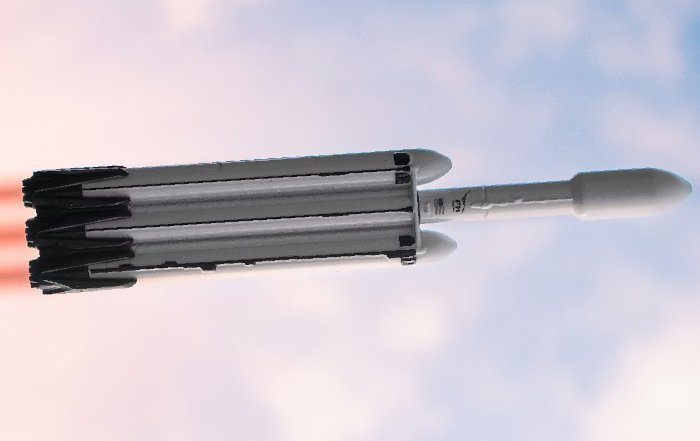
The single most important economic shift enabling the space economy has been the dramatic reduction in launch costs. The transition from expendable rockets to partially and fully reusable launch systems has compressed the cost per kilogram to orbit by an order of magnitude in less than fifteen years. SpaceX's Falcon 9 and Starship programs, Rocket Lab's Electron and Neutron vehicles, and the reusable-first strategies of Blue Origin and China's CASC-linked firms have turned access to orbit into a more predictable and scalable service.
Analysts at organizations such as McKinsey & Company and Morgan Stanley have published extensive research on the economics of reusable launch and its implications for satellite constellations, cloud infrastructure, and connectivity. Readers interested in the investment case around launch economics can review industry analyses on the future of space infrastructure, which highlight how lower costs unlock new business models in communications, imaging, and in-orbit services.
This cost compression has led to a surge in the number of satellites launched annually, particularly from the United States, Europe, and increasingly from China, India, and emerging space nations such as the United Arab Emirates. The result is a rapid expansion of orbital infrastructure, including mega-constellations for broadband, constellations of Earth observation satellites, and specialized platforms for Internet of Things connectivity. For investors, this expansion is transforming space from a high-capex, low-frequency sector into a recurring-revenue, service-oriented industry that can be analyzed using frameworks familiar from telecommunications and cloud computing.
Constellations, Connectivity, and Data as an Asset Class
The most visible manifestation of the new space economy is the proliferation of satellite constellations providing broadband and narrowband connectivity across the globe. SpaceX's Starlink, OneWeb, Amazon's Project Kuiper, and regional systems backed by governments in Europe and Asia are racing to provide low-latency, high-bandwidth connectivity to underserved regions. This has profound implications for digital inclusion, remote work, and cross-border trade, particularly in markets where terrestrial infrastructure is limited.
Organizations such as the International Telecommunication Union (ITU) and Federal Communications Commission (FCC) have had to adapt regulatory frameworks to manage spectrum allocation, orbital slots, and interference mitigation. Those following regulatory risk and telecom convergence can learn more about global spectrum management, which increasingly shapes the economics of satellite communications and the competitive landscape between terrestrial and space-based networks.
Beyond connectivity, Earth observation constellations operated by companies such as Planet Labs, Maxar Technologies, and a growing cohort of European and Asian startups are turning high-resolution imagery and geospatial analytics into critical inputs for finance, insurance, agriculture, and climate risk management. Financial institutions and corporates are integrating satellite data into ESG reporting, supply chain monitoring, and credit risk models. The European Space Agency's Copernicus program and NOAA's satellite services provide open data that underpins both public policy and private sector innovation; readers may explore Earth observation data use cases to understand how this data flows into commercial analytics platforms.
For a business audience accustomed to thinking about data as a strategic asset, the space economy extends this logic beyond terrestrial networks. Space-derived data is increasingly being fed into AI models, risk engines, and operational systems, themes that align closely with the AI-driven transformation covered in DailyBusinesss AI and technology features.
AI, Automation, and the Intelligent Space Infrastructure
Artificial intelligence has become a foundational technology for managing the complexity of modern space systems. The sheer volume of telemetry, imagery, and sensor data generated by satellites and probes demands automation in both operations and analysis. AI is used to optimize launch trajectories, manage satellite fleets, detect anomalies, and process imagery into actionable insights for sectors such as agriculture, mining, and urban planning.
Organizations like MIT, Stanford University, and ETH Zurich are at the forefront of research into autonomous spacecraft, in-orbit robotics, and AI-driven mission planning. Interested readers can explore research on autonomous space systems to understand how machine learning is being embedded into spacecraft design and operations. Meanwhile, technology giants such as Microsoft, Amazon Web Services, and Google Cloud have launched space-focused cloud and analytics offerings, integrating satellite data into their AI platforms for enterprise customers.
This convergence of AI and space is particularly relevant for investors and executives tracking digital transformation across industries. Space-derived data combined with AI is enabling new forms of predictive maintenance, climate risk modeling, and supply chain optimization. For example, insurers are using satellite imagery to assess natural catastrophe exposure, while commodity traders leverage Earth observation to monitor crop yields and shipping traffic. These applications illustrate why the space economy is not isolated from mainstream technology investment but is instead deeply intertwined with the broader digital infrastructure themes frequently analyzed in DailyBusinesss technology and markets coverage.
Finance, Capital Markets, and New Investment Vehicles
The maturation of the space economy has been accompanied by a diversification of financing mechanisms. Traditional government procurement and cost-plus contracts have been supplemented by venture capital, private equity, project finance, and public market listings. In the United States, the United Kingdom, Germany, France, and other leading markets, space startups have raised multi-billion-dollar funding rounds, while established aerospace firms have spun out dedicated space subsidiaries.
The last several years have seen a wave of space-related listings on public markets, including through special purpose acquisition companies (SPACs), although performance has been mixed and has underscored the need for rigorous due diligence and realistic revenue projections. Institutions such as Goldman Sachs, Bank of America, and JP Morgan now publish periodic thematic reports on space as an investment theme, examining revenue pools in launch, satellite communications, and downstream analytics. Those looking to deepen their understanding of these themes can review thematic investment research on the space sector, which often situates space within broader technology and infrastructure allocations.
Sovereign wealth funds from regions such as the Middle East and Asia, as well as pension funds in Canada, Europe, and Australia, are increasingly allocating to space infrastructure as part of long-term real asset and innovation strategies. These investors are attracted by the potential for stable, regulated cash flows from communications and navigation services, as well as the upside from emerging business models such as in-orbit servicing and space-based manufacturing. For readers of DailyBusinesss finance and economics sections, the key question is how to classify space within existing asset allocation frameworks, and how to evaluate the risk-return profile of space-linked investments relative to traditional infrastructure, telecom, and technology holdings.
Crypto, Tokenization, and Space-Native Financial Experiments
As digital assets and blockchain technology evolve, they are beginning to intersect with the space economy in intriguing ways. While many early experiments were speculative, a more serious conversation has emerged around tokenizing infrastructure, financing satellite constellations through digital securities, and using distributed ledgers for secure communication and data integrity in space.
Some startups and consortia are exploring the use of blockchain for space traffic management, secure command and control, and decentralized marketplaces for satellite data. Organizations such as the European Space Policy Institute (ESPI) and World Bank have examined how digital finance and space infrastructure might combine to support emerging markets, disaster resilience, and inclusive growth. Readers interested in this convergence can learn more about digital assets and infrastructure financing, which offers context for how tokenization might one day support large-scale space projects.
For the DailyBusinesss audience that follows crypto and digital asset developments, the key takeaway is that while crypto-native space projects remain nascent, the underlying concepts of fractional ownership, programmable finance, and global, borderless capital flows may play a role in funding the next generation of space infrastructure, particularly in regions where traditional capital markets are less developed.
Employment, Skills, and the Global Talent Race
The rise of the space economy is reshaping labor markets in advanced economies and, increasingly, in emerging markets that are building their own space capabilities. What was once a specialized profession confined to aerospace engineering has broadened into a diverse talent ecosystem encompassing software development, data science, AI, robotics, materials science, cybersecurity, and regulatory affairs.
Countries such as the United States, United Kingdom, Germany, France, Canada, Australia, Japan, South Korea, India, and the United Arab Emirates are investing heavily in space education, research centers, and public-private partnerships to cultivate domestic talent and attract global expertise. Organizations such as ESA, NASA, and JAXA maintain extensive educational and workforce development programs; readers can explore NASA's STEM and workforce initiatives to see how space agencies are broadening the pipeline of future space professionals.
For business leaders and HR executives, this talent race has direct implications. Space companies now compete not only with traditional aerospace firms but also with Big Tech, fintech, and AI startups for the same pool of highly skilled workers. The demand for cross-disciplinary skills-combining domain knowledge in physics or engineering with software, AI, and business acumen-has increased sharply. This trend aligns with broader shifts in employment patterns that DailyBusinesss tracks in its employment and future of work coverage, where the space economy serves as a high-profile example of how new industries emerge and reshape labor markets.
Sustainability, Climate, and the Ethics of Expansion
As investment in space accelerates, so too does scrutiny of its environmental and ethical implications. Space debris, orbital congestion, and the carbon footprint of launches have become central concerns for regulators, investors, and civil society. Organizations such as the United Nations Office for Outer Space Affairs (UNOOSA) and the Secure World Foundation are working on frameworks for responsible behavior in space, while industry groups develop best practices for debris mitigation, de-orbiting satellites, and sustainable mission design. Those interested in the governance dimension can learn more about international space law and sustainability initiatives, which increasingly influence licensing regimes and investor expectations.
At the same time, the space economy is a powerful enabler of sustainability on Earth. Earth observation satellites provide critical data for monitoring deforestation, tracking greenhouse gas emissions, managing water resources, and supporting climate adaptation strategies. Initiatives such as Climate TRACE, supported by leading climate and technology organizations, use satellite data and AI to estimate emissions from facilities and sectors worldwide. Business leaders seeking to learn more about sustainable business practices will find that space-derived data is increasingly embedded in climate risk disclosures, regulatory reporting, and sustainable finance taxonomies.
For the DailyBusinesss audience that follows sustainable business and ESG themes, the space economy presents a dual narrative: it is both a potential source of environmental risk, particularly if debris and emissions are not carefully managed, and a critical tool for enabling the low-carbon transition, climate resilience, and more transparent global supply chains.
Geopolitics, Regulation, and the Strategic Dimension
The space economy does not exist in a political vacuum. It is deeply intertwined with national security, industrial policy, and geopolitical competition. The United States, China, Russia, the European Union, India, Japan, and other spacefaring nations view space not only as an economic domain but also as a strategic theater. This has led to the creation of dedicated military space commands, increased investment in dual-use technologies, and more assertive rhetoric around space sovereignty and access to orbits and resources.
Organizations such as the Council on Foreign Relations (CFR) and Chatham House have analyzed the geopolitical stakes of the new space race, including concerns about anti-satellite weapons, cyber threats to space infrastructure, and the risk of conflict extending into orbit. Readers can explore analysis on space and international security to understand how strategic considerations may affect commercial operators and investors.
Regulation is evolving rapidly in response to these dynamics. National regulators and international bodies are revisiting licensing requirements, export controls, spectrum allocation, and liability regimes. For investors and founders, regulatory risk is now a core part of the investment thesis in space, requiring close monitoring of policy developments in key jurisdictions such as the United States, United Kingdom, European Union, Japan, and emerging space nations. This regulatory layer reinforces the need for trusted, expert analysis, the kind of cross-border perspective that readers regularly seek in DailyBusinesss world and trade coverage.
Founders, Ecosystems, and the Entrepreneurial Edge
The modern space economy has been shaped by a distinctive generation of founders and entrepreneurial teams who combine deep technical expertise with ambitious, long-term visions. Figures such as Elon Musk, Jeff Bezos, and Peter Beck have become synonymous with the commercialization of space, but the ecosystem now includes hundreds of founders in the United States, Europe, Asia, and emerging markets who are building specialized companies in launch, propulsion, sensors, in-orbit servicing, and data analytics.
Startup ecosystems in regions such as Silicon Valley, Los Angeles, Colorado, Berlin, Munich, Toulouse, London, Singapore, Seoul, Tokyo, Bangalore, and Sydney are increasingly hosting dedicated space accelerators, incubators, and venture funds. Organizations like Seraphim Space, Starburst Accelerator, and national space agencies sponsor programs to connect founders with capital, customers, and technical resources. Those interested in the founder perspective can explore insights from space startup accelerators, which highlight the diversity of business models and regional strengths.
For DailyBusinesss, which regularly profiles founders and entrepreneurial journeys, the space economy offers a compelling narrative about resilience, long-term thinking, and the interplay between public missions and private capital. Space founders must navigate complex regulatory environments, long development cycles, and high technical risk, yet their work has the potential to create infrastructure and data platforms that underpin entire sectors of the global economy.
Integrating Space into Mainstream Investment and Strategy
The emergence of the space economy as a new investment frontier raises practical questions for investors, corporate leaders, and policymakers. For institutional investors, the challenge is to incorporate space into strategic asset allocation in a way that balances innovation exposure with risk management. This may involve a combination of direct investments in listed space companies, allocations to specialized venture and growth equity funds, and exposure to diversified aerospace and defense firms with significant space portfolios.
Corporate leaders in sectors such as telecommunications, logistics, agriculture, insurance, energy, and finance must determine how to integrate space-derived data and services into their operating models and product offerings. For some, this will mean partnering with satellite operators and analytics providers; for others, it may involve building in-house capabilities or participating in consortia that shape industry standards. Policymakers, meanwhile, are tasked with creating regulatory environments that foster innovation, ensure safety and sustainability, and guard against strategic vulnerabilities.
As readers of DailyBusinesss consider how the space economy intersects with markets, trade, and long-term economic trends, the key is to view space not as an isolated sector but as a layer of critical infrastructure and data that will increasingly underpin everyday business decisions on Earth. From enabling global broadband and precision logistics to supporting climate resilience and financial risk management, the space economy is becoming woven into the fabric of global commerce.
In 2026, the frontier of space is no longer defined solely by distance from Earth but by the depth of its integration into the world's economic, financial, and technological systems. For business leaders, investors, and founders across North America, Europe, Asia, Africa, and South America, understanding the space economy is no longer optional; it is an essential part of navigating the future of global business-a future that DailyBusinesss will continue to follow closely across its coverage of AI, finance, business, crypto, economics, employment, founders, world affairs, investment, markets, sustainability, technology, travel, and trade.
