
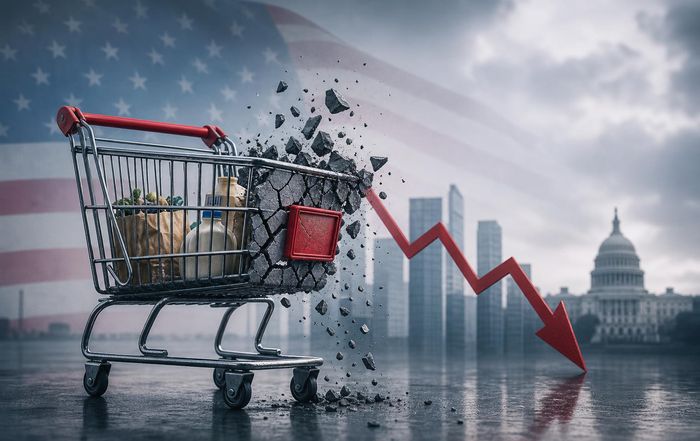
The Economic Impact of Slower Consumer Spending in the US
When US consumers start to pull back, the ripple effects run through almost every corner of the economy. With household consumption accounting for close to 70% of US GDP, even a modest slowdown in spending can shift growth trajectories, corporate earnings, labor demand, and financial markets at home and abroad. This 100% original article examines what slower consumer spending actually means, why it happens, how it feeds through to growth, jobs, inflation, profits and markets, and what policymakers and businesses typically do in response.
Why US consumer spending matters so much
In national accounts data from the Bureau of Economic Analysis (BEA), personal consumption expenditures (PCE) consistently make up around two-thirds of US GDP. That share fluctuates slightly over time, but the core reality is stable: the US is a consumption-driven economy.
Consumer outlays cover a wide range of categories: goods such as vehicles, appliances, clothing and electronics, and services such as housing, healthcare, travel, restaurants, financial services and digital subscriptions. A slowdown rarely hits all of these areas equally. Historically, discretionary categories such as travel, hospitality, durable goods and luxury retail tend to weaken first, while essentials like groceries, rent and basic healthcare are more resilient. For companies and investors following sectors like retail, travel, and technology on markets pages, these category differences are often more important than the headline PCE number.
Because the US is a large importer of consumer products-from electronics and apparel to furniture and vehicles-changes in American spending also affect exporters in Asia, Europe and Latin America. Slower purchases of imported goods can soften global trade volumes, something tracked closely by organizations such as the World Trade Organization (WTO) and the International Monetary Fund (IMF). In that sense, a shift in US household behavior is not just a domestic story; it is a global macroeconomic event.
What "slower spending" looks like in the data
Slower consumer spending does not necessarily mean an outright collapse or a recession; it often begins as a deceleration. Instead of real consumption growing at, say, 3% annually, it might slow to 1% or less, or even flatten. Analysts look at several indicators to gauge this shift.
The BEA's PCE series, particularly real (inflation-adjusted) PCE, is a core gauge. Economists also track monthly retail sales from the US Census Bureau (census.gov), spending by category, and high-frequency data from card networks and major banks. Consumer sentiment surveys, such as the University of Michigan index and the Conference Board's confidence measures (conference-board.org), often turn down before spending does, signaling that households are becoming more cautious.
In recent years, analysts have also paid close attention to the personal saving rate, real wage growth, and household balance sheets. Data from the Federal Reserve (federalreserve.gov) on consumer credit, delinquency rates and net worth offer clues about how much financial cushion households still have. Rising credit card balances and higher delinquency rates, combined with flat or falling real incomes, often precede a slowdown in discretionary purchases, even if headline employment remains strong.
For email subscribing members or website visitors tracking broader economics trends, these indicators help separate temporary noise-such as weather-related dips or one-off tax changes-from more persistent shifts in behavior that can reshape the business cycle.
Why consumers slow down: inflation, rates, jobs and confidence
Several forces typically converge when US households begin to spend more cautiously. High inflation erodes real purchasing power, especially when wage gains lag price increases. Even if nominal paychecks are larger, the ability to buy goods and services may shrink, forcing consumers to prioritize essentials and cut back on non-necessities.
Higher interest rates are another powerful brake. As the Federal Reserve raises policy rates to fight inflation, borrowing becomes more expensive for mortgages, auto loans, credit cards and small business credit lines. This not only raises monthly payments but can also deter big-ticket purchases altogether. The Fed's own research and communications on federalreserve.gov emphasize that tighter financial conditions are a deliberate channel through which monetary policy cools demand.
Labor market conditions and job security also matter. Even when unemployment remains relatively low, slower hiring, fewer job openings, reduced hours or smaller bonuses can make households feel less secure. That perception-captured in survey questions about expectations for income and employment-often leads to precautionary saving. Households may choose to build cash buffers, pay down debt or delay major outlays. Economists at institutions such as the Brookings Institution (brookings.edu) and National Bureau of Economic Research (nber.org) have long highlighted this "buffer-stock saving" behavior as a key driver of cyclical consumption patterns.
Wealth effects from housing and equity markets also play a role. When home prices or stock portfolios soften, households feel less wealthy and tend to restrain spending, even if their current income has not changed. Conversely, strong asset markets can support consumption, a dynamic closely watched by investors following investment and finance developments.
The growth impact: from households to GDP
Because consumption is such a large share of GDP, a slowdown in consumer spending almost automatically lowers overall growth, unless offset by stronger business investment, government spending or net exports. When real consumption growth decelerates, quarterly GDP prints from the BEA typically reflect this within a few months.
The composition of the slowdown matters. If the pullback is concentrated in imported goods, the net trade balance might improve slightly, cushioning the GDP impact. But if services spending-especially domestically intensive categories like restaurants, travel and personal services-slows, the drag on domestic output and employment is usually stronger. This is one reason why global institutions like the OECD (oecd.org) and IMF pay close attention not just to the level of US consumption, but to its sectoral mix.
Over time, weaker consumption can also weigh on business investment. Companies that see slower sales growth may cut back on capital expenditures, advertising, hiring and expansion plans. That secondary effect can amplify the initial consumer-driven slowdown, making it harder for other GDP components to offset weaker household demand. For readers tracking corporate earnings and equity valuations on business and markets pages, this feedback loop is often a key narrative in earnings seasons.
Jobs, wages and the labor market feedback loop
The US labor market both influences and responds to consumer spending. When households cut back, firms in consumer-facing sectors-retail, hospitality, travel, entertainment, consumer tech and discretionary services-often feel the impact first. They may respond by reducing hiring, trimming hours, freezing wages, or in more severe cases, laying off workers.
This has a direct effect on employment and wage growth, tracked in detail by the Bureau of Labor Statistics (bls.gov). Slower job creation and weaker wage gains, in turn, limit income growth and can reinforce the original slowdown in spending. The feedback loop can be self-reinforcing: weaker demand leads to weaker labor markets, which further suppress demand.
However, the severity of this loop depends on broader conditions. If other sectors-such as business services, healthcare, manufacturing tied to public investment, or technology-remain robust, they can absorb some displaced workers and sustain aggregate income growth. Government policies, including unemployment benefits, tax credits and targeted support programs, can also soften the blow to household finances, influencing how far and how fast consumption falls. Those people following employment trends often watch these policy levers as closely as the raw jobs numbers.
Inflation and monetary policy: cooling demand by design
From the perspective of central banks, a controlled slowdown in consumer spending is sometimes not only acceptable but necessary. When inflation runs significantly above target, reducing demand is one of the primary tools to bring price growth back down. The Federal Reserve has been explicit that tighter monetary policy works partly by moderating consumption and investment.
As higher interest rates and tighter financial conditions take effect, slower spending can ease pressure on prices in rate-sensitive sectors such as housing, autos and some services. Over time, weaker demand can reduce firms' pricing power, leading to smaller price increases or even outright discounts. This is particularly visible in categories where inventories have built up following earlier supply disruptions.
Yet the balancing act is delicate. If spending slows too sharply, the economy can tip into recession, with rising unemployment and underutilized capacity. Policymakers therefore monitor a broad set of indicators-from PCE and retail sales to credit conditions and labor market data-to judge whether the pace of deceleration is consistent with a "soft landing" or veering toward a deeper contraction. Institutions like the IMF and OECD frequently analyze whether US demand is cooling enough to tame inflation without causing an unnecessary spike in joblessness.
For business leaders and investors, the key question is often whether slower spending is transitory and policy-driven or signals a more structural downshift in household demand. That distinction shapes strategies in sectors from consumer goods to tech and AI, where long-term growth assumptions underpin valuations and capital allocation.
Corporate earnings, sectors and market sentiment
Publicly traded companies feel changes in US consumer spending quickly, and the impact varies sharply by sector and business model. Retailers, consumer brands, travel companies, streaming platforms and restaurants often report softer same-store sales, lower volumes or pressure to discount when households become more price-sensitive. Margins can be squeezed if input costs remain elevated while customers resist higher prices.
Consumer staples producers may fare better than discretionary retailers, as demand for essential goods is less elastic. However, even staples companies can face "down-trading," where shoppers shift from premium to value brands or from branded products to private-label alternatives. Analysts at major financial institutions and media outlets such as Bloomberg (bloomberg.com) and The Wall Street Journal (wsj.com) often highlight these shifts as early indicators of broader demand weakness.
Platform businesses and digital services that rely on advertising can also be indirectly affected. When brands cut marketing budgets in response to weaker sales, ad-supported tech companies may see slower revenue growth. On the other hand, some subscription-based or low-cost digital services can benefit if consumers substitute away from more expensive offline experiences.
Equity markets tend to respond quickly to these dynamics, repricing companies based on updated revenue and profit expectations. Sectors tied closely to discretionary consumption often underperform broader indices during periods of slowing spending, while more defensive sectors-utilities, healthcare, consumer staples-can relatively outperform. For investors following investment and markets coverage, understanding the nuances of consumer behavior becomes central to sector allocation decisions.
Spillovers to credit, banking and financial stability
Slower consumer spending can also influence credit quality and financial stability. If the underlying driver of weaker spending is stress on household balance sheets-rising debt burdens, higher interest payments, or stagnant incomes-then delinquencies on credit cards, auto loans and other consumer credit products can increase. Data from the Federal Reserve and major credit bureaus are watched closely by banks and regulators for early signs of strain.
Banks with large exposure to consumer lending may respond by tightening credit standards, reducing credit limits or raising borrowing costs further. That, in turn, can constrain spending even more, especially for lower-income households that rely on credit to smooth consumption. In extreme cases, this dynamic can contribute to a broader credit cycle downturn, although strong capital and liquidity standards introduced after the global financial crisis have, so far, made the system more resilient.
On the corporate side, companies facing weaker demand may find it harder to service existing debts, particularly if they borrowed heavily at low rates and now face refinancing at higher yields. This can increase default risks in segments of the corporate bond and leveraged loan markets, which is of particular interest to institutional investors and regulators like the US Securities and Exchange Commission (sec.gov).
For fans interested in finance and world developments, these credit-market linkages highlight how a consumer-led slowdown in the US can influence global capital flows, risk appetite and cross-border investment.
Global trade and international spillovers
Because the US is a major destination for exports from Europe, Asia and the Americas, slower US consumer demand can soften global trade volumes. Manufacturers of electronics, apparel, furniture, vehicles and consumer durables in countries such as China, Mexico, Germany, South Korea and Vietnam are particularly exposed. A dip in US orders can translate quickly into lower factory utilization, weaker employment and slower growth abroad.
Multinational companies with significant US retail exposure may adjust production plans, supply chain commitments and capital spending across multiple countries, magnifying the impact. Global shipping volumes and freight rates, tracked by logistics firms and organizations like the World Bank (worldbank.org), often respond in parallel, offering additional evidence of demand shifts.
At the same time, currency markets can react to changing expectations for US growth and interest rates. If slower spending leads investors to anticipate earlier or deeper Fed rate cuts, the US dollar may weaken, affecting trade competitiveness and capital flows. For emerging markets, shifts in US demand and dollar strength can influence everything from export earnings to external debt servicing costs, linking American households' behavior to macroeconomic conditions worldwide.
Smart readers following trade and world coverage can see these spillovers in export data, corporate guidance from global manufacturers and commentary from central banks in other major economies.
How businesses adapt: pricing, product mix and strategy
Companies rarely respond passively to a slowdown in consumer spending. Instead, they adjust pricing, product offerings, marketing strategies and cost structures to defend margins and maintain customer loyalty.
On pricing, firms may shift from broad-based increases to more targeted or promotional strategies, using discounts, loyalty programs and dynamic pricing to stimulate demand without permanently eroding price points. Some businesses reconfigure product portfolios, emphasizing value-oriented lines, smaller package sizes or "good-better-best" tiers to capture more price-sensitive shoppers.
Cost control becomes a priority, from optimizing supply chains and renegotiating contracts to streamlining operations and, in some cases, reducing headcount. Investments in automation and technology, including AI tools for demand forecasting and inventory management, can help companies operate more efficiently in a slower-growth environment.
At the same time, many firms view downturns as an opportunity to strengthen competitive position. They may accelerate digital transformation, invest in customer experience, or pursue strategic acquisitions at lower valuations. For entrepreneurs and founders, periods of weaker consumer demand can be challenging but also create openings for new business models that offer better value, convenience or resilience.
Policy responses and political implications
When consumer spending slows significantly, the policy debate in Washington often intensifies. Monetary policy, led by the Federal Reserve, is the first line of macroeconomic stabilization, but fiscal policy-taxation, government spending and targeted relief-also plays a central role.
Lawmakers may consider measures such as temporary tax rebates, enhanced unemployment benefits, expanded social safety nets or support for specific sectors like housing, autos or small businesses. The design and timing of these interventions matter: poorly targeted or delayed measures can be less effective or even counterproductive, while well-calibrated support can help stabilize incomes and confidence without overstimulating demand.
Politically, slower consumer spending and weaker growth can influence public perceptions of economic management and become a central issue in election cycles. Voters tend to focus on their own financial situations-job security, wages, prices and the ability to afford essentials-rather than abstract macro indicators. As a result, narratives around "cost of living," "middle-class squeeze" and "economic fairness" often intensify when households feel under pressure.
Internationally, other governments and institutions such as the IMF and World Bank monitor US policy responses closely, given the global implications of American demand. For businesses and investors, understanding the likely trajectory of policy-tightening versus easing, broad stimulus versus targeted support-is critical for planning in sectors from sustainable infrastructure to crypto and digital finance.
Conclusion: What a sustained shift could mean for the US economic model
Thanks for being here. The article may end now, but another story, thought, or perspective can always open the next door.
Most consumer slowdowns are cyclical: they ebb and flow with interest rates, inflation, and the business cycle. However, some analysts argue that structural forces-demographics, inequality, technology and climate transition-could gradually reshape US consumption patterns over the longer term.
An aging population may spend differently, with relatively more on healthcare and services and less on certain goods. Rising awareness of sustainability and climate risks could shift demand toward greener products, energy-efficient housing, low-carbon travel and more durable goods, affecting sectors covered in sustainable and travel reporting. Advances in AI and automation may change the composition of jobs and incomes, affecting who has purchasing power and what they buy.
If these trends lead to a persistently higher saving rate or a more cautious approach to debt, the US could gradually move away from the highly consumption-intensive growth model of recent decades. That would have far-reaching implications for fiscal policy, corporate strategy, global trade patterns and long-term investment themes.
For now, the more immediate concern for businesses, workers and policymakers is how to navigate the current phase of slower consumer spending: distinguishing between temporary cooling and deeper structural change, and adapting strategies accordingly. Understanding the channels through which household behavior shapes growth, jobs, inflation and markets is a necessary starting point for anyone making decisions in this environment, from central bankers and legislators to investors, executives and entrepreneurs.
