
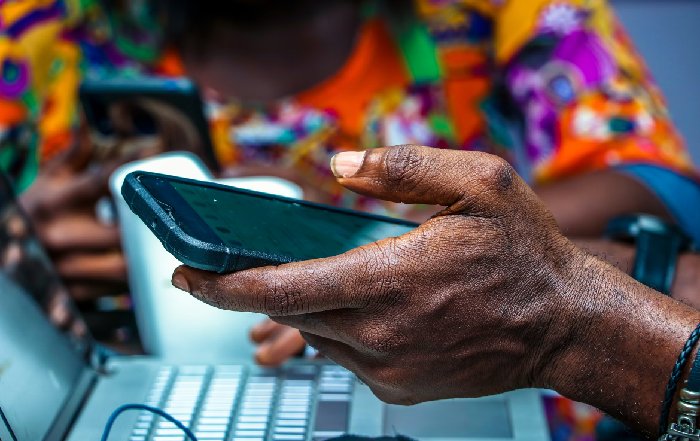
Africa's Mobile Money Revolution Inspires New Markets
A New Financial Playbook for a Fragmented World
Business leaders from New York to Nairobi, from Berlin to Bangkok, are increasingly looking to Africa not just as a growth frontier, but as a source of financial innovation that is reshaping how the global economy thinks about payments, credit, and inclusion. Nowhere is this more evident than in the continent's mobile money revolution, which began as a response to structural gaps in banking infrastructure and has evolved into a sophisticated, technology-driven ecosystem that is influencing policy, product design, and investment strategies across both emerging and advanced markets.
For readers of DailyBusinesss who follow developments in business and global strategy, the African mobile money story offers a detailed blueprint of how to build trusted digital financial rails in environments characterized by regulatory complexity, fragmented infrastructure, and volatile macroeconomic conditions. It also offers powerful lessons for executives in AI, fintech, crypto, and digital trade who are seeking to design resilient, scalable solutions for the next decade of financial innovation.
From Basic Transfers to Full-Stack Financial Infrastructure
The origins of mobile money in Africa, often associated with M-Pesa in Kenya, are well documented, but the transformation since those early days is far more profound than many outside observers appreciate. What began as a simple way to send value via text message in markets with limited bank branch penetration has evolved into a multi-layered financial infrastructure that now supports savings, credit, insurance, merchant payments, cross-border remittances, and government disbursements.
In Kenya, Tanzania, Ghana, and beyond, mobile network operators, banks, and fintechs have built dense agent networks that function as distributed cash-in/cash-out points, enabling individuals and small businesses to move seamlessly between physical and digital value. By integrating mobile wallets with national payment switches and banking systems, these platforms have effectively become de facto retail banking interfaces for tens of millions of people. Observers looking to understand broader macroeconomic implications increasingly recognize that this infrastructure is not peripheral; it is central to how money moves in several African economies.
International institutions such as the World Bank have chronicled how mobile money has contributed to higher levels of financial inclusion, particularly for women and rural populations, and how digital payments have helped reduce the shadow economy and improve tax collection efficiency. Learn more about financial inclusion metrics and policy frameworks at the World Bank's financial inclusion overview. Meanwhile, the International Monetary Fund has highlighted the macro-financial stability implications of mobile money float accounts, settlement risk, and the need for robust regulatory oversight, themes that are now influencing central bank thinking well beyond the continent. The IMF's analysis of digital money and payment systems can be explored via their digital money research resources.
Regulatory Experimentation and Risk Management
One of the most striking aspects of Africa's mobile money revolution is the degree of regulatory experimentation that has taken place. In markets such as Kenya, Ghana, and Rwanda, central banks and telecom regulators have crafted bespoke licensing regimes for non-bank payment service providers, enabling telecom operators and fintechs to offer wallet-based services while safeguarding customer funds through trust accounts held at regulated banks.
This approach contrasts sharply with more conservative regulatory postures in parts of Europe and North America, where non-bank payment providers often face heavier constraints and slower approval processes. Regulators in the United Kingdom, Singapore, and Brazil have been among those studying African experiences to inform their own frameworks for e-money, payment institutions, and digital banks. Readers interested in global regulatory trends can review comparative perspectives through the Bank for International Settlements, which maintains extensive research on payment innovation and oversight; see its innovation in payments and financial market infrastructures portal for further analysis.
Crucially, African regulators have had to manage systemic risk in real time, as mobile money transactions have grown to represent a significant share of GDP in some countries. The Central Bank of Kenya and Bank of Ghana, for instance, have implemented interoperability mandates, transaction limits, and enhanced know-your-customer (KYC) rules to balance innovation with stability and consumer protection. These policy choices, often made in the context of limited supervisory resources, have become case studies for governments in Asia, Latin America, and Eastern Europe that are now exploring similar mobile-centric approaches to inclusion and digital payments.
The Data Dividend: AI, Credit Scoring, and Behavioral Insights
By 2026, the intersection of mobile money and artificial intelligence has become one of the most dynamic frontiers of fintech. Transactional data generated by mobile wallets, merchant payments, airtime purchases, and utility bill payments has created a rich behavioral dataset that can be used-when governed responsibly-to assess creditworthiness, detect fraud, and tailor financial products to specific customer segments.
Fintech companies across Africa are using machine learning to build alternative credit scores for individuals and micro, small, and medium-sized enterprises that lack formal credit histories. This approach has unlocked working capital for merchants, farmers, and gig economy workers who previously operated entirely in cash. For executives tracking how AI is reshaping finance, the African experience offers a live laboratory in which algorithms trained on high-frequency, low-value transactions are powering new lending models. Readers can explore the broader convergence of AI and finance in the context of emerging technologies and financial innovation.
Global technology leaders such as Google, Microsoft, and IBM have taken note, investing in AI research hubs and cloud infrastructure across the continent, while African-founded startups such as Flutterwave, Chipper Cash, and Wave have built cross-border payment and remittance platforms that rely heavily on AI-driven risk scoring and compliance automation. The OECD has published guidance on trustworthy AI and responsible data use that is increasingly relevant to these ecosystems; executives can review these frameworks through the OECD AI policy observatory.
For policymakers and investors, the key question is how to harness this data dividend while maintaining robust privacy protections, avoiding algorithmic bias, and ensuring that customers understand how their data is used. Organizations such as Access Now and Privacy International have warned about the risks of opaque data practices, particularly for vulnerable populations. Business leaders looking to design responsible data strategies can consult the World Economic Forum's resources on digital trust and financial inclusion, including its insights on digital payments and inclusion.
Mobile Money as a Catalyst for Entrepreneurship and Employment
The impact of mobile money on entrepreneurship and employment is particularly relevant to the DailyBusinesss audience focused on founders, employment, and startup ecosystems. By lowering the cost and complexity of accepting digital payments, mobile money has enabled millions of informal traders, micro-retailers, and small service providers across Nigeria, Kenya, Ghana, Uganda, South Africa, and Côte d'Ivoire to formalize their operations, access credit, and build transaction histories that can be leveraged for growth capital.
For many early-stage entrepreneurs in Africa, the mobile wallet has become the default business account, providing a real-time view of cash flow and enabling instant payments to suppliers, employees, and partners. Platforms that integrate mobile money with inventory management, point-of-sale solutions, and basic accounting tools are turning smartphones into powerful business infrastructure. This evolution parallels, and in some cases anticipates, trends in gig economy platforms and digital wallets in the United States, Europe, and Asia, where similar tools are now being deployed to serve freelancers and small merchants.
International organizations such as the International Labour Organization and UNCTAD have highlighted how digital payments can support formalization, job creation, and trade integration, particularly for women-owned businesses and youth-led enterprises. Those interested in the employment dimension can explore global perspectives on digitalization and jobs through the ILO's future of work resources. In Africa, these dynamics are especially significant given the continent's rapidly growing, youthful population and the urgency of creating sustainable livelihoods at scale.
Cross-Border Payments, Remittances, and Trade Integration
Africa's mobile money revolution is also reshaping cross-border payments and trade, with implications for markets far beyond the continent. Historically, remittance corridors linking Europe, North America, and the African continent have been among the most expensive in the world, with high fees and slow settlement times. Mobile money has introduced new competition, enabling digital remittances directly into wallets and reducing dependence on cash-based transfer operators.
Fintech platforms that connect African mobile money systems with bank accounts and wallets in the United States, United Kingdom, France, Italy, Spain, and the Gulf are helping to reduce costs and increase transparency. The Global Knowledge Partnership on Migration and Development (KNOMAD), hosted by the World Bank, has tracked these trends and their impact on household welfare and investment in education, health, and small business. More details on global remittance costs and flows can be found via the KNOMAD remittances initiative.
At the regional level, initiatives such as the Pan-African Payment and Settlement System (PAPSS) and the African Continental Free Trade Area (AfCFTA) are seeking to build interoperable payment rails that can support intra-African trade in goods and services, reducing reliance on foreign currencies for settlement. These developments are closely watched by trade economists and corporate strategists who see Africa as a testbed for integrated digital trade infrastructure. Readers interested in how payments and trade intersect can explore broader trade and economic themes on DailyBusinesss' trade and markets coverage.
For businesses in Europe, Asia, and North America that import from or export to African markets, the rise of mobile and instant payments has practical implications for working capital, supply chain risk, and customer acquisition. As more African consumers and enterprises transact digitally, global firms will need to integrate with local payment methods, comply with evolving regulatory frameworks, and design products that reflect the specific needs and preferences of mobile-first users.
Crypto, Stablecoins, and the Next Phase of Digital Money
While mobile money has been the dominant digital payment channel across much of Africa, the past several years have seen rapid growth in cryptocurrency and stablecoin usage, particularly in markets grappling with currency volatility, capital controls, and inflation. Countries such as Nigeria, South Africa, Kenya, and Ghana have emerged as significant crypto markets, with users often leveraging stablecoins for cross-border payments, remittances, and hedging against local currency depreciation.
The interplay between mobile money and crypto is complex. On one hand, mobile wallets provide a familiar user interface and distribution network that could, in theory, be used to deliver crypto-based services at scale. On the other hand, regulatory concerns around money laundering, consumer protection, and macroeconomic stability have led many central banks to adopt cautious or restrictive stances toward unregulated digital assets. For readers monitoring developments in crypto and digital assets, Africa's experience offers insight into how grassroots adoption can outpace formal regulatory frameworks and how governments respond under pressure.
Global standard setters such as the Financial Stability Board and Financial Action Task Force have issued guidelines on the regulation of stablecoins, virtual asset service providers, and cross-border crypto flows, which African regulators are now adapting to their local contexts. Business leaders can review international norms and risk assessments through the FSB's work on crypto-asset markets. At the same time, several African central banks, including those in Nigeria and South Africa, are experimenting with central bank digital currencies (CBDCs) that could coexist with or complement mobile money systems, potentially reshaping the competitive landscape for payment providers and fintechs.
Sustainable Development, Climate Resilience, and Mobile Finance
Beyond payments and credit, mobile money is increasingly being deployed as a tool for sustainable development and climate resilience. Governments, NGOs, and development finance institutions are using mobile wallets to distribute social protection payments, agricultural subsidies, and emergency cash transfers during climate-related disasters such as floods, droughts, and cyclones. This capacity for rapid, targeted disbursement is particularly valuable in regions with limited physical banking infrastructure and high vulnerability to climate shocks.
In countries such as Mozambique, Madagascar, and Malawi, mobile money has been used to deliver humanitarian aid following extreme weather events, enabling recipients to purchase food, water, and shelter materials in local markets and supporting faster community recovery. The United Nations Development Programme and World Food Programme have documented how digital cash transfers can enhance both efficiency and dignity in humanitarian response. Business leaders interested in sustainability and resilience can explore broader perspectives on climate risk and finance through the UNDP's climate and disaster resilience resources.
For investors and corporates focused on sustainable business practices and ESG integration, the African mobile money experience underscores how digital finance can support inclusive growth, empower smallholder farmers, and facilitate investment in off-grid energy, clean cooking, and climate-smart agriculture. Fintech-enabled pay-as-you-go models for solar home systems and irrigation, for example, rely heavily on mobile money for recurring micro-payments, creating new asset classes and revenue streams that are now attracting interest from impact investors and infrastructure funds around the world.
Lessons for Mature Markets: What the World Can Learn
The significance of Africa's mobile money revolution extends far beyond emerging markets. In advanced economies where card networks and bank transfers dominate, the African experience challenges long-held assumptions about what is required to build inclusive, efficient payment systems. It demonstrates that financial innovation does not need to be anchored in legacy infrastructure and that mobile-first, agent-assisted models can outperform traditional branch-based banking in terms of reach, cost, and user experience.
In the United States and Canada, where debates about real-time payments, financial inclusion, and bank deserts continue, African case studies provide concrete evidence that low-cost, ubiquitous digital wallets can bring unbanked and underbanked populations into the formal financial system when designed with local realities in mind. In Europe, where instant payment schemes such as SEPA Instant Credit Transfer are still gaining traction, African mobile money platforms highlight the importance of interoperability, user-centric design, and agent networks in driving adoption beyond early adopters.
Technology executives and policymakers in Asia-Pacific-from Singapore and South Korea to India and Indonesia-have already begun to integrate elements of the African model into their own instant payment and digital wallet strategies. The Monetary Authority of Singapore, for example, has engaged with African regulators and fintechs through international forums, recognizing the continent's role as a source of practical insights on interoperability, risk management, and cross-border connectivity. Those tracking global payments innovation can find additional context via the G20 and FSB initiatives on cross-border payments, summarized on the G20's digital finance pages.
For the DailyBusinesss readership that follows technology, markets, and global finance, these developments point to a more pluralistic future in which no single region or business model holds a monopoly on financial innovation. Instead, ideas and architectures will increasingly flow in multiple directions, with African mobile money serving as both an inspiration and a partner in co-creating the next generation of financial infrastructure.
Strategic Implications for Investors and Corporate Leaders
From an investment and corporate strategy standpoint, Africa's mobile money revolution presents both direct opportunities and indirect lessons. Private equity firms, venture capital funds, and strategic investors from the United States, United Kingdom, Germany, France, China, and Singapore have poured capital into African fintechs, betting that the combination of demographic growth, rapid urbanization, and digital adoption will generate outsized returns. For those evaluating such opportunities, it is essential to understand not only the technology stack, but also the regulatory environment, agent network economics, and competitive dynamics between telecom operators, banks, and independent fintechs.
Readers focused on investment and finance will recognize that the risk-return profile of African mobile money and fintech ventures differs significantly from that of more mature markets. Currency volatility, political risk, and infrastructure constraints must be weighed against the potential for rapid user growth, high engagement, and first-mover advantages in underpenetrated segments such as SME finance, agri-fintech, and embedded insurance. Global advisory firms, multilaterals such as the International Finance Corporation, and regional development banks have published detailed sector analyses that can serve as valuable due diligence inputs; these can be explored through the IFC's digital finance and fintech insights.
For multinational corporations in retail, consumer goods, logistics, and travel, the strategic question is how to integrate with African mobile money ecosystems to reach customers more effectively and manage operational risk. Airlines, hotel groups, and online travel agencies serving markets like Kenya, South Africa, Nigeria, and Ethiopia are increasingly offering mobile money as a payment option, recognizing that card penetration remains relatively low and that wallet-based payments can reduce chargeback and fraud risk. Those tracking broader travel and consumer trends can contextualize these shifts within DailyBusinesss' travel and world coverage.
The Road Ahead: Convergence, Competition, and Collaboration
Looking toward 2030, Africa's mobile money revolution is likely to enter a new phase characterized by convergence between telecom-led wallets, bank-led digital channels, super-app ecosystems, and potentially CBDCs. Competition will intensify as global payment networks, big tech firms, and regional fintech champions vie for market share, while collaboration will be essential to ensure interoperability, security, and consumer trust.
For policymakers and regulators, the challenge will be to maintain a balanced approach that encourages innovation while safeguarding financial stability and protecting consumers. For founders and investors, the opportunity lies in building solutions that address real economic frictions-whether in agriculture, logistics, healthcare, education, or cross-border trade-using mobile money as a foundational layer rather than an end in itself. For corporate leaders in North America, Europe, Asia, and beyond, the imperative is to recognize that the future of finance is being shaped not only in traditional financial centers, but also in the streets of Lagos, Nairobi, Accra, and Johannesburg.
For DailyBusinesss, which serves readers across finance, technology, economics, employment, and world affairs, Africa's mobile money story is more than a regional success narrative; it is a global case study in how constraint-driven innovation can produce new architectures for trust, value exchange, and economic participation. As businesses navigate an increasingly uncertain and interconnected world, the lessons from this revolution-about agility, partnership, inclusion, and resilience-will remain highly relevant, informing strategic decisions in boardrooms from Toronto to Tokyo, Sydney to Stockholm, and far beyond.
