
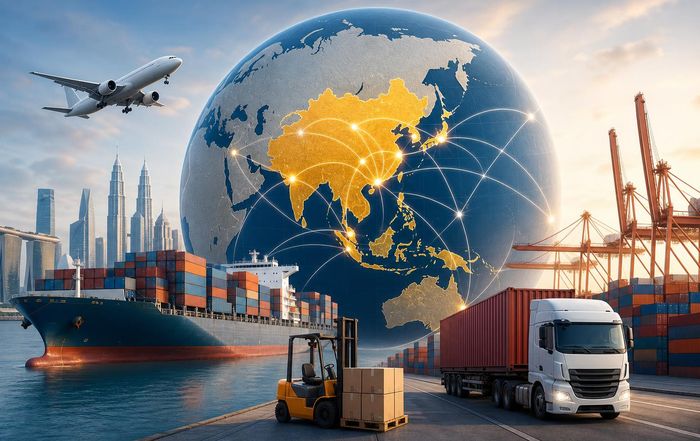
Asia's Expanding Role in Global Supply Chain Strategy
Introduction: From "Factory of the World" to Strategic Nerve Center
Asia has moved far beyond its historical reputation as the "factory of the world" and has become the strategic nerve center of global supply chains, shaping not only where goods are manufactured but how value is created, capital is allocated, technology is deployed, and risk is managed across continents. For the super readership of DailyBusinesss, which closely follows developments in business, finance, economics, employment, founders' journeys, investment and markets across the United States, Europe, and the wider world, understanding Asia's expanding role is no longer optional; it has become central to decision-making in boardrooms, investment committees, and policy circles.
This shift has been driven by a confluence of structural forces: the maturing of China's industrial base and its evolving position in global trade, the rise of Southeast and South Asia as alternative and complementary hubs, the rapid diffusion of advanced manufacturing and artificial intelligence, and the reconfiguration of trade routes under geopolitical pressure. Executives who once viewed Asia primarily as a cost arbitrage opportunity now see it as a multi-dimensional ecosystem of innovation, consumption, talent, and capital, with deep implications for risk diversification and long-term competitiveness. As dailybusinesss.com continues to explore global business dynamics on its dedicated business insights and world economy pages, Asia's supply chain transformation has become a recurring theme that touches almost every sector.
The Strategic Rewiring of Global Supply Chains
In the wake of the pandemic-era disruptions and subsequent energy and logistics shocks, multinational corporations have re-examined the vulnerabilities created by overconcentration of production in single geographies. This reassessment has not led to a retreat from Asia; instead, it has produced a more nuanced and layered strategy in which the region remains central but is engaged in more diversified, resilient, and technologically sophisticated ways. Organizations that once optimized purely for lowest-cost sourcing are now balancing cost with resilience, geopolitical exposure, and sustainability, drawing on analytical frameworks promoted by institutions such as the World Bank and the International Monetary Fund, which regularly publish guidance on global value chains and resilience and trade and supply network risk.
The concept of "China+1" has evolved into "Asia+Many," where companies configure production, assembly, and logistics across multiple Asian economies to hedge against local shocks while still leveraging the region's scale and capabilities. This approach is visible in sectors ranging from electronics and automotive to pharmaceuticals and renewable energy equipment, and it is increasingly being reflected in investment flows tracked on the markets coverage of dailybusinesss.com and in the capital allocation strategies of global asset managers that monitor Asia's industrial evolution through platforms such as MSCI and S&P Global.
China's Evolving Role: From Workshop to Platform
China remains the anchor of Asia's supply chain architecture, but its role has evolved from low-cost assembly hub to high-value manufacturing and technology platform. Rising labor costs, demographic shifts, and a deliberate policy pivot toward advanced industries mean that China is increasingly focused on semiconductors, electric vehicles, battery technology, industrial robotics, and green manufacturing, supported by large-scale initiatives such as "Made in China 2025" and continued investment in research and development. Business leaders tracking these shifts often turn to resources like McKinsey & Company, which regularly analyzes China's industrial upgrading and supply chain strategy, and to OECD reports on global production networks.
At the same time, multinational companies are recalibrating their exposure to Chinese manufacturing while remaining deeply embedded in its ecosystem. Many have retained core operations in coastal provinces for high-value production and engineering, while relocating more labor-intensive processes to Southeast Asia and South Asia. This dual-track strategy reflects the reality that China still offers unmatched infrastructure, supplier depth, and domestic demand, even as geopolitical tensions and export controls introduce new layers of complexity. For readers of dailybusinesss.com following trade and policy developments, understanding the interplay between China's industrial policy and Western regulatory responses has become crucial to anticipating supply chain realignments.
Southeast Asia's Rise: The New Manufacturing Crescent
As companies diversify beyond China, Southeast Asia has emerged as a key beneficiary, with Vietnam, Thailand, Malaysia, Indonesia, and the Philippines building out complementary capabilities across electronics, automotive components, consumer goods, and increasingly, green technologies. Vietnam has attracted significant foreign direct investment from Samsung, Apple's contract manufacturers, and numerous European and American suppliers, capitalizing on competitive labor costs, improving logistics, and trade agreements with major economies. Thailand and Indonesia are positioning themselves as regional hubs for electric vehicle and battery production, while Malaysia continues to play an important role in semiconductor packaging and testing.
The Association of Southeast Asian Nations (ASEAN) has supported this trajectory by promoting trade integration and infrastructure connectivity, with resources such as the ASEAN official portal outlining regional economic initiatives and supply chain programs. Parallel efforts by the Asian Development Bank to finance infrastructure and logistics corridors are further strengthening the region's attractiveness as a diversified manufacturing base. Corporate strategists evaluating plant locations, supplier networks, and logistics routes increasingly view Southeast Asia not as a single alternative to China but as an interconnected manufacturing crescent that can be orchestrated to support regional and global demand.
India and South Asia: From Potential to Performance
India and its South Asian neighbors have long been discussed as the "next frontier" for global manufacturing, but in recent years the rhetoric has begun to translate into tangible supply chain shifts. India's government has introduced production-linked incentive schemes to attract investments in electronics, mobile devices, pharmaceuticals, and renewable energy equipment, while pursuing major infrastructure upgrades in ports, highways, and industrial corridors. Multinationals in technology, automotive, and consumer electronics are now integrating India into their global production maps not only as a vast consumer market but also as a scalable manufacturing base and innovation center.
Reports from organizations such as Deloitte and Boston Consulting Group provide detailed analysis of India's manufacturing competitiveness and South Asia's role in global value chains, highlighting both structural opportunities and persistent challenges in logistics, regulatory complexity, and skills development. For the audience of dailybusinesss.com, which closely follows employment trends and founder stories across emerging markets, the rise of Indian and South Asian supply chains raises important questions about talent pipelines, entrepreneurship ecosystems, and the integration of digital technologies into traditional industries.
Technology, AI, and the Digitization of Supply Chains
Asia's expanding role is not solely about physical production capacity; it is equally about its leadership in supply chain digitization, automation, and artificial intelligence. Advanced manufacturing centers in China, South Korea, Japan, Singapore, and increasingly India and Vietnam are deploying industrial IoT, predictive analytics, and AI-driven planning tools to increase visibility, reduce downtime, and optimize inventory across complex networks. Companies are leveraging platforms from global technology leaders such as Microsoft, Google, and IBM, whose resources on AI in supply chain optimization and cloud-based logistics solutions are widely studied by operations executives.
For readers engaging with the dedicated AI and technology coverage on dailybusinesss.com, Asia's role as both developer and adopter of these technologies is a defining feature of the current decade. From autonomous mobile robots in Japanese and Korean warehouses to AI-enabled quality control systems in Chinese and Malaysian factories, the region is demonstrating how digital tools can mitigate labor shortages, enhance resilience, and support near real-time decision-making across borders. This technological layer also enables more sophisticated ESG tracking, allowing companies to monitor emissions, energy usage, and labor conditions throughout their Asian supply bases and report more transparently to regulators and investors.
Financing the New Supply Chain Architecture
The reconfiguration of global supply chains across Asia is being underwritten by substantial flows of capital from both public and private sources, with implications for global finance, investment strategies, and market structure. Development finance institutions such as the Asian Infrastructure Investment Bank (AIIB) and the World Bank Group are channeling funds into ports, railways, energy systems, and digital infrastructure that support cross-border production networks, while sovereign wealth funds from the Middle East, Europe, and North America are taking long-term positions in logistics parks, industrial zones, and technology platforms across the region. Global banks and private equity firms, advised by consultancies like PwC on infrastructure and supply chain investment opportunities, are structuring complex financing vehicles to support multi-country manufacturing footprints.
For the investor community that turns to dailybusinesss.com for finance and investment analysis, these developments present both opportunities and risks. On the opportunity side, diversified Asian supply chains can support higher returns through exposure to fast-growing consumer markets, productivity gains from technology adoption, and valuation uplift in logistics and industrial real estate. On the risk side, capital is increasingly exposed to geopolitical tensions, regulatory shifts, and environmental vulnerabilities, requiring more sophisticated risk management, scenario planning, and portfolio diversification. Asset allocators are therefore integrating supply chain geography as a core variable in their investment theses, rather than treating it as a secondary operational detail.
Geopolitics, Trade Policy, and Strategic Autonomy
Asia's centrality to global supply chains has inevitably drawn it into the heart of geopolitical competition, particularly between the United States and China, but also involving the European Union, Japan, India, and regional powers in Southeast Asia. Trade policies, export controls, investment screening mechanisms, and industrial subsidies are reshaping the contours of what is possible in cross-border production and technology collaboration. Governments are pursuing "strategic autonomy" in critical sectors such as semiconductors, pharmaceuticals, and clean energy, while still relying on Asia's manufacturing ecosystems for scale and cost efficiency.
The World Trade Organization (WTO) and institutions such as the Peterson Institute for International Economics provide ongoing analysis of trade tensions, tariffs, and supply chain implications, which are closely monitored by corporate strategists and policy analysts. For readers of dailybusinesss.com who follow global economics and trade developments, the key question is how companies can navigate a landscape where supply chains are increasingly influenced by national security considerations, data localization rules, and climate policy. Leading firms are responding by building parallel supply networks, segmenting product lines for different regulatory regimes, and investing in local partnerships that can help them interpret and adapt to fast-changing policy environments.
Labor, Skills, and the Future of Employment in Asia
The expansion and transformation of Asia's role in global supply chains have profound implications for employment, skills development, and social stability across the region. While traditional manufacturing jobs remain important in countries such as Bangladesh, Cambodia, and parts of India and Indonesia, there is a clear shift toward higher-skill roles in automation maintenance, data analysis, engineering, and supply chain management. Governments and businesses are partnering with universities and technical institutes to modernize curricula and build training programs that align with Industry 4.0 requirements, often drawing on best practices disseminated by organizations like the International Labour Organization, which regularly examines future-of-work trends in Asia.
For a business audience that follows employment and labor market trends on dailybusinesss.com, the central issue is how companies can secure the talent they need while contributing to inclusive growth and social cohesion. Firms are increasingly expected to provide upskilling and reskilling opportunities for their workforce, invest in safe and fair working conditions throughout their supply chains, and engage transparently with stakeholders about labor practices. As automation and AI continue to advance, the balance between efficiency gains and job creation will remain a critical consideration for both policymakers and corporate leaders operating across Asia.
Sustainability, Climate Risk, and Responsible Sourcing
Asia's dominance in global manufacturing also means that it sits at the epicenter of debates around sustainability, climate risk, and responsible sourcing. The region hosts many of the world's most carbon-intensive industrial clusters and is highly exposed to climate-related hazards such as flooding, heatwaves, and typhoons, which can disrupt production and logistics on a large scale. At the same time, Asia is a major producer of renewable energy equipment, electric vehicles, and energy-efficient technologies, positioning it as both part of the climate challenge and a significant part of the solution.
Companies are under increasing pressure from regulators, investors, and consumers to decarbonize their supply chains, adhere to stricter environmental and social standards, and demonstrate robust governance, in line with ESG frameworks promoted by organizations such as the Task Force on Climate-related Financial Disclosures and the Sustainability Accounting Standards Board, whose resources on climate risk disclosure and supply chain transparency are widely referenced. For the sustainability-focused audience of dailybusinesss.com, the dedicated sustainable business coverage highlights how firms are investing in green logistics, circular production models, and renewable energy sourcing across their Asian operations, while also assessing physical climate risks when selecting plant locations and transport routes.
Digital Trade, E-Commerce, and Logistics Innovation
Beyond traditional manufacturing, Asia is also reshaping the logistics and distribution side of global supply chains through its leadership in e-commerce, fintech, and digital trade platforms. Companies such as Alibaba, JD.com, Shopee, and Flipkart have built sophisticated fulfillment and last-mile delivery networks that serve not only domestic consumers but increasingly cross-border markets, leveraging data analytics, smart warehousing, and digital payment systems. These developments are documented by organizations like UNCTAD, which analyzes e-commerce and digital trade trends, and by industry research from Bain & Company, which examines logistics innovation in Asia.
For readers of dailybusinesss.com interested in technology and digital transformation, this convergence of e-commerce and logistics is a critical dimension of Asia's expanding role. It is no longer sufficient to consider only the manufacturing footprint; companies must also evaluate how digital platforms, regional trade agreements, and cross-border data flows influence their ability to move goods efficiently, collect and analyze customer data, and comply with varying regulatory regimes in Europe, North America, and other parts of Asia. The rise of digital trade also intersects with crypto-assets and digital currencies, themes explored on dailybusinesss.com's crypto and fintech pages, as central banks and private companies experiment with new forms of cross-border settlement that may further reshape supply chain finance.
Strategic Implications for Global Business Leaders
For senior executives, founders, and investors who rely on dailybusinesss.com to interpret global trends, Asia's expanding role in supply chain strategy demands a more integrated and forward-looking approach. Companies can no longer treat supply chain configuration as a purely operational concern delegated to procurement and logistics departments; it has become a core element of corporate strategy, risk management, and value creation. Decisions about where to locate production, how to structure supplier relationships, which technologies to deploy, and how to balance cost with resilience and sustainability must be made with a clear understanding of Asia's evolving economic, political, and technological landscape.
This implies a need for cross-functional collaboration between operations, finance, risk, and sustainability teams, as well as closer engagement with local partners, governments, and research institutions across Asia. It also requires continuous monitoring of market, policy, and technology developments through high-quality information sources, including international organizations such as the World Economic Forum, which regularly publishes insights on global supply chains and the future of trade, and specialized business media like dailybusinesss.com, which brings together perspectives on finance, business strategy, technology, and world affairs in a way that reflects the interconnected reality of today's supply networks.
Conclusion: Asia as the Backbone of a New Global Supply Chain Era
Asia is no longer simply one region among many in the global supply chain conversation; it is the backbone of a new era in which production, innovation, and consumption are distributed across a dense and dynamic network of countries from China and Japan to India, Vietnam, Indonesia, and beyond. This network is shaped by powerful trends in technology, finance, geopolitics, labor markets, and sustainability, and it is redefining how businesses in North America, Europe, and the rest of the world design their strategies and allocate their capital.
For the global growing business community that turns here for timely and authoritative coverage of business, finance, economics, employment, markets, and technology, Asia's trajectory will remain a central lens through which to interpret the shifting architecture of global commerce. Leaders who understand the nuances of this transformation, who invest in the right partnerships and technologies, and who build resilient, responsible, and future-ready supply chains anchored in Asia will be better positioned to navigate uncertainty and capture growth in the decade ahead. Those who cling to outdated models of cost-driven offshoring, or who underestimate the strategic significance of Asia's evolving role, risk being left behind in a world where supply chain strategy has become inseparable from overall corporate success.
