
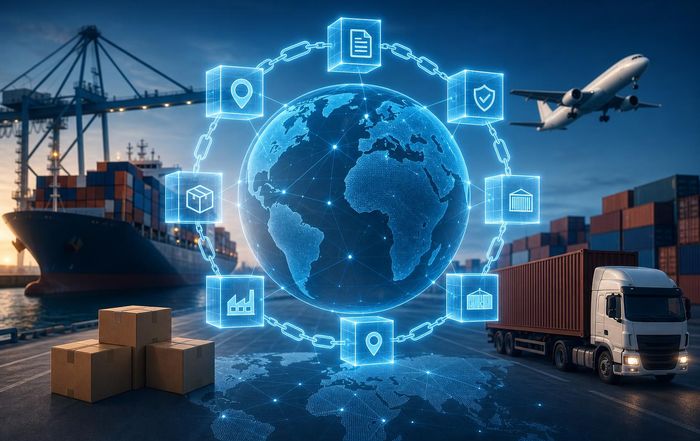
How Blockchain Can Improve Transparency in Global Trade
Why Transparency Has Become the Defining Issue in Global Trade
Has it happened after so long that transparency has moved from being a regulatory buzzword to a core competitive differentiator in global trade? Executives in manufacturing, logistics, retail, commodities, and financial services now recognise that opaque supply chains and fragmented trade documentation are not just operational irritants; they are direct threats to profitability, regulatory compliance, and brand trust. From the 100% original well researched knowledge perspective of DailyBusinesss, which consistently tracks the intersection of business, finance, technology, and policy across major markets, blockchain is no longer a speculative technology looking for a problem; it has become a practical architecture for rebuilding how information flows across borders, contracts, and counterparties.
Traditional trade processes rely heavily on paper-based documentation, siloed databases, and manual reconciliation across customs authorities, banks, freight forwarders, insurers, and corporates. This complexity creates delays, increases fraud risk, and makes it extremely difficult for leaders to obtain a single, reliable version of the truth about where goods are, who owns them, and what obligations are attached. Reports from institutions such as the World Trade Organization show how trade finance gaps particularly affect small and medium-sized enterprises, while analyses from the World Bank and OECD highlight the persistent friction in customs clearance, rules-of-origin verification, and compliance with environmental and labour standards. In this context, blockchain's promise of shared, tamper-evident records and programmable business logic is directly aligned with the needs of global trade stakeholders who must operate across jurisdictions from the United States and the European Union to Asia-Pacific, Africa, and Latin America.
Biz executives reading DailyBusinesss are increasingly asking not whether blockchain matters, but where it can be deployed today to create measurable improvements in transparency, risk management, and capital efficiency. This article examines the core mechanisms of blockchain relevant to trade, the evolving regulatory and standards landscape, and the strategic implications for businesses operating in global value chains.
Understanding Blockchain's Value Proposition for Trade Transparency
To understand how blockchain can improve transparency in global trade, it is essential to move beyond superficial descriptions of "distributed ledgers" and focus on the specific capabilities that matter to trade practitioners. A blockchain is, in essence, a shared database maintained by multiple participants, in which transactions are recorded in cryptographically linked blocks, making historical records tamper-evident and auditable. For trade, the critical features are data integrity, shared visibility with controlled access, and the ability to embed rules in the form of smart contracts.
In conventional trade flows, each party maintains its own ledger and reconciles it periodically with others, which leads to mismatches, disputes, and delays. By contrast, a well-governed blockchain network can provide a single, synchronised record of shipment status, financing arrangements, customs declarations, and insurance coverage. Organizations such as IBM, Maersk, and consortia led by R3 have demonstrated that distributed ledger technology can reduce document processing times and enhance traceability across complex shipping routes. Readers who wish to explore the technical underpinnings can consult resources from the Linux Foundation's Hyperledger project, which has been central to many enterprise-grade blockchain deployments in trade.
For decision-makers focused on finance and risk, one of blockchain's most powerful attributes is its auditability. Regulators, auditors, and compliance teams can verify transaction histories without relying solely on internal records that might be incomplete or inconsistent. This is especially relevant in jurisdictions with stringent anti-money laundering and know-your-customer requirements, such as the United States, the United Kingdom, the European Union, Singapore, and Switzerland, where supervisory bodies like FINRA, the Financial Conduct Authority, and the Monetary Authority of Singapore increasingly expect firms to demonstrate robust data governance and traceability. In global trade, where documentation authenticity and provenance of goods are critical, blockchain's capacity to create an immutable trail of events can substantially strengthen trust.
Trade Documentation and Smart Contracts: From Paper to Programmable Processes
One of the most immediate applications of blockchain in trade is the digitalisation and automation of core documents such as bills of lading, letters of credit, certificates of origin, and inspection reports. Traditionally, these documents are issued, transferred, and validated through a combination of courier services, email attachments, and proprietary platforms. Each handover introduces latency and risk, and disputes over document authenticity or timing can delay cargo release and payment.
Blockchain-based trade platforms aim to convert these documents into digital assets that can be securely issued, endorsed, and transferred on a shared ledger. A digital bill of lading, for example, can represent legal title to goods in transit, with transfers of ownership recorded on-chain and visible to authorised parties including carriers, banks, and customs authorities. In several pilot projects referenced by industry groups such as the International Chamber of Commerce, smart contracts have been used to automatically trigger payment under a letter of credit when predefined conditions are met, such as confirmation of shipment, arrival at port, or passing of customs inspections.
From the vantage point of DailyBusinesss.com, which regularly covers developments in trade and supply chain business and finance, this shift from paper to programmable documents is not merely an efficiency upgrade; it is a structural change in how risk and responsibility are managed. Smart contracts can encode complex conditional logic, such as partial shipments, quality tolerances, or dynamic pricing based on freight rates or commodity indices. When combined with trusted data feeds from Internet of Things sensors, port operators, or customs systems, these contracts can execute with minimal human intervention, reducing opportunities for manipulation or error.
This programmable layer also has implications for legal certainty and dispute resolution. Bodies such as UNCITRAL and national law reform commissions in jurisdictions like Singapore and the United Kingdom have been updating legal frameworks to recognise electronic trade documents and clarify the enforceability of smart contracts. As these frameworks mature, businesses will be able to rely more confidently on blockchain-based documentation as legally robust instruments in cross-border transactions.
Supply Chain Visibility, ESG, and the New Transparency Mandate
In the past five years, environmental, social, and governance (ESG) considerations have become central to trade strategy, driven by regulatory mandates, investor expectations, and consumer scrutiny. Regulations such as the European Union's Corporate Sustainability Reporting Directive, Germany's Supply Chain Due Diligence Act, and similar initiatives in Canada, France, and other jurisdictions require companies to demonstrate responsible sourcing, monitor labour conditions, and measure climate-related impacts across their value chains.
Blockchain can significantly enhance supply chain visibility by creating a shared record of the journey that raw materials and finished products take from origin to end customer. Each participant in the chain, from miners and farmers to manufacturers, logistics providers, and retailers, can record key events and attestations on a distributed ledger. These might include certifications of sustainable forestry, fair-trade compliance, carbon footprint metrics, or verification of non-use of forced labour. Organizations such as GS1 and the World Economic Forum have highlighted how standardised data models and interoperable blockchain networks can support granular, verifiable ESG reporting.
For the global audience of DailyBusinesss.com, particularly those following sustainable business and climate-oriented strategies, the intersection of blockchain and ESG is strategically important. Businesses that can provide verifiable provenance and impact data will be better positioned to access green financing, qualify for preferential tariffs under certain trade agreements, and maintain access to markets with strict import requirements, such as the European Union and the United States. Moreover, as asset managers and institutional investors increasingly integrate ESG metrics into capital allocation decisions, transparent, blockchain-backed data can enhance a company's attractiveness to long-term capital.
Companies operating in sectors with high reputational risk, such as apparel, electronics, mining, and agriculture, are already experimenting with blockchain-based traceability solutions. Initiatives in cocoa, palm oil, cobalt, and rare earths aim to provide regulators and buyers with credible evidence of sustainable and ethical practices. By anchoring these claims in a tamper-evident ledger, firms can strengthen trust with stakeholders while reducing the administrative burden of responding to audits and questionnaires.
Trade Finance, Working Capital, and Risk Mitigation
A critical pain point in global trade, particularly for small and medium-sized enterprises in emerging markets, is access to trade finance. Studies by the Asian Development Bank and other international institutions have documented persistent trade finance gaps running into hundreds of billions of dollars, driven by risk aversion among banks, fragmented data, and compliance costs. Banks often lack sufficient visibility into the underlying trade flows and counterparties to confidently extend credit, especially to smaller firms without extensive collateral or long credit histories.
Blockchain can alleviate some of these challenges by providing financial institutions with more reliable, real-time data on trade transactions. When shipment status, invoices, inspection results, and customs clearances are recorded on a shared ledger, banks can assess risk based on actual performance rather than static documentation. This can enable more dynamic forms of supply chain finance, such as receivables discounting and inventory financing, with automated triggers for disbursement and repayment. Leading institutions such as HSBC, Standard Chartered, and BNP Paribas have participated in blockchain-based trade finance pilots, exploring how distributed ledgers can streamline KYC checks, reduce fraud in duplicate financing, and accelerate decision-making.
For readers engaged with investment and capital markets coverage on DailyBusinesss.com, the connection between blockchain-enabled transparency and working capital efficiency is increasingly evident. Corporates with better visibility into their receivables and payables can optimise cash flow, negotiate better terms with suppliers and buyers, and potentially securitise trade assets more effectively. Investors, in turn, can gain access to new asset classes built around tokenised trade receivables or inventory, with risk profiles informed by granular, verifiable data.
At the same time, blockchain's role in trade finance intersects with developments in digital currencies and tokenised deposits. Central banks from the European Central Bank to the Bank of England, Federal Reserve, Monetary Authority of Singapore, and Bank of Japan are exploring central bank digital currencies and cross-border payment architectures that could further reduce friction in trade settlement. While these initiatives are distinct from public cryptocurrencies, they often draw on similar distributed ledger concepts and could eventually integrate with trade-focused networks, enabling near-instant cross-border payments linked directly to trade events.
Standards, Interoperability, and Regulatory Alignment
Despite tangible progress, blockchain in global trade remains constrained by fragmentation and a lack of fully mature standards. Multiple consortia and platforms have emerged, often targeting specific corridors, industries, or use cases, leading to concerns about interoperability. Executives must navigate a landscape that includes enterprise-focused solutions based on Hyperledger Fabric, Corda, and other frameworks, as well as public blockchains used for tokenisation and decentralised finance.
Standard-setting bodies and international organisations have recognised this challenge. The International Organization for Standardization has been actively developing technical standards for blockchain and distributed ledger technologies, while trade-specific groups such as the International Chamber of Commerce and the United Nations Centre for Trade Facilitation and Electronic Business are working on harmonised data models and processes for digital trade documents. Policymakers in regions such as the European Union, the United States, Singapore, and the United Arab Emirates are also issuing guidance on how electronic bills of lading, digital signatures, and blockchain records can be recognised in customs and legal processes.
From the editorial vantage point of DailyBusinesss.com, which covers world trade and economic policy and macroeconomic developments, regulatory alignment is perhaps the single most important determinant of blockchain's long-term impact on trade transparency. Without consistent legal recognition of blockchain-based records and clear rules on data privacy, liability, and jurisdiction, adoption will remain uneven. Businesses must therefore engage proactively with industry associations, standards bodies, and regulators to ensure that emerging frameworks reflect practical realities and support cross-border interoperability.
Another dimension of regulation concerns data protection and sovereignty. Jurisdictions such as the European Union, under the General Data Protection Regulation, impose strict requirements on how personal data is processed and stored, which can be challenging to reconcile with blockchain's immutability. Solutions such as off-chain storage of sensitive data, zero-knowledge proofs, and permissioned network designs are being developed to address these concerns, but executives need to understand the trade-offs between transparency, privacy, and compliance.
Strategic Considerations for Business Leaders
For senior executives and founders who follow business strategy coverage on DailyBusinesss.com, the strategic question is not simply whether blockchain is technically feasible, but how it fits into broader digital transformation and risk management agendas. Deploying blockchain in global trade requires more than procuring software; it requires building or joining ecosystems, rethinking processes, and aligning incentives across multiple stakeholders.
A first strategic consideration is to identify trade flows and processes where information asymmetry and trust deficits are most acute. These might include high-value or high-risk supply chains, such as pharmaceuticals, luxury goods, critical minerals, and perishable food, where provenance and authenticity are paramount. It may also involve corridors where customs clearance is particularly complex or where trade finance is constrained. By focusing on specific pain points, organisations can pilot blockchain solutions with clear success metrics, such as reduced dwell time at ports, lower dispute rates, or improved access to financing.
A second consideration is governance. Blockchain networks for trade are typically consortium-based, involving multiple corporates, financial institutions, and service providers. Governance structures must define who can participate, how data is shared, how costs are allocated, and how disputes are resolved. Leading examples in shipping, commodities, and trade finance illustrate that successful consortia often involve neutral conveners or infrastructure providers and clear rules on data ownership and commercial use. For founders and innovators, this creates opportunities to build platform businesses that orchestrate these ecosystems, as highlighted in the entrepreneurial stories regularly featured on founders and innovation pages of DailyBusinesss.com.
A third consideration is integration with existing systems. Most large organisations already operate sophisticated enterprise resource planning, logistics, and treasury platforms. Blockchain solutions must interoperate with these systems, ideally through standardised APIs and middleware, to avoid creating new silos. This integration challenge underscores the importance of partnering with technology providers who understand both the technical and operational dimensions of global trade, and of investing in internal capabilities around data management, cybersecurity, and digital identity.
The Role of AI, Data, and Emerging Technologies
Blockchain does not operate in isolation; its impact on trade transparency is amplified when combined with other technologies, particularly artificial intelligence, advanced analytics, and the Internet of Things. As explored in AI-focused analysis and technology coverage on DailyBusinesss.com, AI can process the large volumes of structured and unstructured data generated by trade processes, identifying patterns of risk, predicting delays, and optimising routing and inventory decisions.
When trade events and documentation are recorded on a blockchain, AI models can access cleaner, more reliable datasets, reducing the noise and inconsistency that often undermine predictive accuracy. For example, machine learning algorithms can analyse historical shipment data, customs declarations, and inspection outcomes to identify anomalous patterns that may indicate fraud, sanctions evasion, or non-compliance with environmental or labour standards. Regulators and enforcement agencies, including customs administrations in the United States, the European Union, and Asia, are increasingly exploring how to combine blockchain-based data with advanced analytics to enhance targeting and risk-based inspections.
Internet of Things devices, such as GPS trackers, temperature sensors, and smart seals, provide real-time data on the location and condition of goods in transit. When these data feeds are anchored to a blockchain, they create a tamper-evident record of shipment integrity, which can be used to trigger smart contract conditions, claim insurance, or verify that cold-chain requirements have been met. Companies in sectors like pharmaceuticals and food, where product integrity is critical, are particularly interested in these capabilities.
The convergence of blockchain, AI, and IoT also has implications for employment and skills. As discussed in employment and future-of-work coverage, trade-related roles will increasingly require digital literacy, data analysis capabilities, and cross-functional understanding of technology, law, and operations. While some manual documentation and reconciliation tasks may be automated, new roles will emerge in ecosystem governance, digital identity management, and data-driven trade strategy.
Crypto, Tokenisation, and the Future of Trade Assets
Although enterprise trade applications typically rely on permissioned blockchains and fiat currencies, the broader crypto ecosystem is exerting influence on how trade assets and payments are conceptualised. Tokenisation-the representation of real-world assets as digital tokens on a blockchain-has been applied to trade receivables, invoices, and even inventory, enabling fractional ownership, secondary trading, and new forms of collateralisation. Platforms in the decentralised finance space have experimented with on-chain lending against tokenised trade assets, though regulatory and risk concerns remain substantial.
For readers following crypto and digital asset developments via DailyBusinesss.com, the key point is that the technical infrastructure developed in public blockchain ecosystems is informing enterprise-grade solutions in trade. Concepts such as stablecoins, programmable money, and on-chain identity are being adapted to regulated environments, with central banks, commercial banks, and technology firms collaborating on pilots for cross-border wholesale payments and settlement. Over time, the boundary between "crypto" and "enterprise blockchain" in trade may become less distinct, particularly if regulatory frameworks mature and interoperability between public and permissioned networks improves.
At the same time, businesses must approach tokenisation with a clear understanding of legal, accounting, and risk implications. Questions about the legal status of tokenised assets, investor protections, and cross-border regulatory compliance remain under active discussion among policymakers, including the Financial Stability Board and national securities regulators. Companies considering tokenising trade assets should engage with legal and compliance teams early and monitor guidance from bodies such as the International Organization of Securities Commissions.
Regional Perspectives and Competitive Dynamics
The adoption of blockchain in global trade is not uniform across regions. In Asia, economies such as Singapore, South Korea, Japan, and China have pursued ambitious digital trade initiatives, often supported by proactive government strategies and close collaboration between public and private sectors. Singapore's Networked Trade Platform, for example, has been a testbed for integrating blockchain-based trade documentation with customs and port systems, while China has explored blockchain applications in customs, logistics, and cross-border e-commerce. In Europe, the European Commission and national governments in Germany, France, the Netherlands, and the Nordics have advanced digital identity, e-invoicing, and e-customs initiatives that can interface with blockchain-based solutions.
In North America, the United States and Canada have seen strong interest from major banks, logistics companies, and technology providers, though regulatory fragmentation and legacy infrastructure can slow implementation. The United Kingdom, post-Brexit, has positioned itself as a hub for digital trade innovation, with legislative reforms aimed at recognising electronic trade documents and promoting interoperability. In emerging markets across Africa and South America, blockchain is viewed as a way to leapfrog legacy systems, improve access to trade finance, and enhance trust in cross-border transactions, particularly in corridors where documentation fraud and corruption risks are significant.
For globally active firms and investors who rely on DailyBusinesss.com for markets and macro insights, these regional dynamics create both opportunities and risks. Companies that align early with leading digital trade hubs and participate in shaping standards can gain first-mover advantages, such as preferential access to digital trade corridors, improved financing options, and reduced compliance burdens. Conversely, firms that delay may find themselves locked into less efficient processes or excluded from certain networks, particularly if large buyers or logistics providers mandate participation in specific platforms.
Outlook to 2030: From Pilots to Infrastructure
Looking ahead to 2030, blockchain's role in global trade is likely to evolve from discrete pilots and consortia into an integral part of trade infrastructure, much as electronic data interchange and containerisation transformed logistics in previous decades. The trajectory will depend on continued progress in legal recognition of electronic trade documents, convergence around common data standards, and integration with digital identity frameworks and payment systems.
From the vantage point of today, several trends appear likely. First, blockchain-based trade documentation, particularly electronic bills of lading and digital letters of credit, is poised for broader adoption as legal reforms take hold in major trading nations and as shipping lines, banks, and corporates coalesce around interoperable platforms. Second, ESG-driven transparency requirements will intensify, making blockchain-enabled traceability a practical necessity in sectors exposed to regulatory and reputational risk. Third, the convergence of blockchain with AI, IoT, and digital currencies will enable more automated, data-driven trade flows, reshaping how working capital is managed and how risk is priced.
For the growing and fairly loyal audience of DailyBusinesss.com, which are business leaders, investors, policymakers, and entrepreneurs across the United States, Europe, Asia-Pacific, and beyond, the imperative is clear: blockchain in global trade is no longer a peripheral experiment but a strategic capability. Organisations that invest now in understanding the technology, engaging with evolving standards, and piloting targeted use cases will be better positioned to navigate an increasingly complex, regulated, and data-intensive trade environment. Those that succeed will not only reduce costs and risks; they will enhance their reputations as trustworthy, transparent partners in the interconnected global economy.
That’s all for now, friends. Our editorial team is already preparing more original, inspiring business content for our loyal readers around the world.
