
Labor Markets in 2026: Automation, AI and the New Global Workforce Reality
A New Stage in the Global Work Transformation
By early 2026, the transformation of labor markets that DailyBusinesss first began tracking as a distant trend has become a defining feature of daily business decisions across North America, Europe, Asia, Africa and South America. Automation and artificial intelligence are no longer experimental add-ons or innovation talking points; they are embedded in the core operating models of leading enterprises, influencing everything from capital allocation and workforce planning to regulatory strategy and geopolitical risk. What was once a gradual shift driven by industrial robots and basic software automation has evolved into a pervasive restructuring powered by generative AI, advanced machine learning, robotics, cloud-native architectures and increasingly sophisticated data infrastructure, with companies such as Microsoft, Alphabet, Amazon, NVIDIA, Tencent and others integrating these technologies into logistics, customer service, product design, risk management and financial analysis at scale. Readers following DailyBusinesss business coverage see this not as a theoretical debate but as a set of immediate choices about where to invest, which skills to hire and how to redesign organizations for an AI-first economy.
In parallel, policymakers in the United States, United Kingdom, Germany, Canada, Australia, France, Italy, Spain, Netherlands, Switzerland, China, Singapore, Japan, South Korea, Brazil, South Africa and other key economies are advancing into a more mature phase of policy experimentation, seeking ways to preserve employment, social cohesion and competitiveness while enabling innovation in AI and automation. Institutions such as the OECD and the International Labour Organization continue to produce influential frameworks on inclusive growth, skills policy and social protection, while the World Economic Forum has expanded its work on the future of jobs to reflect the rapid deployment of generative AI since 2023. For the senior executives, investors and founders who rely on DailyBusinesss as a strategic lens, the core questions in 2026 are increasingly precise: which tasks and sectors will be automated next, how quickly will productivity gains translate into earnings and wages, which regions will emerge as winners or laggards and what governance models will sustain trust in an environment characterized by algorithmic decision-making and data-driven oversight.
From Pilots to Platforms: The Automation Landscape in 2026
The most striking change between the mid-2020s and 2026 is the shift from isolated automation pilots to integrated digital platforms that coordinate human and machine work in real time. Cloud hyperscalers and enterprise software providers now offer end-to-end solutions that combine data ingestion, model training, deployment, monitoring and governance, enabling companies to automate complex workflows with far less bespoke engineering than was required only a few years ago. Industrial robots and autonomous mobile robots have become standard in large manufacturing and logistics operations across North America, Europe and Asia, while algorithmic trading, AI-driven risk management and automated compliance tools have become entrenched in global finance. In many emerging markets in Africa, Southeast Asia and South America, organizations have leapfrogged legacy on-premise systems in favor of cloud-native automation, building digital operations from the ground up rather than retrofitting older processes.
This platformization of automation has profound implications for labor markets. Research from bodies such as the World Economic Forum and the International Monetary Fund suggests that while technology continues to displace certain categories of routine work, it simultaneously creates demand for new roles in AI governance, data engineering, robotics maintenance, cybersecurity, product management and digital operations. However, these new roles often cluster in major urban and innovation hubs, require advanced technical and interdisciplinary skills and command wage premiums that can widen inequality between high-skill and mid-skill workers. Readers exploring DailyBusinesss technology insights and AI analysis will recognize how quickly generative AI has moved from being a tool for text and image creation to a generalized reasoning and automation layer that supports code generation, knowledge management, decision support and even elements of strategic analysis.
In global finance, institutions such as JPMorgan Chase, HSBC, Goldman Sachs and UBS are now deeply reliant on AI-driven models for credit scoring, portfolio optimization, anti-money-laundering monitoring and real-time risk analytics, while regulators including the U.S. Securities and Exchange Commission, the European Central Bank and the Bank of England are refining supervisory approaches to algorithmic trading, model risk and AI governance. Those who follow DailyBusinesss finance coverage see how automation has become central not only to cost management but also to regulatory compliance and competitive differentiation in a market shaped by higher interest rates, geopolitical fragmentation and rising cyber threats. In manufacturing centers from Germany, Italy and France to China, Japan and South Korea, advanced robotics, computer vision and digital twins are being deployed to offset aging workforces and rising labor costs, but the success of these deployments hinges on access to highly skilled engineers, data scientists and technicians, underscoring the importance of education reform and corporate training programs that can keep pace with technological change.
Sectoral Disruption: Where Automation Replaces and Where It Amplifies
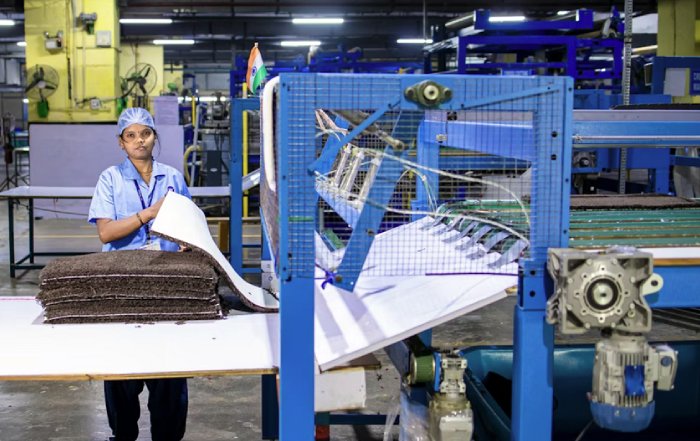
The sector-by-sector impact of automation in 2026 is highly differentiated, and this unevenness is critical for business leaders, investors and policymakers who look to DailyBusinesss to understand where risks and opportunities are emerging. In manufacturing, automotive and electronics plants operated by companies such as BMW, Volkswagen, Toyota, Tesla, Samsung and Foxconn rely on sophisticated robotics and AI-based quality control to handle a growing share of assembly, painting, inspection and packaging. While these facilities employ fewer traditional line workers than in the past, they increasingly recruit robotics engineers, industrial data analysts and human-machine interface designers, creating high-skill employment clusters around industrial regions in Germany, United States, China, Japan and South Korea. Resources such as the International Federation of Robotics provide data on robot density and adoption trends that help contextualize these shifts for decision-makers.
In logistics, e-commerce and retail, firms including Amazon, Alibaba, JD.com, Walmart and Mercado Libre have scaled warehouse automation, predictive inventory management and AI-driven demand forecasting, reducing the need for manual picking and packing while increasing demand for technicians, systems integrators and last-mile logistics specialists who can work alongside automated systems. Autonomous delivery pilots, though still constrained by regulation and safety concerns, are more common in controlled environments such as campuses, ports and industrial zones, with regulators drawing on guidance from organizations like the World Bank and national transport authorities to shape deployment frameworks. For readers tracking DailyBusinesss markets analysis, these trends are reflected in valuations and capital expenditures across logistics, retail and industrial real estate.
The services sector has undergone perhaps the most visible transformation from the perspective of knowledge workers. Generative AI platforms from OpenAI, Anthropic, Google DeepMind, Meta and enterprise providers such as Salesforce, SAP, Oracle and ServiceNow now automate large portions of documentation, reporting, research synthesis, marketing content generation and even early-stage software development. Law firms, consultancies and professional services organizations, including McKinsey & Company, Boston Consulting Group, Deloitte and PwC, have integrated AI into research, modeling and client delivery processes while simultaneously establishing governance frameworks to preserve confidentiality, accuracy and professional standards. Many have adopted "human-in-the-loop" models in which AI performs first drafts or initial analyses, with human experts responsible for validation, contextualization and client communication. As DailyBusinesss has highlighted in its AI coverage, this hybrid model is reshaping expectations of productivity and career development for professionals in law, accounting, consulting, marketing and software engineering.
Financial services continue to push the frontier of algorithmic decision-making. Robo-advisory platforms, algorithmic trading systems and automated underwriting tools are now mainstream, and banks, insurers and asset managers rely on AI to segment customers, detect fraud and optimize capital allocation. Institutions such as the Bank for International Settlements and the Financial Stability Board publish analyses of how these technologies affect market structure, liquidity and systemic risk, which are closely watched by readers of DailyBusinesss economics coverage. Simultaneously, the crypto and digital-asset ecosystem, a core area for DailyBusinesss crypto reporting, is experimenting with on-chain automation through smart contracts, decentralized autonomous organizations and tokenized real-world assets, raising novel questions about employment, governance and regulation in jurisdictions such as Singapore, Switzerland, United Arab Emirates and United States.
Regional Divergence: Automation, Demographics and Policy
Automation in 2026 is unfolding along markedly different trajectories across regions, and this divergence is increasingly central to corporate location strategy, supply-chain design and portfolio allocation. Advanced economies such as the United States, United Kingdom, Germany, France, Italy, Spain, Netherlands, Sweden, Norway, Denmark, Switzerland, Canada, Australia, Japan and South Korea generally exhibit high automation capacity due to capital availability, digital infrastructure and research ecosystems, but they also face demographic aging, high wage levels and political pressure to protect middle-income employment. In the United States, technology hubs in Silicon Valley, Seattle, Austin, Boston and New York continue to lead in AI research and commercialization, while manufacturing regions in the Midwest and South accelerate adoption of robotics and digital twins to maintain competitiveness. Policy debates at the White House, Federal Reserve and state governments revolve around how to align industrial policy, skills programs and social insurance with an economy where AI-enhanced firms can scale quickly and concentrate market power.
In the United Kingdom and the wider European Union, the regulatory environment has become more defined with the progression of the EU AI Act and complementary digital regulations, which seek to ensure that AI systems are transparent, safe and non-discriminatory. Institutions such as the European Commission, the European Parliament and national regulators have issued detailed guidance on high-risk AI use cases in employment, finance, healthcare and public services, creating both compliance obligations and competitive advantages for firms that can demonstrate robust AI governance. For executives following DailyBusinesss world coverage, the interplay between European regulation, U.S. innovation and Chinese industrial policy is a central strategic theme.
In Asia, countries such as China, Japan, South Korea and Singapore continue to treat automation and AI as core pillars of economic strategy. China has expanded its investments in AI chips, industrial robotics and 5G infrastructure, supported by research from institutions like the Chinese Academy of Sciences and major universities, while also tightening data and platform regulation. Japan and South Korea, facing acute demographic challenges, are advancing human-centric robotics and automation in manufacturing, eldercare and services. Singapore remains a testbed for AI governance and digital infrastructure, with initiatives that combine pro-innovation policy with rigorous standards on data protection and financial stability. Organizations such as the World Bank and Asian Development Bank provide frameworks for how emerging economies in Southeast Asia, South Asia and Africa can adopt automation while still expanding formal employment and avoiding premature deindustrialization.
In Africa and parts of South America, the calculus is more complex. Countries such as South Africa, Kenya, Nigeria, Brazil, Chile and Colombia are exploring automation in mining, agriculture, logistics and public services, but they must do so in labor markets where informal employment remains significant and social safety nets are often limited. Guidance from the African Development Bank, the World Bank and international NGOs emphasizes the need to pair automation with investments in education, digital infrastructure and social protection to avoid deepening inequality. For global firms and investors tracking DailyBusinesss markets and trade coverage, these regional contrasts shape decisions about where to locate high-skill digital work, where to maintain labor-intensive operations and how to structure risk management in an era of fragmented globalization.
Employment, Skills and the Evolving Social Contract
The acceleration of automation in 2026 is, at its core, a story about people, skills and the social contract that underpins modern economies, and this human dimension is central to DailyBusinesss editorial focus, particularly in its employment coverage. Aggregate employment levels in many advanced economies remain relatively stable, but the composition of work is changing rapidly. Mid-skill, routine-intensive roles in administration, basic accounting, customer service, manufacturing and logistics are under sustained pressure, while demand grows for high-skill technical roles and hybrid positions that blend domain expertise with digital fluency, such as data-literate managers, product owners, AI ethicists and automation strategists. This polarization exacerbates wage inequality and raises questions about intergenerational mobility, especially in regions where education systems have been slow to adapt.
Institutions such as the International Labour Organization and OECD continue to emphasize lifelong learning, reskilling and upskilling as foundational elements of the new social contract, arguing that traditional models of front-loaded education followed by decades of relatively stable employment no longer align with technological and economic realities. Employers across finance, manufacturing, healthcare, tourism, energy and technology are expanding internal academies, apprenticeship programs and partnerships with universities and online platforms such as Coursera, edX and Udacity, which provide modular credentials in AI, data science, cybersecurity and digital business operations. Governments in Germany, France, Netherlands, Sweden, Norway, Denmark, Finland and other European countries are experimenting with training vouchers, tax incentives and public-private partnerships to support mid-career transitions, while also debating how to fund pensions and social insurance in a world of more fluid employment relationships.
In the United States, where safety nets are more fragmented, debates about wage stagnation, regional inequality and the quality of work intersect with concerns about AI-driven displacement. Think tanks such as the Economic Policy Institute, the Peterson Institute for International Economics and the Brookings Institution have proposed models including wage insurance, portable benefits, negative income taxes and targeted tax credits for employer-sponsored training. Meanwhile, the rise of hybrid work, remote collaboration and digital nomadism, enabled in part by automation of coordination and documentation tasks, has expanded geographic options for knowledge workers in Canada, Australia, New Zealand, Singapore, Thailand, Malaysia, Brazil, South Africa and other countries that offer digital nomad visas or favorable tax regimes. Readers interested in how these trends intersect with lifestyle and mobility can explore related themes in DailyBusinesss travel coverage, where the blending of work and travel has become a recurring topic.
For employers, the strategic challenge is to design workforce strategies that recognize automation as both a productivity lever and a catalyst for redefining roles, performance metrics, career paths and organizational culture. Leading organizations are moving beyond simplistic narratives of "jobs lost versus jobs created" and instead focusing on task-level redesign, human-machine collaboration and transparent communication about how roles will evolve. Trust is emerging as a critical asset; employees who believe that their employers will invest in their skills and treat them fairly during transitions are more likely to embrace new tools and processes, which in turn accelerates value capture from automation investments.
Founders, Investors and the Automation Opportunity
For founders, venture capitalists and corporate innovators, the acceleration of automation is not only a labor-market challenge but also one of the defining entrepreneurial opportunities of the decade, a theme that resonates strongly with readers of DailyBusinesss founders coverage and investment insights. Startups across Silicon Valley, London, Berlin, Paris, Toronto, Vancouver, Singapore, Tel Aviv, Seoul, Bangalore and Sydney are leveraging AI, robotics, sensor technologies and cloud infrastructure to build specialized automation solutions in sectors as diverse as precision agriculture, construction, logistics, legaltech, fintech, medtech and climate-tech. Many of these ventures focus on augmenting human workers rather than replacing them outright, offering tools that increase safety, reduce cognitive load or enable new business models.
Venture firms such as Sequoia Capital, Andreessen Horowitz, SoftBank Vision Fund, Accel and Index Ventures continue to allocate substantial capital to automation-related ventures, while corporate venture arms of industrial and technology giants invest strategically to gain access to emerging technologies and talent. Institutional investors, sovereign wealth funds and pension funds, drawing on research from organizations like the McKinsey Global Institute, BlackRock Investment Institute and OECD, are incorporating automation scenarios into long-term asset allocation, assessing which sectors are likely to benefit from sustained productivity gains and which may face margin compression or regulatory headwinds. For readers of DailyBusinesss markets, these themes manifest in shifting valuations for semiconductor manufacturers, industrial automation suppliers, cloud providers, professional services firms and labor-intensive industries.
In the crypto and Web3 ecosystem, founders are exploring decentralized autonomous organizations and smart contracts as mechanisms for automating governance, revenue sharing and certain operational processes, raising complex questions about employment classification, fiduciary responsibility and cross-border regulation. Jurisdictions such as Singapore, Switzerland, Hong Kong and certain U.S. states are experimenting with legal frameworks for DAOs and tokenized assets, developments followed closely in DailyBusinesss crypto reporting. For entrepreneurs and investors, success in this environment increasingly depends not only on technical excellence but also on deep understanding of sector-specific workflows, regulatory landscapes and cultural expectations in target markets across North America, Europe, Asia-Pacific, Latin America and Africa.
Automation, Sustainability and the Economics of Transition
Automation is now firmly intertwined with sustainability and climate strategy, a linkage that is particularly relevant for readers who track DailyBusinesss sustainable business coverage and broader economics analysis. AI and advanced analytics are being used to optimize energy consumption in buildings and factories, reduce waste in manufacturing and logistics, improve agricultural yields with fewer inputs and monitor environmental risks in real time. Organizations such as the United Nations Environment Programme, the World Resources Institute and the International Energy Agency highlight the role of digital technologies in achieving net-zero emissions, enhancing resource efficiency and supporting climate-resilient infrastructure. Many companies now deploy automation to track and report greenhouse gas emissions, manage circular-economy initiatives and comply with regulatory requirements such as the EU Corporate Sustainability Reporting Directive and emerging climate-disclosure regimes in the United States, United Kingdom, Canada and Australia.
At the same time, the environmental footprint of automation itself has become a focus of scrutiny. Large-scale AI models require significant computing power and data-center capacity, while robotics manufacturing and electronic waste raise concerns about resource use and end-of-life management. Researchers at institutions such as MIT, Stanford University, ETH Zurich and Imperial College London are studying the energy and materials implications of large-scale digital infrastructure, prompting leading cloud providers and data-center operators to invest in renewable energy, advanced cooling technologies and more efficient hardware. Forward-looking companies are integrating lifecycle assessments into automation procurement decisions and exploring how to align digital transformation with science-based climate targets, recognizing that investors and regulators increasingly expect coherence between sustainability narratives and technology strategies.
For policymakers, the convergence of automation and sustainability represents both an opportunity and a challenge. On one hand, automation can enable green growth by improving energy efficiency, accelerating deployment of renewable energy, supporting electric-vehicle supply chains and enhancing environmental monitoring. On the other, workers in carbon-intensive industries such as fossil fuels, heavy manufacturing and traditional automotive production face structural change that requires carefully designed just-transition policies, including retraining, regional development initiatives and targeted investment in new industrial clusters. Regions such as the American Midwest, German Ruhr region, South Africa's mining belt and Brazil's industrial zones illustrate the complexity of balancing climate goals, automation-driven productivity and social stability.
Strategic Imperatives for Leaders in an Automated World
For executives, board members, founders and policymakers who look to DailyBusinesss for guidance, the 2026 automation landscape demands a strategic response that integrates technology, talent, governance, finance and societal impact into a coherent agenda. At the core is the need to articulate a clear automation strategy anchored in business objectives such as productivity, resilience, quality, innovation and customer experience, rather than in technology adoption for its own sake. This requires rigorous assessment of which tasks should be automated, which should be augmented and where uniquely human capabilities-judgment, empathy, creativity, negotiation-create enduring value.
Leaders must invest in robust data foundations, cybersecurity, cloud infrastructure and AI governance frameworks that align with emerging standards from organizations such as the National Institute of Standards and Technology and the International Organization for Standardization, recognizing that trust, transparency and accountability are prerequisites for both customer loyalty and regulatory acceptance. Governance structures increasingly include AI risk committees at board level, cross-functional ethics reviews and continuous monitoring of model performance and bias. At the same time, workforce strategies need to treat employees as partners in transformation, emphasizing honest communication, co-design of new roles, fair transition support, internal mobility and meaningful opportunities for reskilling. Firms that rely solely on attrition or external hiring to manage technological change risk eroding morale, reputational capital and institutional knowledge.
From a financial perspective, automation investments should be evaluated through disciplined capital-allocation frameworks that consider not only direct cost savings but also effects on risk, resilience, innovation capacity, brand equity and regulatory exposure. Scenario planning and stress testing, informed by analysis from bodies such as the IMF, World Bank and leading academic institutions, can help organizations anticipate how different combinations of technological progress, macroeconomic conditions and regulatory developments might affect labor costs, supply chains, demand patterns and capital markets. Readers can follow how these dynamics are reflected in corporate earnings, sector rotations and asset prices through DailyBusinesss finance and markets coverage.
Ultimately, organizations that thrive in an era of accelerating automation will be those that combine technological excellence with human-centered design, ethical leadership and a long-term perspective on value creation. They will recognize that sustainable competitive advantage arises not only from owning advanced tools but also from building trust with employees, customers, regulators and communities, and from aligning automation strategies with broader economic, social and environmental objectives.
DailyBusinesss as a Strategic Guide in the Automation Era
As automation reshapes labor markets from New York, San Francisco and Toronto to London, Berlin, Paris, Amsterdam, Zurich, Stockholm, Oslo, Copenhagen, Shanghai, Shenzhen, Singapore, Seoul, Tokyo, Bangkok, Sydney, Melbourne, Cape Town, Johannesburg, São Paulo, Rio de Janeiro, Kuala Lumpur and Auckland, decision-makers confront an environment characterized by rapid technological change, regulatory flux and information overload. DailyBusinesss positions itself as a trusted guide in this landscape, integrating analysis across AI, finance, business, crypto, economics, employment, founders, world affairs, investment, markets, sustainability, technology, travel, future trends and trade into a coherent narrative that helps readers see beyond headlines and hype.
Through its connected coverage of business, tech, economics, employment, world and related verticals, DailyBusinesss aims to deliver the depth, context and practical insight that executives, investors, founders and professionals require to make informed decisions about automation strategies, workforce planning and long-term positioning. By drawing on high-quality external research from respected global institutions while maintaining an independent editorial stance, the platform seeks to embody the experience, expertise, authoritativeness and trustworthiness that a sophisticated business audience demands.
As 2026 unfolds and labor markets continue to adjust to the accelerating integration of automation and AI, the central challenge for organizations and individuals will be to harness technology in ways that expand opportunity, enhance productivity and support sustainable, inclusive growth across regions and sectors. For those navigating this transition, access to reliable, nuanced and forward-looking information will be a decisive asset. DailyBusinesss is committed to being a core part of that information infrastructure, helping its global readership understand not only where automation is taking the world of work, but also how to shape that future in line with their strategic ambitions, values and responsibilities.
