
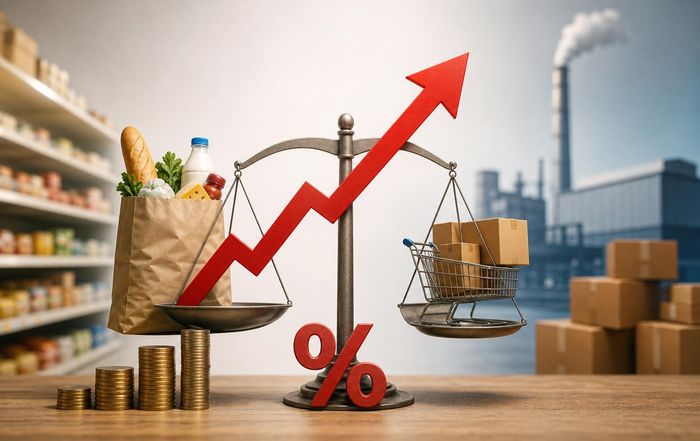
How Inflation Shapes Consumer Spending and Business Demand !
Inflation as the Defining Business Variable of the Mid-2020s
Wow inflation has moved from being a background macroeconomic indicator to a central variable in nearly every strategic decision taken by executives, investors, and policymakers. For readers of dailybusinesss.com, whose interests span business, finance, economics, employment, founders, investment, markets, and technology, inflation is no longer an abstract concept discussed only in central bank reports; it is the key lens through which consumer behavior, corporate pricing power, capital allocation, and global trade patterns are interpreted and forecast.
The inflation shock that began in the early 2020s reshaped expectations about what constitutes "normal" price dynamics in advanced and emerging economies alike. While headline inflation in many major economies has moderated from its peaks, structural pressures linked to demographics, energy transition, supply chain reconfiguration, and geopolitical fragmentation mean that the risk of persistent, episodic inflation remains elevated. Against this backdrop, understanding how inflation shapes consumer spending and business demand has become a core competence for leaders across sectors, from retail and manufacturing to financial services, technology, and logistics. Readers engaging with the broader macro context online today can deepen this perspective through its dedicated coverage of economics and markets, which closely track these evolving dynamics.
The Mechanics of Inflation and Household Purchasing Power
Inflation, at its simplest, is the sustained increase in the general price level of goods and services over time. Yet for households in the United States, Europe, Asia, and beyond, what matters most is not the abstract rate reported by statistical agencies, but how inflation interacts with wages, savings, and debt to shape real purchasing power. When price growth outpaces income growth, real disposable income declines, forcing consumers to reallocate spending, draw down savings, or increase borrowing. As a result, even modest inflation can have outsized effects on demand if it is not matched by corresponding wage gains or productivity improvements.
Institutions such as the Federal Reserve in the United States and the European Central Bank in the euro area monitor these dynamics closely, as they attempt to balance inflation control with employment and growth. Analysts following their policy decisions can review official data and commentary through sources like the U.S. Bureau of Labor Statistics and the European Central Bank, which provide detailed insights into price trends, wage growth, and sectoral pressures. For business leaders and investors, these data are not merely academic; they inform pricing strategies, labor negotiations, and investment planning, shaping expectations for both short-term demand and long-term structural shifts.
Shifting Consumer Spending Patterns Under Inflation Pressure
When inflation accelerates, consumers typically respond in a sequence of adjustments that unfold over time and vary across income groups and regions. Initially, households tend to absorb higher prices in essential categories such as food, housing, healthcare, and energy, while trimming discretionary expenditures in travel, entertainment, and non-essential retail. Over time, as price increases persist, consumers shift from brand loyalty to price sensitivity, trading down from premium to value brands, increasing their use of private labels, and actively seeking promotions, subscriptions, and loyalty schemes that help stabilize their monthly outlays.
Research from organizations like the OECD and the Bank for International Settlements highlights how inflation disproportionately affects lower-income households, which devote a larger share of their budgets to necessities and have less financial buffer to absorb shocks. Readers interested in comparative international data can explore how different economies experience and manage inflation through resources such as the OECD statistics portal and the Bank for International Settlements, which offer cross-country analyses of prices, wages, and consumption. For businesses, this unequal impact creates a more polarized demand environment, with premium segments remaining resilient among higher-income consumers, while the mass market shifts toward affordability, durability, and value.
Regional Variations: United States, Europe, and Asia-Pacific
While inflation is a global phenomenon, its drivers and consequences differ markedly across regions. In the United States, a combination of strong post-pandemic demand, fiscal support, labor market tightness, and supply constraints initially pushed inflation to multi-decade highs. By 2026, tighter monetary policy and easing supply bottlenecks have moderated headline inflation, but core services inflation, particularly in housing and healthcare, remains sticky. This has encouraged U.S. consumers to prioritize spending on experiences and essential services while becoming more selective in retail categories, a trend closely followed in the business and finance articles here.
In the United Kingdom and the euro area, energy prices and currency movements added an additional layer of complexity, with imported inflation amplifying domestic pressures. Consumers in Germany, France, Italy, Spain, and the Netherlands have faced particularly volatile energy and food costs, driving policymakers to introduce targeted subsidies and price caps, which in turn influenced how businesses set prices and plan investments. Resources such as Eurostat provide detailed breakdowns of inflation components across European economies, enabling executives to benchmark their markets and anticipate shifts in consumer demand.
In Asia-Pacific, inflation trajectories have been more varied. Countries such as Japan and South Korea, long accustomed to low inflation or even deflation, experienced a notable shift as global supply disruptions and currency weakness pushed prices higher, prompting a re-evaluation of wage policies and corporate pricing strategies. Meanwhile, emerging markets like Thailand, Malaysia, and Brazil have had to navigate the twin challenges of inflation and currency volatility, balancing domestic price stability with the need to attract investment. Analysts can follow these regional developments through platforms such as the International Monetary Fund, which offers country reports and inflation outlooks that are increasingly central to cross-border investment and trade decisions.
Business Demand, Pricing Power, and Margin Management
From the perspective of corporations and founders, inflation reshapes business demand through its effects on both input costs and customer willingness to pay. On the cost side, higher prices for raw materials, energy, logistics, and labor compress margins unless companies can either improve productivity or pass those costs on to customers. On the demand side, consumer and enterprise clients may reduce or delay purchases, downgrade to lower-priced offerings, or renegotiate contracts, particularly in price-sensitive sectors such as retail, hospitality, and manufacturing.
Organizations with strong brands, differentiated products, and high switching costs typically possess greater pricing power, allowing them to maintain or even expand margins during inflationary periods. Conversely, firms competing primarily on price face intense pressure, as they struggle to raise prices without losing volume. Insights from McKinsey & Company and Deloitte have shown how companies that actively manage pricing, product mix, and cost structures can outperform peers during inflationary episodes. Executives interested in advanced pricing strategies can explore resources such as the McKinsey Insights on inflation and pricing or the Deloitte economics and business outlook to refine their approach.
For professional people here, this interplay between costs, prices, and demand is reflected across its coverage of investment, trade, and world markets, where inflation is increasingly treated as a strategic variable rather than a cyclical anomaly. Investors and founders alike are paying closer attention to unit economics, operating leverage, and the resilience of demand under different inflation scenarios when evaluating business models and growth plans.
Labor Markets, Wages, and Employment Dynamics
Inflation also exerts a powerful influence on employment and wage dynamics, which in turn feedback into consumer spending and business demand. In tight labor markets, as experienced in the United States, the United Kingdom, Canada, Australia, and parts of Europe during the early to mid-2020s, workers have greater bargaining power to demand wage increases that offset rising living costs. While this can support consumer spending, it also raises labor costs for employers, potentially contributing to a wage-price spiral if productivity does not keep pace.
Organizations such as the International Labour Organization and the World Economic Forum have documented how inflation and wage negotiations are reshaping labor relations, remote work arrangements, and skills development priorities across sectors. Business leaders tracking these trends can review detailed analyses on the International Labour Organization website and the World Economic Forum's Future of Jobs reports, which explore how inflation, automation, and demographic shifts intersect in labor markets worldwide. For hard-working individuals, the employment dimension is particularly salient in the context of employment articles, where wage growth, skills shortages, and workforce restructuring are recurring themes linked directly to inflation and productivity.
Founders, Startups, and the Cost of Capital in an Inflationary Era
For founders and early-stage companies, inflation has altered the cost of capital, investor expectations, and the path to profitability. Higher inflation typically leads to higher interest rates, as central banks seek to anchor expectations and prevent runaway price growth. Elevated rates increase borrowing costs, compress valuation multiples, and shift investor focus from long-duration growth stories toward cash-generating, resilient business models. For startup ecosystems in hubs such as the United States, United Kingdom, Germany, France, Singapore, and South Korea, this has meant a recalibration of funding terms, a renewed emphasis on disciplined unit economics, and a more cautious approach to expansion.
Venture capital and private equity investors are scrutinizing pricing power, cost flexibility, and exposure to inflation-sensitive sectors more rigorously than in the era of ultra-low interest rates. Founders who can articulate how their products or platforms help clients manage inflation-whether by improving efficiency, enabling price optimization, or reducing input volatility-are better positioned to attract capital and strategic partners. Readers exploring the founder and entrepreneurial angle on dailybusinesss.com can find related perspectives in its founders and business sections, where the new realities of building and scaling companies in an inflationary environment are increasingly prominent.
Technology, AI, and the Productivity Response to Inflation
In response to sustained inflation pressures, many organizations have accelerated investment in technology and automation as a means of protecting margins and sustaining competitiveness. Artificial intelligence, data analytics, and cloud-based platforms are being deployed to optimize pricing, forecast demand, manage inventories, and streamline operations, thereby offsetting some of the cost increases in labor and materials. In sectors ranging from retail and logistics to manufacturing and financial services, AI-driven tools are helping companies understand how consumers respond to price changes, personalize offers, and dynamically adjust promotions to sustain volume and profitability.
Leading technology firms such as Microsoft, Google, Amazon, and IBM have expanded their suites of AI and analytics solutions aimed explicitly at inflation management, including demand forecasting, supply chain risk modeling, and automated procurement. Business leaders interested in these developments can explore resources from the World Bank on productivity and digitalization, as well as technology-focused insights from the MIT Sloan Management Review, which regularly examines how AI and automation reshape business models under macroeconomic stress. For intelligent, loyal followers, these themes intersect with ongoing reporting in AI and technology and tech, where the focus is increasingly on how digital transformation can mitigate inflation's impact on both costs and customer experience.
Financial Markets, Investment Strategies, and Inflation Hedging
Inflation also reconfigures the investment landscape, influencing asset allocation decisions, valuation frameworks, and risk management strategies. Historically, equities in sectors with strong pricing power, such as consumer staples, energy, and certain technology segments, have been more resilient during inflationary periods, while long-duration assets, including growth stocks and long-term bonds, can suffer as discount rates rise. Real assets, such as real estate and commodities, along with inflation-linked bonds, have often been used as hedges, although their performance varies across cycles and regions.
Institutional investors, from pension funds in Europe and North America to sovereign wealth funds in Asia and the Middle East, are revisiting their strategic asset allocations to ensure resilience under different inflation scenarios. Guidance and analysis from organizations like BlackRock and Vanguard emphasize the importance of diversification, active risk management, and scenario planning when inflation is a central macro risk. Investors seeking a deeper understanding of inflation-sensitive strategies can consult resources such as the BlackRock Investment Institute and the Vanguard investment research center, while complementing these with the ongoing investment and finance coverage at dailybusinesss.com, which contextualizes global trends for a broad business audience.
Global Trade, Supply Chains, and the Geography of Inflation
Inflation is also reshaping global trade patterns and supply chain strategies, as companies respond to cost volatility, geopolitical risk, and shifting regulatory landscapes. The disruptions of the early 2020s prompted many firms to reconsider their reliance on single-country sourcing, particularly from China, and to explore diversification through nearshoring, friend-shoring, and multi-regional manufacturing footprints. While these strategies can improve resilience, they often entail higher unit costs in the short term, contributing to inflationary pressures but potentially stabilizing prices over the long run by reducing exposure to sudden shocks.
International trade bodies such as the World Trade Organization and regional organizations in Europe and Asia have analyzed how tariffs, export controls, and industrial policy are influencing supply chains and price dynamics. Business leaders monitoring these developments can access detailed reports at the World Trade Organization and regional analyses from the Asian Development Bank, which provide insight into how trade fragmentation, logistics bottlenecks, and reshoring initiatives feed into inflation and business demand. For the global readership of dailybusinesss.com, these issues resonate across its world and trade sections, where the intersection of geopolitics, costs, and market access has become a defining feature of strategic planning.
Sustainable Business, Energy Transition, and Structural Inflation
Another structural driver of inflation in the mid-2020s is the global transition toward more sustainable and low-carbon business models. While the long-term goal of the energy transition is to stabilize and ultimately reduce the economic and environmental costs of energy, the interim period involves substantial capital expenditure, regulatory changes, and shifts in relative prices. Carbon pricing, emissions regulations, and incentives for green technologies can raise costs in carbon-intensive sectors while creating new demand and pricing power in renewable energy, electric mobility, and energy-efficient infrastructure.
Organizations such as the International Energy Agency and the United Nations Environment Programme have explored how the energy transition influences inflation through its effects on energy prices, investment flows, and technological innovation. Executives and investors can review these dynamics through resources like the International Energy Agency and the UN Environment Programme, which offer scenario analyses and sector-specific insights. For the research and editorial team whose growing community is increasingly focused on sustainable business practices, the link between sustainability, inflation, and long-term competitiveness is central: businesses that proactively invest in efficiency, circularity, and low-carbon technologies may face higher upfront costs but can secure more stable cost structures and differentiated demand over time.
Big Points for Business Leaders and Investors
So inflation has become a persistent, if uneven, feature of the global economic landscape, requiring a more sophisticated and integrated response from business leaders, founders, policymakers, and investors. For the audience of dailybusinesss.com, this means recognizing that inflation is not merely a macroeconomic backdrop but a dynamic force that shapes consumer spending choices, business demand, wage negotiations, technology investment, and global trade strategies.
Companies that thrive in this environment are those that develop granular, data-driven insights into how their customers respond to price changes; that invest in technology and process improvements to raise productivity; that build resilient, diversified supply chains; and that align their strategies with long-term structural trends such as digitalization and sustainability. Investors, meanwhile, are increasingly required to integrate inflation scenarios into their risk models, asset allocation frameworks, and valuation methodologies, paying close attention to sectors and geographies with sustainable pricing power and robust balance sheets.
As inflation continues to evolve across regions from North America and Europe to Asia, Africa, and South America, the ability to interpret its signals and translate them into actionable strategies will differentiate resilient organizations from those that struggle to adapt. Through its coverage of business, finance, economics, employment, founders, investment, markets, world affairs, technology, and sustainability, DailyBusinesss is positioned to serve as a trusted guide for decision-makers navigating this complex landscape, offering ongoing analysis, context, and practical insight into how inflation shapes consumer spending and business demand in 2026 and beyond.
