
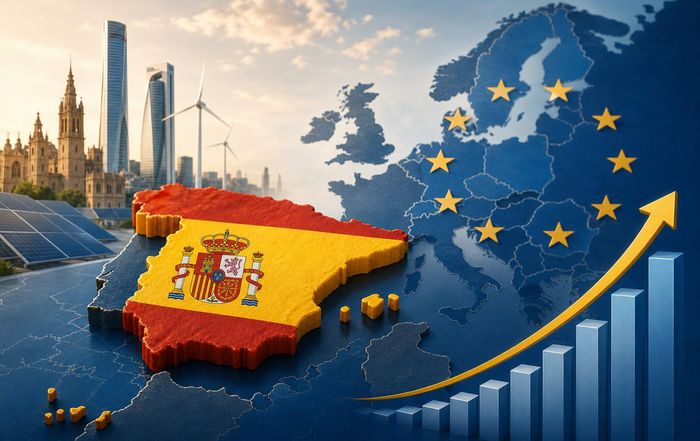
Spain's Changing Position in the European Economy
Introduction: Spain Moves from Periphery to Pivot
By mid-2026, Spain occupies a markedly different place in the European economic landscape than it did a decade ago. Once framed primarily as a post-crisis recovery story following the eurozone turmoil and the severe impact of the COVID-19 pandemic, Spain is now increasingly viewed as a pivotal mid-sized power within the European Union, whose performance influences debates on fiscal rules, industrial strategy, labor market reforms, and the green and digital transitions. For the top business community on this site at dailybusinesss.com, understanding Spain's evolving role is no longer optional; it has become essential context for decisions on investment, trade, employment, and innovation across Europe and beyond.
Spain's changing position is the product of several converging dynamics: a rebalanced growth model less dependent on construction and more anchored in services, manufacturing niches, and high-value tourism; a decisive deployment of NextGenerationEU recovery funds; a labor market that, while still facing structural challenges, has seen meaningful institutional reforms; and an increasingly assertive voice in European policy debates on fiscal governance, energy, and industrial autonomy. At the same time, persistent issues such as high structural unemployment, public debt, demographic pressures, and regional imbalances ensure that Spain's trajectory is not linear and that its influence will depend on sustaining credibility and reform momentum.
This article examines Spain's current economic position in Europe, the structural drivers behind its transformation, and the implications for businesses, investors, and policymakers who follow new developments each day through the updated sections on business, finance, economics, markets, and world affairs.
Macroeconomic Performance: From Fragility to Relative Resilience
Spain's macroeconomic story since the mid-2010s has been defined by recovery, adjustment, and, more recently, resilience in the face of overlapping shocks. Following the eurozone sovereign debt crisis, Spain carried out a painful internal devaluation, banking sector restructuring, and fiscal consolidation. These measures, while socially costly, laid the groundwork for a more balanced current account and strengthened export capacity. When the pandemic hit in 2020, Spain was among the hardest-hit economies in Europe due to its dependence on tourism and face-to-face services, but by 2023-2025 it had emerged as one of the eurozone's faster-growing large economies, benefiting from pent-up demand, strong fiscal support, and the inflow of EU recovery funds.
According to data from Eurostat and the European Commission, Spain's real GDP growth between 2021 and 2025 outpaced that of several core eurozone economies, including Germany and Italy, even if from a lower base after the pandemic contraction. Readers can review the latest European macro indicators and forecasts through the European Commission's official portal, which offers detailed country profiles and comparative data for those seeking to understand euro area growth dynamics. While growth is moderating in 2026 as monetary conditions remain tighter and global trade slows, Spain continues to benefit from a robust services sector, a recovering tourism industry, and ongoing public investment in infrastructure, digitalization, and green projects financed in part by NextGenerationEU.
Inflation, which surged across Europe after the energy price shock triggered by Russia's invasion of Ukraine, has been brought closer to the European Central Bank's target, with Spain often recording lower headline inflation than the euro area average thanks to policy measures on energy prices and a relatively diverse electricity mix. The ECB's monetary stance, accessible through its official communications and analysis for those wishing to follow eurozone monetary policy, has had a significant impact on Spain's financing conditions, mortgage markets, and corporate borrowing. Despite higher interest rates, Spanish banks-restructured and recapitalized in the previous decade-have, so far, shown resilience, which has supported credit availability to households and firms.
For business leaders and investors tracking macro trends on DailyBusinesss through its economics and finance coverage, Spain now appears less as a potential source of systemic risk and more as a bellwether for how mid-sized eurozone economies can navigate high debt, structural reform, and the green and digital transitions simultaneously.
Labor Market and Employment: Reform, Flexibility, and Persistent Duality
Spain's labor market has long been characterized by high unemployment, especially among youth, and a pronounced duality between permanent and temporary contracts. Over the past few years, however, significant reforms have altered this landscape. In particular, the 2021-2022 labor reform package, negotiated between the Spanish government, employers' associations, and trade unions, sought to reduce excessive temporary employment, strengthen collective bargaining, and promote stable contracts. The impact has been tangible: the share of temporary contracts has fallen markedly, and permanent contracts have increased, indicating a shift toward greater employment stability.
Nevertheless, Spain's unemployment rate remains one of the highest in the euro area, especially among younger workers and in certain regions. The challenge is not only cyclical but structural, linked to skill mismatches, sectoral concentration in low-productivity activities, and barriers to geographic mobility. Institutions such as the OECD and the International Labour Organization provide comparative analysis and policy recommendations on these issues for those who wish to explore labor market reforms in advanced economies. Spain's experience is increasingly cited as a case study in how to rebalance flexibility and security in labor markets that were once dominated by precarious forms of work.
From the perspective of the DailyBusinesss audience interested in employment and human capital strategies, Spain offers both opportunities and cautionary lessons. On one hand, a large, relatively well-educated workforce, competitive wage levels compared with northern Europe, and a growing ecosystem of digital and technology professionals in hubs such as Madrid, Barcelona, and Valencia make Spain attractive for nearshoring, shared services, and technology development centers. On the other hand, persistent regional disparities, limited housing affordability in major cities, and ongoing productivity challenges mean that companies must design nuanced talent strategies tailored to local conditions rather than assuming a uniform national labor market.
Structural Reforms and the Role of EU Recovery Funds
A key driver of Spain's changing position in the European economy has been its role as one of the largest beneficiaries of NextGenerationEU, the EU's unprecedented recovery and resilience facility launched in response to the pandemic. Spain's national Recovery, Transformation and Resilience Plan, approved by the European Commission, channels tens of billions of euros into digitalization, green transition, education, training, and social cohesion projects over the first half of this decade. For readers seeking to understand how EU recovery funds are reshaping member state economies, Spain stands out as a test case for whether such large-scale, conditional public investment can catalyze structural change rather than simply support short-term demand.
The Spanish plan has emphasized public-private partnerships, support for small and medium-sized enterprises, and sector-specific initiatives such as the Strategic Projects for Economic Recovery and Transformation (PERTEs), which target areas like electric vehicles, renewable energy, and the agri-food chain. These initiatives aim to position Spain not only as a consumer of imported technologies but as a producer and exporter of solutions in fields such as battery manufacturing, green hydrogen, and sustainable mobility. International institutions such as the World Bank and the International Monetary Fund have followed these developments closely, incorporating Spain's experience into broader analyses of public investment and productivity growth.
For the business community that turns to DailyBusinesss for insights on investment, the central question is whether Spain can translate this influx of public funds into lasting improvements in productivity, innovation, and competitiveness. Early signs are mixed but encouraging: there is evidence of increased business investment in digital tools, a surge in renewable energy projects, and growing interest from foreign investors in Spanish infrastructure and technology assets. At the same time, administrative bottlenecks, regional coordination challenges, and debates over the distribution of funds underscore the importance of governance quality and execution capacity in determining outcomes.
Sectoral Shifts: Tourism, Manufacturing, Energy, and Technology
Spain's economic identity has traditionally been associated with tourism, construction, and certain manufacturing segments such as automotive and agri-food. While these sectors remain crucial, their relative weight and internal dynamics are evolving, with implications for Spain's role in European value chains and for the international firms that engage with the Spanish market.
Tourism, which suffered a historic collapse in 2020, has staged a strong recovery, with international arrivals and spending approaching or surpassing pre-pandemic levels by 2024-2025. Organizations such as the World Tourism Organization (UNWTO), headquartered in Madrid, provide detailed data and analysis for those wishing to track global tourism trends. However, Spain is increasingly focused on moving away from a purely volume-driven model toward higher-value, more sustainable tourism that reduces environmental pressure and seasonality. This shift aligns with broader European objectives on sustainable development and offers new opportunities in premium hospitality, cultural tourism, and digital tourism services.
In manufacturing, Spain remains a key automotive producer within Europe, hosting major plants of Volkswagen, Stellantis, and Ford, among others. The transition to electric vehicles and stricter emissions standards has prompted substantial investment in battery production, charging infrastructure, and R&D. Spain's automotive clusters, supported by EU funds and national initiatives, aim to secure a place in the emerging European EV value chain, competing with and complementing production in countries such as Germany and France. For those interested in European industrial policy and supply chains, Spain's automotive sector provides a revealing lens on how decarbonization is reshaping competitiveness.
The energy sector has become one of Spain's most strategically significant assets within Europe. With abundant solar and wind resources, Spain has been at the forefront of renewable energy deployment, and its progress is closely tracked by organizations such as the International Energy Agency, which offers extensive resources to learn more about energy transition pathways. Moreover, Spain's geographic position and infrastructure, including liquefied natural gas terminals and interconnections with North Africa, have elevated its importance in Europe's quest to diversify away from Russian energy supplies. Projects related to green hydrogen, cross-border energy corridors, and enhanced interconnection with France place Spain at the center of debates on European energy security and industrial decarbonization.
In technology and digital services, Spain has become an increasingly attractive destination for startups, scale-ups, and multinational digital firms. Cities like Barcelona and Madrid have developed dynamic innovation ecosystems, supported by accelerators, venture capital funds, and research institutions. For readers of DailyBusinesss who follow technology and AI developments, Spain's growing presence in fields such as fintech, cybersecurity, data analytics, and artificial intelligence is noteworthy. While Spain still trails leading tech hubs in the United States, the United Kingdom, and some northern European countries, its combination of talent, quality of life, and improving digital infrastructure is drawing increasing interest from global investors and entrepreneurs who monitor developments through platforms such as Tech Nation, Startup Genome, and the European Innovation Council, which provide resources to understand startup ecosystems and innovation policy.
Financial System, Capital Markets, and Investment Climate
Spain's financial system, once at the epicenter of the eurozone banking crisis, has undergone a profound transformation. Consolidation, recapitalization, and enhanced supervision have produced a more concentrated but generally stronger banking sector, led by institutions such as Banco Santander and BBVA, which are not only domestic players but also significant global banks with substantial operations in Latin America, the United States, and other regions. The Bank of Spain and European supervisory authorities provide detailed assessments of financial stability and risk, offering useful context for those seeking to assess euro area banking resilience.
Spanish capital markets, centered on Bolsas y Mercados Españoles (BME) and integrated into the broader European market infrastructure, remain relatively smaller than those of France or Germany but have become more open and diversified. Spain has made efforts to attract foreign direct investment, streamline business regulation, and encourage the growth of venture capital and private equity, particularly in high-growth sectors. Organizations such as ICEX Spain Trade and Investment and global advisory firms provide practical guidance for companies that wish to explore investment opportunities in Spain.
For the DailyBusinesss audience that follows markets and cross-border investment flows, Spain presents a nuanced picture. On the positive side, the country offers access to the large EU single market, a stable institutional framework, and improving innovation ecosystems. It also serves as a gateway to Latin America, where Spanish banks, telecoms, and infrastructure firms maintain deep ties. On the more cautious side, investors must consider political fragmentation, periodic tensions between central and regional authorities, and the potential for policy volatility in areas such as taxation, housing regulation, and labor law. As with other European markets, careful due diligence and engagement with local expertise remain essential.
Spain in European Economic Governance and Policy Debates
Spain's changing position is not only economic but also political and institutional within the EU. Over the past few years, Spain has become more active in shaping debates on fiscal rules, industrial policy, and strategic autonomy. During its presidency of the Council of the European Union in 2023, Spain played a visible role in negotiations on reforming the Stability and Growth Pact, pushing for rules that balance fiscal responsibility with room for investment in green and digital priorities. For those wishing to follow EU governance reforms, think tanks such as Bruegel and the Centre for European Policy Studies offer in-depth analysis that frequently references Spain's positions and proposals.
In the context of energy security and climate policy, Spain has advocated for stronger interconnections within the EU energy market, accelerated deployment of renewables, and a more coordinated approach to gas and hydrogen infrastructure. Its experience in integrating high shares of variable renewables into the grid and in designing auctions and regulatory frameworks is increasingly cited as a reference point by other member states and international organizations that study successful clean energy policies such as the International Renewable Energy Agency (IRENA).
Spain has also been vocal on issues of social cohesion, minimum wages, and labor standards at the European level, aligning itself with other countries that favor a stronger social dimension to the EU's economic model. This positioning reflects domestic priorities but also enhances Spain's influence in shaping directives and regulations that affect businesses across the single market. For the global readership of DailyBusinesss, which monitors world and trade policy developments, Spain's voice in Brussels matters because it helps determine the regulatory environment in which multinational companies operate, from digital services and data protection to environmental standards and corporate taxation.
Comparative Position: Spain Among Europe's Mid-Sized Powers
Within the hierarchy of European economies, Spain is often grouped with Italy as a large southern member state, but recent trends suggest that Spain is carving out a somewhat distinct profile. While still smaller than Germany and France in absolute terms, Spain's growth performance, export diversification, and progress in renewables have, in some respects, been more dynamic. Comparative analyses by institutions such as the European Policy Centre and Chatham House highlight Spain's potential to serve as a bridge between northern and southern Europe, and between the EU and Latin America, which remains an important region for Spanish business and diplomacy. Readers interested in global economic realignments will find Spain's evolving partnerships and positioning particularly instructive.
In terms of competitiveness, Spain ranks in the middle tier among EU countries on indicators such as innovation capacity, digital readiness, and business environment, as measured by organizations like the World Economic Forum, which offers tools to examine competitiveness and productivity trends. However, Spain outperforms several peers in areas such as renewable energy deployment and tourism infrastructure, while lagging behind in R&D intensity and certain aspects of educational outcomes. This mixed profile underscores the need for continued structural reforms and investment in human capital if Spain is to consolidate and enhance its position.
Spain's role in global trade is also evolving. While it is not a manufacturing powerhouse on the scale of Germany, it has strengthened its position in agri-food exports, automotive components, and services such as tourism, logistics, and business services. Its ports, including Valencia, Algeciras, and Barcelona, are key nodes in Mediterranean and Atlantic trade routes, and infrastructure investments continue to enhance connectivity. For companies and investors who follow trade and logistics trends through sources such as UNCTAD, Spain's ports and logistics corridors represent important gateways for goods moving between Europe, Africa, and the Americas.
The Digital and AI Transformation: Spain's Emerging Role
Digitalization and artificial intelligence are central to Spain's long-term economic strategy and to its aspiration to reposition itself within the European and global economy. The Spanish government has launched initiatives such as the Digital Spain 2026 agenda and national AI strategies, supported by EU funding, to accelerate broadband deployment, promote digital skills, and encourage adoption of AI in both public administration and the private sector. For DailyBusinesss readers who follow AI and tech trends, Spain's policies are relevant not only domestically but as part of the broader EU effort to develop a distinct, human-centric approach to AI regulation and deployment.
Spain has been active in implementing and shaping the EU's AI Act, data governance frameworks, and digital services regulations, working closely with institutions such as the European Data Protection Board and the European Union Agency for Cybersecurity, which provide resources to understand digital regulation and cybersecurity in Europe. Spanish companies in sectors such as banking, insurance, retail, and manufacturing are experimenting with AI-driven solutions for customer service, risk management, predictive maintenance, and supply chain optimization, while startups are emerging in niches such as natural language processing, computer vision, and healthtech.
International organizations and research networks, including the OECD AI Policy Observatory and Partnership on AI, which offer platforms to explore global AI policy and best practices, increasingly reference Spain as a case of a mid-sized economy seeking to balance innovation with ethical and regulatory safeguards. For businesses and investors, this environment presents both opportunities and constraints: Spain may offer a relatively predictable and rights-based regulatory framework for digital operations, but compliance requirements and data governance obligations can be demanding, especially for smaller firms.
Sustainability, ESG, and Spain's Green Ambitions
Sustainability has moved from the periphery to the core of Spain's economic strategy, aligning with the EU's Green Deal and global commitments under the Paris Agreement. Spain's National Energy and Climate Plan and its climate legislation set ambitious targets for emissions reductions, renewable energy deployment, and energy efficiency. The country's progress is closely monitored by organizations such as the European Environment Agency, which provides data and analysis for those who wish to learn more about sustainable business practices.
For the DailyBusinesss audience that follows sustainable business and ESG investing, Spain offers a compelling case. Its leadership in solar and wind power, combined with emerging projects in green hydrogen and sustainable mobility, positions it as a testing ground for new business models and financing structures. Spanish utilities such as Iberdrola, Endesa, and Naturgy are significant players in European and global renewable energy markets, while infrastructure funds and institutional investors are increasingly active in Spanish green assets. At the same time, Spain faces adaptation challenges related to water scarcity, heatwaves, and biodiversity loss, which require substantial investment in resilient infrastructure and climate-proofed urban planning.
Global frameworks such as the Task Force on Climate-related Financial Disclosures (TCFD) and guidance from bodies like the Sustainability Accounting Standards Board (SASB), which help companies integrate climate and ESG risks into financial decision-making, are influencing Spanish corporates and financial institutions. Spain's integration of sustainability into corporate reporting, banking supervision, and public investment criteria is gradually elevating its profile as a jurisdiction that treats ESG not as a peripheral concern but as a core component of competitiveness and financial stability.
Risks, Constraints, and the Road Ahead
Despite notable progress, Spain's changing position in the European economy remains subject to significant risks and constraints that business readers of DailyBusinesss must factor into their strategies. Public debt levels, elevated after years of crisis management and pandemic support, constrain fiscal space and make Spain sensitive to shifts in market sentiment and eurozone fiscal rules. Demographic trends, including population ageing and uneven regional population dynamics, pose challenges for the labor force, pensions, and long-term growth potential. Structural unemployment, especially among youth, continues to weigh on social cohesion and productivity.
Politically, Spain has experienced a period of fragmentation and polarization, with frequent elections, complex coalition governments, and tensions between central and regional authorities, particularly in Catalonia. While the institutional framework remains robust and anchored in EU membership, episodes of political uncertainty can affect regulatory predictability and investor confidence. International observers such as Freedom House and the Economist Intelligence Unit, which provide tools to assess political stability and governance quality, generally view Spain as a stable democracy, but they also highlight the importance of effective governance in sustaining reform momentum.
Externally, Spain is exposed to broader European and global risks: shifts in ECB monetary policy, geopolitical tensions affecting energy and trade, technological competition with the United States and China, and potential fragmentation of the global trading system. Organizations such as the World Trade Organization and OECD, which provide analysis to understand shifts in global trade and investment patterns, underline how mid-sized open economies like Spain must navigate an increasingly complex environment marked by industrial policy, security considerations, and regionalization of supply chains.
Implications for the DailyBusinesss Audience
For business leaders, investors, founders, and professionals who rely on DailyBusinesss for original and new insight into business, finance, economics, employment, and world markets, Spain's changing position in the European economy carries several practical implications.
First, Spain should be viewed not merely as a peripheral or tourism-dependent economy, but as an increasingly diversified and strategically relevant player in sectors such as renewable energy, automotive transformation, digital services, and sustainable tourism. Second, the country's role as a major recipient and implementer of EU recovery funds makes it a laboratory for policy experimentation and public-private collaboration that can inform strategies in other jurisdictions. Third, Spain's labor market reforms, while incomplete, offer insights into how to address duality and precariousness, which are issues of concern in many advanced economies.
At the same time, prudent risk management requires acknowledging Spain's vulnerabilities: high public debt, persistent unemployment, demographic pressures, and political fragmentation. Investors and companies must therefore combine an appreciation of Spain's opportunities with a realistic assessment of its constraints, leveraging local expertise and robust scenario planning.
As time rolls on, Spain's trajectory will continue to be shaped by domestic reforms, European policy decisions, and global economic forces. Its evolving position in the European economy will remain a key area of focus for DailyBusinesss, which will continue to track developments across markets, tech and AI, sustainable business, and international trade, providing readers with the analysis and context needed to navigate a rapidly changing landscape in Spain, Europe, and the wider world.
