
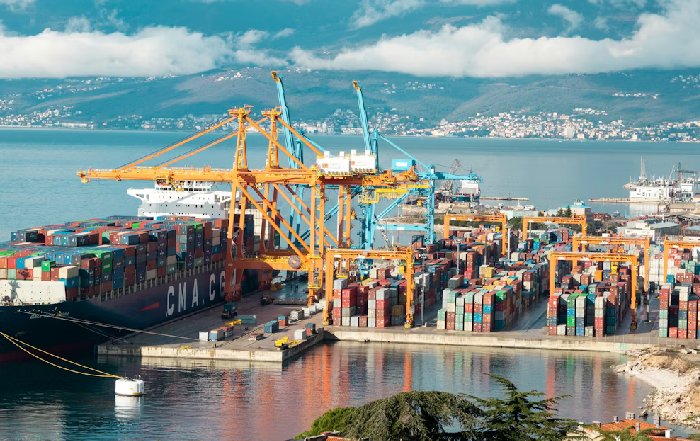
Supply Chain Regionalization Creates New Trade Routes
A New Geography of Trade in 2026 ?
The global trade map looks markedly different from the hyper-globalized landscape that defined the early 2000s. The long-standing model of ultra-lean, far-flung supply chains optimized solely for cost has been fundamentally re-engineered in favor of regional resilience, strategic redundancy, and closer proximity to end markets. For readers of DailyBusinesss who follow developments in AI, finance, trade, and global strategy, understanding this shift is no longer optional; it is central to how capital is allocated, how production networks are designed, and how competitive advantage is secured.
The cumulative impact of the COVID-19 pandemic, geopolitical tensions between major powers, recurring disruptions in critical shipping lanes, and accelerating climate risks has pushed policymakers and corporate leaders to rethink the geography of production and logistics. The result is a decisive move toward supply chain regionalization, creating new trade routes, new industrial corridors, and new hubs of economic influence that are reshaping how businesses in the United States, Europe, Asia, Africa, and the Americas interact and compete. As organizations pivot from a just-in-time to a just-in-case mindset, the patterns of trade that DailyBusinesss has tracked over the past decade are being redrawn in real time.
From Hyper-Globalization to Regional Resilience
The transition from a single, global production web to a more regionalized architecture did not occur overnight. It has been driven by a layered set of pressures that exposed the fragility of long, complex supply chains. The pandemic highlighted the risks of over-concentration in particular regions, especially in sectors such as semiconductors, pharmaceuticals, and critical medical equipment. Subsequent disruptions, including port congestion, container shortages, and incidents like the temporary blockage of the Suez Canal, underscored that a single chokepoint could ripple through global commerce for months. Analysts at organizations such as the World Trade Organization have documented how trade volumes initially contracted and then rebounded in a more diversified pattern, as firms sought to reduce single-region dependence and explore alternative sourcing options; readers can learn more about recent trade developments to appreciate the scale of this adjustment.
In parallel, trade policy has become more assertive and strategic. The United States, European Union, China, and other major economies have deployed industrial policies, reshoring incentives, and export controls that encourage companies to locate critical manufacturing closer to home or within trusted regional blocs. The International Monetary Fund has examined how this trend toward "friend-shoring" and regionalization is altering investment flows and long-term growth prospects, and its analysis helps explain why global value chains are now being redesigned around resilience as much as efficiency; business leaders can explore IMF insights on trade and supply chains to understand these macroeconomic dynamics.
For the global business community that engages with DailyBusinesss, this evolution has transformed supply chain design from a back-office function into a board-level strategic priority. Decisions about where to source components, assemble products, and distribute goods now intertwine with risk management, regulatory compliance, sustainability objectives, and geopolitical assessments.
Regionalization, Risk, and the New Economics of Location
Regionalization does not mean de-globalization; rather, it implies a rebalancing of global and regional linkages, where companies maintain international reach but with more distributed and diversified networks. The economic logic underpinning this shift is rooted in a broader conception of total cost and total risk. Where the old model often prioritized unit cost of production, the new model incorporates the cost of disruption, the price of political risk, and the premium placed on reliability and speed to market.
Research from institutions such as McKinsey & Company and Boston Consulting Group has highlighted that many firms underestimated the financial impact of supply chain breakdowns, which could erase years of cost savings from offshoring in a single event. By quantifying the trade-off between slightly higher production costs and sharply lower disruption risk, these studies have helped boards justify investments in regional capacity, inventory buffers, and multi-sourcing strategies. Executives comparing scenarios can review in-depth analysis on resilient supply chains to benchmark their own configurations.
For economies like the United States, Germany, Japan, and South Korea, this shift is reflected in targeted subsidies for strategic industries such as semiconductors, clean energy technologies, and advanced manufacturing. Regional blocs like the European Union are deepening internal integration to ensure that critical inputs can be sourced within the single market, while also forging new partnerships with neighboring regions in Africa and Eastern Europe. Readers interested in how these changes interact with broader economic trends can refer to DailyBusinesss coverage on global economics, where analysis of inflation, growth, and trade now routinely includes the lens of supply chain reconfiguration.
North America: Nearshoring and the USMCA Corridor
Nowhere is the regionalization trend more visible than in North America, where the United States-Mexico-Canada Agreement (USMCA) has become the backbone of a new production and logistics corridor. Manufacturers in the United States and Canada, seeking to reduce dependence on far-flung suppliers, have expanded nearshoring to Mexico, especially in automotive, electronics, aerospace, and medical devices. This has led to the emergence of robust cross-border supply routes that integrate design capabilities in the United States, component manufacturing in Mexico, and high-value services across the region.
The U.S. International Trade Administration has noted a growing volume of intra-North American trade, driven by these integrated supply chains, which are supported by investments in rail, trucking, and port infrastructure; business leaders can explore US trade data and analysis to track how these flows are evolving. For companies, the calculus is clear: sourcing from Mexico or Canada may not always match the lowest global production cost, but the advantages of geographic proximity, shared regulatory frameworks, and reduced transit times often outweigh marginal cost differentials.
This regional corridor is also intersecting with the rapid growth of AI-enabled logistics and digital trade. Firms are deploying predictive analytics, digital twins, and advanced planning systems to synchronize production and transportation across the USMCA region, reducing lead times and optimizing inventory. DailyBusinesss readers following developments in AI and automation will recognize how these technologies are no longer experimental; they are embedded in the daily operations of freight networks, cross-border customs processes, and warehouse management, further enhancing the attractiveness of regional supply chains.
Europe: Strategic Autonomy and New East-West Links
In Europe, the concept of "strategic autonomy" has become a guiding principle for supply chain policy and trade strategy. The European Union's experience with energy dependency, semiconductor shortages, and pandemic-era medical supply deficits has catalyzed a push to build more robust internal capabilities while diversifying external partnerships. As part of this effort, the EU is investing heavily in regional production of batteries, green hydrogen, and renewable technologies, linking industrial clusters in Germany, France, Italy, Spain, and the Netherlands with new supply routes from neighboring regions.
One of the most notable developments is the emerging trade and infrastructure corridor stretching from Northern and Western Europe through Central and Eastern Europe toward the Western Balkans and the Eastern Mediterranean. Initiatives such as the EU's Global Gateway seek to create sustainable, rules-based connectivity projects that complement or provide alternatives to other major infrastructure programs; those interested can learn more about sustainable connectivity strategies. This has implications not only for European manufacturers but also for partners in Africa and Asia that are increasingly integrated into these new routes.
European companies are simultaneously diversifying sourcing away from single-country dependencies, particularly in critical raw materials and advanced components. This is fostering new trade relationships with countries such as Norway, Sweden, Finland, and Canada for minerals, as well as with African economies for strategic inputs essential to the green transition. For readers of DailyBusinesss focused on sustainable business and climate strategy, the connection between decarbonization goals and supply chain regionalization is becoming increasingly clear: the path to net-zero requires not only cleaner technologies but also resilient, diversified access to the materials and components that underpin them.
Asia: Rewiring the Factory of the World
Asia remains the world's manufacturing powerhouse, but its internal configuration is undergoing profound change as multinational firms and regional champions adjust to geopolitical pressures and rising costs. While China continues to play a central role in global production, there has been a pronounced shift toward a "China-plus-one" or "China-plus-many" strategy, with investment flowing into Vietnam, Thailand, Malaysia, India, and Indonesia. These countries are emerging as complementary hubs rather than outright replacements, creating a more distributed Asian manufacturing ecosystem.
Trade agreements such as the Regional Comprehensive Economic Partnership (RCEP) are reinforcing this regional integration by reducing tariffs and streamlining rules of origin among key Asian economies and partners in the Pacific. The Asian Development Bank has chronicled how infrastructure upgrades, industrial parks, and digital connectivity are enabling new production corridors that link factories in Southeast Asia to consumer markets in China, Japan, South Korea, and beyond; executives can review analysis on Asia's evolving supply chains to understand these shifts. As a result, new trade routes are emerging not only between Asia and the West but also within Asia itself, with intra-regional trade now accounting for a growing share of total flows.
At the same time, advanced economies like Japan, South Korea, and Singapore are investing in high-tech manufacturing, robotics, and AI-driven production systems that can support regionalization by enabling more capital-intensive, less labor-dependent operations closer to end markets. DailyBusinesss coverage of technology and innovation has increasingly highlighted how these capabilities allow firms to consider reshoring or nearshoring activities that were previously only viable in low-cost locations, thereby reinforcing the broader trend toward regional supply chain hubs.
Emerging Markets and the Rise of New Trade Hubs
Beyond the established industrial economies, emerging markets across Africa, South Asia, and Latin America are positioning themselves as alternative production bases and logistics hubs in the new regionalized order. Countries such as Vietnam, Mexico, Poland, Morocco, Kenya, and Brazil are leveraging strategic geography, improving infrastructure, and favorable trade agreements to attract manufacturing, assembly, and distribution activities that previously concentrated in a narrow set of locations.
Multilateral institutions and development banks, including the World Bank, have emphasized the importance of trade facilitation, port modernization, and customs reform in unlocking these opportunities; business leaders can learn more about trade logistics and competitiveness to assess country-level prospects. As these economies improve their business environments and digital infrastructure, they become increasingly attractive options for companies seeking to diversify supply chains without sacrificing reliability or quality.
For DailyBusinesss readers interested in global business and world markets, this shift holds particular significance. New manufacturing zones in Africa serving European markets, expanded automotive and electronics clusters in Mexico supplying North America, and rising pharmaceutical and textile hubs in South Asia feeding both regional and global demand are all examples of how regionalization is creating new trade routes and value-creation centers. These developments are not merely geographic adjustments; they are reshaping where jobs are created, where capital is deployed, and where innovation ecosystems emerge.
Technology, AI, and the Digital Backbone of Regional Trade
The regionalization of supply chains is being accelerated and enabled by a powerful digital backbone built on AI, data analytics, and cloud platforms. Modern supply chains are no longer managed through static spreadsheets and manual processes; they are orchestrated through real-time visibility platforms, predictive algorithms, and automated decision engines that can dynamically route shipments, rebalance inventory, and simulate disruption scenarios across entire networks.
Organizations like the World Economic Forum have highlighted how digital trade platforms, blockchain-based tracking, and standardized data protocols are improving transparency and trust across borders, which is essential for complex regional networks involving multiple jurisdictions; readers can explore how technology is transforming global trade to see examples of these innovations in practice. AI-driven demand forecasting, computer vision in warehouses, and autonomous transport systems are further compressing lead times and reducing uncertainty, making it more feasible to operate regionally distributed production without sacrificing responsiveness.
For DailyBusinesss, whose audience closely follows AI and automation trends, the intersection of digital technology and supply chain strategy is a natural focal point. Coverage on business and technology increasingly documents how companies in sectors from retail to automotive are investing in end-to-end digital twins of their supply networks, allowing them to model the impact of shifting production from East Asia to Eastern Europe, or from China to Mexico, before making capital-intensive commitments. This fusion of data, AI, and logistics expertise is becoming a defining capability for firms that want to compete in a regionalized yet still globally interconnected marketplace.
Finance, Investment, and the Repricing of Supply Chain Risk
The financial community has been quick to recognize that supply chain resilience is not merely an operational concern but a core driver of enterprise value. Investors, lenders, and insurers are incorporating supply chain robustness into their risk models and valuation frameworks, rewarding companies that demonstrate diversified sourcing, strong supplier governance, and credible contingency plans. This is particularly evident in sectors such as semiconductors, pharmaceuticals, automotive, and consumer electronics, where disruptions can rapidly translate into revenue losses and market share erosion.
Leading asset managers and financial institutions are drawing on research from organizations like S&P Global and Moody's that links supply chain fragility to credit risk and earnings volatility. These insights have in turn influenced how capital is allocated to infrastructure projects, manufacturing capacity, and logistics assets in key regional hubs. Investors tracking these trends can complement external analysis with DailyBusinesss insights on finance and capital markets, where the interplay between supply chain configuration, sovereign risk, and corporate strategy is now a recurring theme.
Moreover, the rise of sustainable finance and ESG-linked investment has introduced a new dimension to supply chain regionalization. Investors are increasingly scrutinizing not only the geographic distribution of suppliers but also their environmental and social performance. This has encouraged companies to favor regional partners that can meet stricter labor, governance, and emissions standards, especially in Europe, North America, and parts of Asia-Pacific. For executives exploring investment strategies in a changing world, aligning supply chain design with ESG expectations is becoming a key differentiator in attracting long-term, patient capital.
Sustainability and the Climate Imperative in Regional Trade
Climate change and the global push toward decarbonization are exerting a powerful influence on how and where supply chains are structured. Long-distance shipping, particularly via fossil-fuel-powered maritime routes, is a significant source of greenhouse gas emissions, and regulatory frameworks such as the EU's Fit for 55 package and evolving carbon pricing mechanisms are increasing the cost of carbon-intensive logistics. As a result, companies are reevaluating whether it is economically and reputationally viable to maintain highly dispersed production networks that depend on extensive intercontinental transport.
Organizations like the International Energy Agency and UNCTAD have detailed how decarbonization policies, green shipping initiatives, and sustainable infrastructure investments are reshaping trade patterns; business leaders can learn more about sustainable transport and trade to understand these implications. Regionalization offers a partial solution by shortening supply lines, enabling greater use of lower-emission transport modes such as rail and electric trucking, and facilitating closer collaboration with suppliers on emissions reduction.
For the DailyBusinesss community focused on sustainable business models, this convergence of climate policy and supply chain strategy is a critical area of attention. Firms are experimenting with regional circular economy models, where materials and components are recovered, remanufactured, and reused within a limited geographic area, reducing both environmental impact and exposure to global commodity volatility. These innovations are not only meeting regulatory and stakeholder expectations but also creating new sources of competitive advantage in a world where resilience and responsibility are increasingly intertwined.
Strategic Implications for Business Leaders and Founders
The regionalization of supply chains and the emergence of new trade routes carry profound strategic implications for established corporations and high-growth founders alike. For large multinationals, the challenge lies in re-architecting complex networks without disrupting current operations, while simultaneously investing in new capabilities in data, risk management, and cross-border collaboration. This requires close coordination between supply chain leaders, CFOs, CIOs, and boards, as well as a nuanced understanding of regulatory environments across multiple regions.
For founders and scale-ups, particularly in sectors such as logistics technology, AI, advanced manufacturing, and sustainable materials, the transformation of supply chains represents a generational opportunity. New platforms for trade finance, regional freight marketplaces, and supplier risk analytics are gaining traction as businesses seek tools to navigate a more fragmented yet interconnected trade landscape. Entrepreneurs profiled in DailyBusinesss founders and innovation coverage are increasingly building companies that sit at the intersection of technology, trade, and sustainability, reflecting the multi-dimensional nature of modern supply chains.
Across both groups, one theme is consistent: supply chain strategy can no longer be treated as a purely operational discipline. It is now a central pillar of corporate strategy, influencing where companies invest, whom they partner with, how they manage risk, and how they communicate with stakeholders. The organizations that thrive in this environment will be those that combine deep operational expertise with strategic foresight, leveraging data and AI while maintaining a clear understanding of geopolitical, regulatory, and environmental dynamics.
The Future of Trade in a Regionalized World
The global economy is not retreating from interconnectedness but rather reconfiguring it along more regional, resilient, and strategically aligned lines. The new trade routes being forged-from North American nearshoring corridors and European-African green supply chains to intra-Asian manufacturing webs and emerging African and Latin American hubs-are redefining how value is created and exchanged across borders. For businesses, investors, and policymakers who rely on DailyBusinesss for insight, the imperative is to interpret these shifts not as temporary adjustments but as structural changes that will shape the next decade of global commerce.
Organizations that recognize this reality are already redesigning their networks, investing in regional capabilities, and embedding AI-driven intelligence into every layer of their supply chains. They are engaging with high-quality sources such as the OECD, where leaders can explore policy analysis on trade and supply chains, and integrating those insights with the on-the-ground perspective that platforms like DailyBusinesss provide through its business and markets reporting. In doing so, they are building supply chains that are not only more robust and responsive but also better aligned with the evolving expectations of regulators, investors, and society.
The regionalization of supply chains will continue to evolve, influenced by technological breakthroughs, political developments, and climate realities. Yet the direction of travel is clear: the future of trade will be shaped less by a single, monolithic global factory and more by a network of interlinked regional ecosystems, each with its own strengths, specializations, and routes. For decision-makers across the United States, Europe, Asia, Africa, and the Americas, the task now is to position their organizations within this emerging geography of trade, turning regionalization from a defensive response into a proactive source of strategic advantage.
